Written By | Our Reporter
The bill contents
PARLIAMENT
Debate on The Protection of Sovereignty Bill, 2026 intensified in Parliament this evening as lawmakers tabled both majority and minority reports, exposing deep divisions over the controversial legislation’s legality, process, and implications for Uganda’s governance and economy.
Speaker Anita Among cleared the way for debate, saying concerns previously raised about the Bill had already been comprehensively addressed by the joint committees.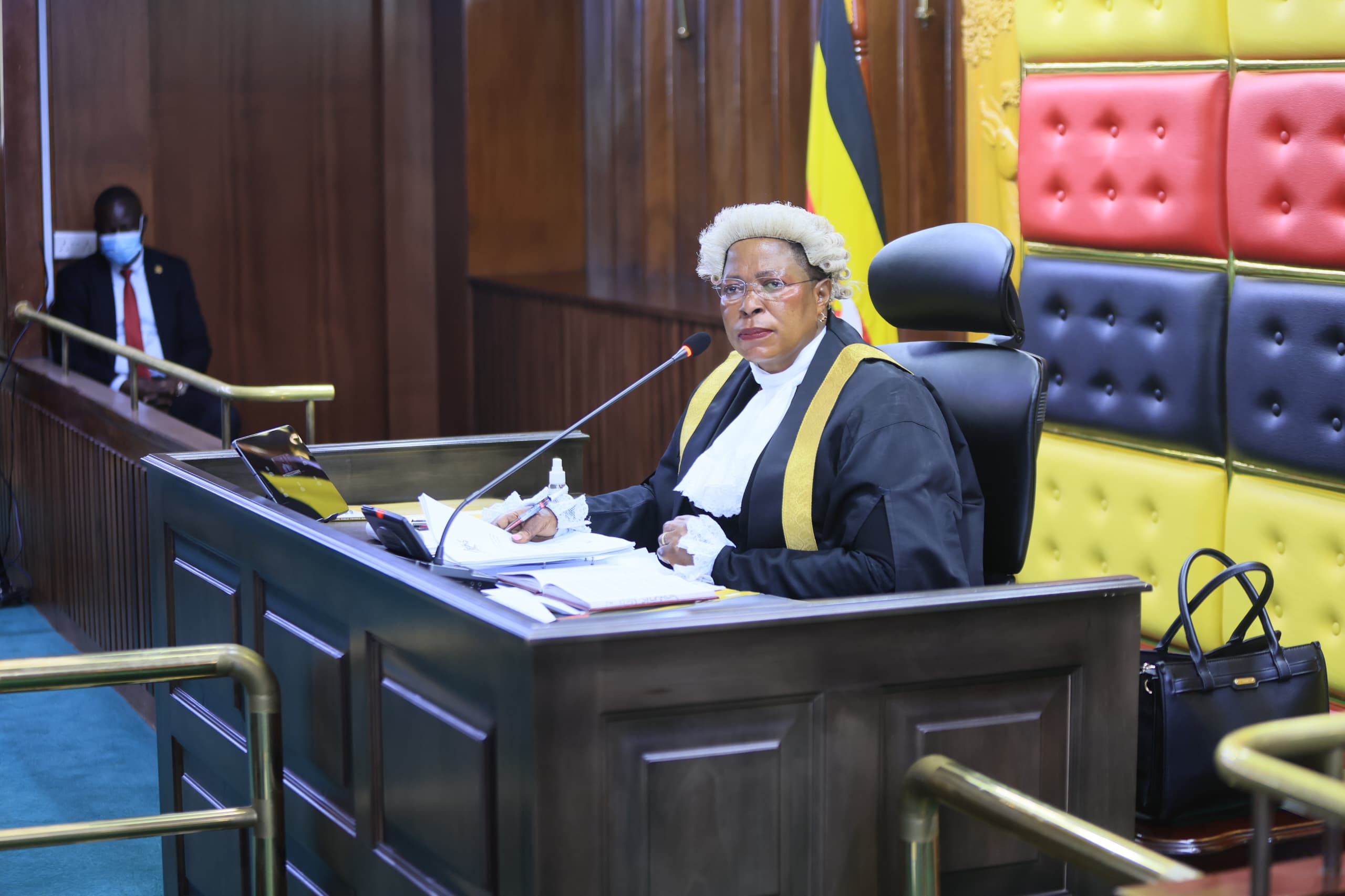
Among said she had reviewed the report from the Joint Committees on Defence and Internal Affairs, and Legal and Parliamentary Affairs, and was satisfied that key public concerns — including foreign funding declarations, ministerial powers, and the definition of a foreigner — had been exhaustively considered.
“Matters of public interest were thoroughly handled by the committee before guidance was given to Members,” the Speaker ruled.
Majority Report Presented
Nyabushozi County MP Wilson Kajwengye presented the majority report on behalf of the joint committees, outlining findings and recommendations following scrutiny of the Bill.
The report supports passage of the proposed law, subject to several amendments aimed at refining definitions, limiting ministerial powers, and exempting regulated institutions and legitimate activities from punitive provisions.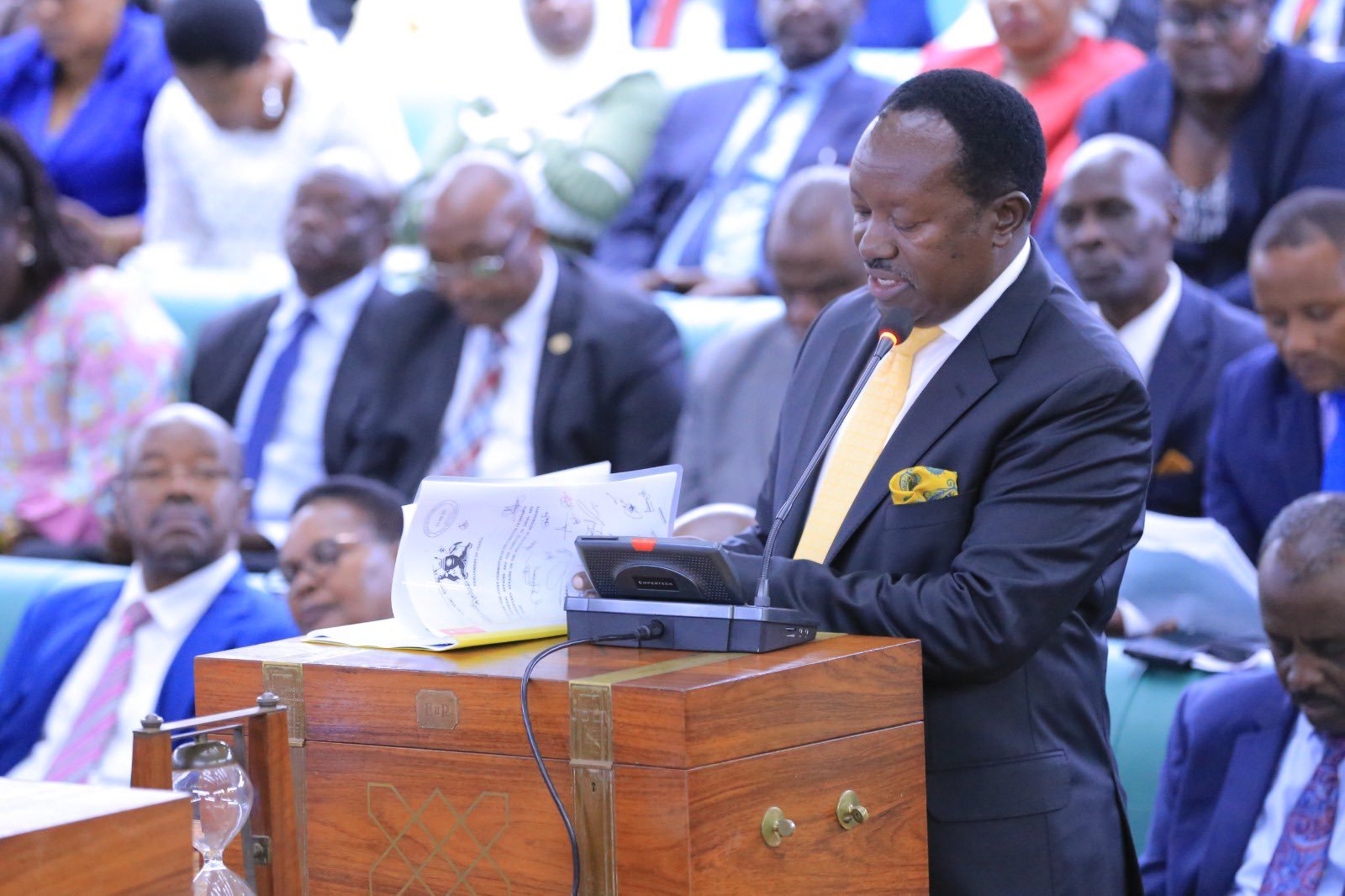
Minority Report Raises Red Flags
In contrast, Erute South County MP and Shadow Minister for Justice and Constitutional Affairs Jonathan Odur tabled a minority report strongly opposing the Bill, accusing the joint committee of procedural irregularities and constitutional violations.
According to Odur, the committee violated Parliament’s Rules of Procedure during its review of the Bill by failing to fully examine its contents and conduct all necessary inquiries required under Rule 135.
The minority report alleges that substantial amendments were adopted without proper scrutiny.
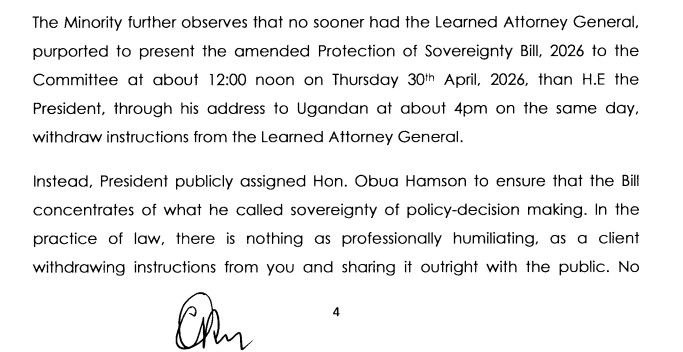
It also claims that some provisions currently contained in the Bill were not part of the original version approved by Cabinet.
The report cites recent public remarks by President Yoweri Kaguta Museveni, in which he reportedly questioned the contents of the Bill, suggesting that additional provisions may have been introduced during the legislative process.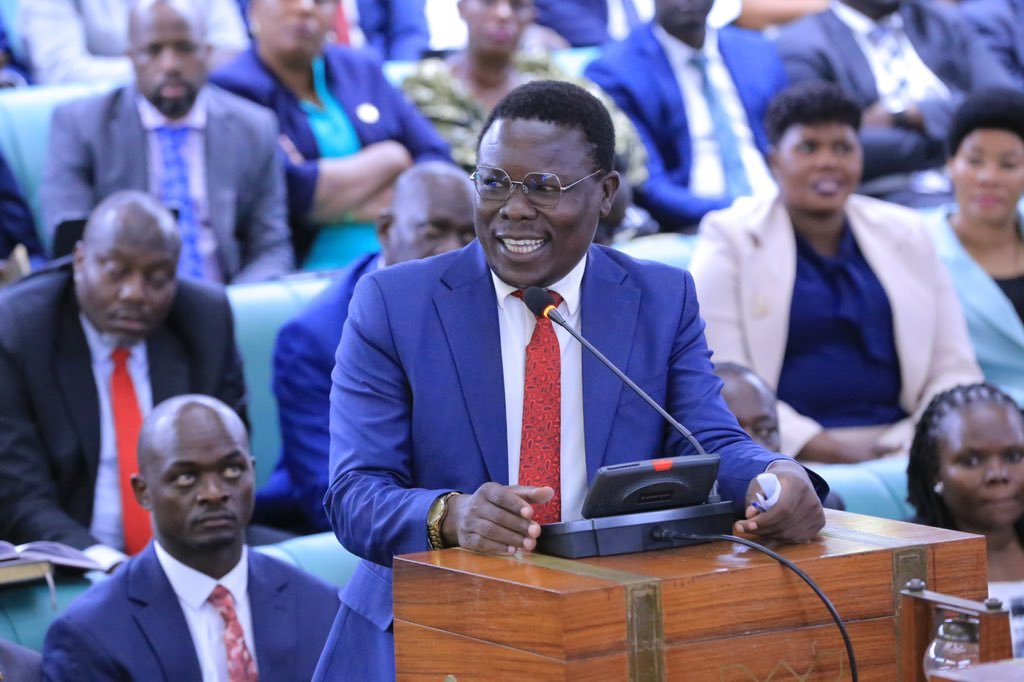
Odur
Odur described the President’s remarks as professionally embarrassing for the Attorney General.
“In legal terms, this is akin to a client publicly withdrawing instructions from his lawyer,” Odur said, arguing that the President’s comments undermined the credibility of the Bill’s drafters.
Questions on Constitutional Interpretation
The minority report further argues that the Bill fundamentally misinterprets the sovereignty of the people as enshrined under Article 1 of Uganda’s Constitution.
According to Odur, sovereignty is exercised through the will and consent of citizens via elections, referenda, and democratic participation, and should not be curtailed through restrictive legislation.
The report also notes that the majority of stakeholders who appeared before the committee opposed the Bill, with institutions such as the Bank of Uganda and several civil society organisations raising concerns over its potential economic and constitutional consequences.
Allegations of Rights Violations
Odur also made dramatic claims about the conduct of the committee process, alleging that MPs opposed to the Bill faced violations of their rights during deliberations.
He claimed dissenting legislators were denied access to photocopying services by committee chairpersons, forcing them to seek external printing services using boda bodas in order to prepare and circulate documents.
The allegations add to growing controversy surrounding the Bill, which has already drawn criticism from legal experts, opposition MPs, and sections of civil society.
Parliament is expected to continue debate on the Bill amid intense scrutiny over whether the legislation strengthens national sovereignty or risks undermining constitutional freedoms and institutional independence.
Torch Media Africa



