Written By | Fashion and Design Desk
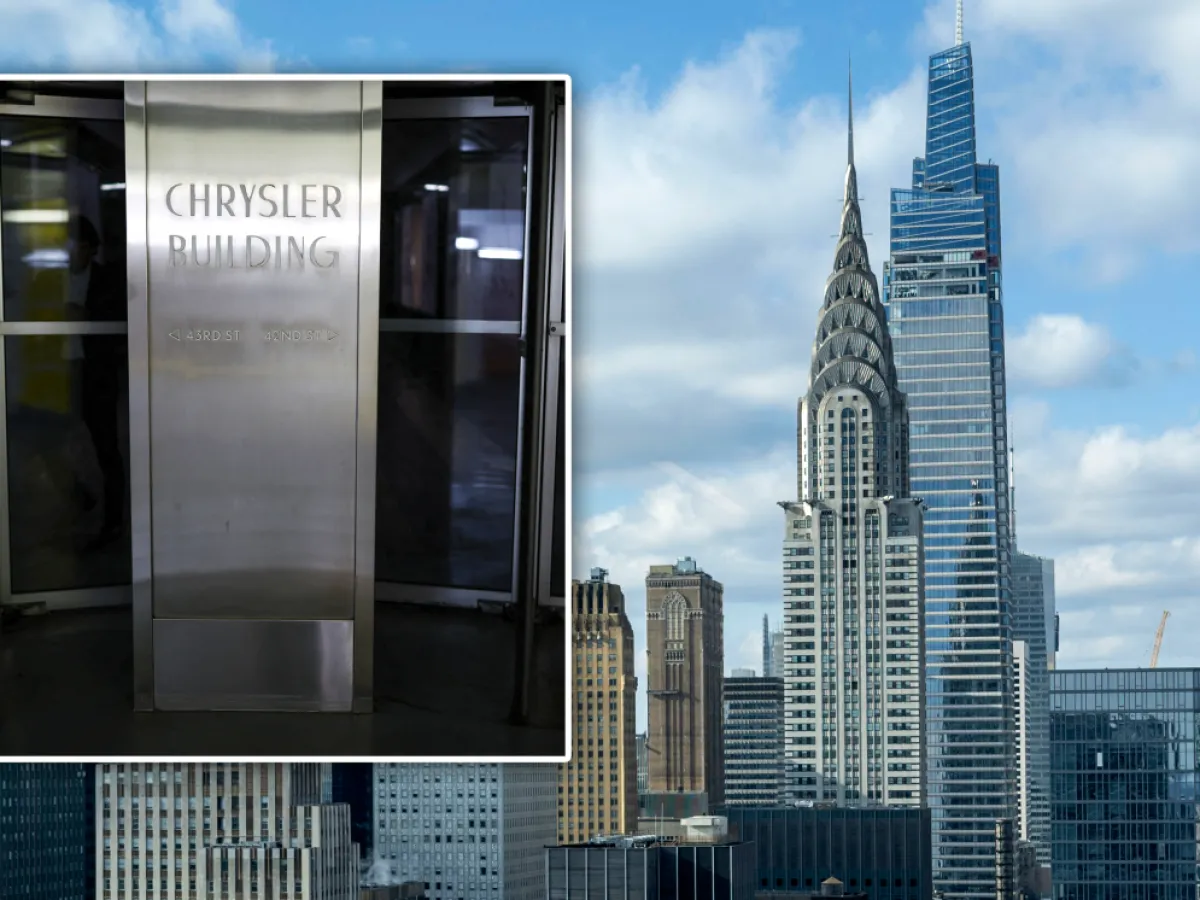
Tishman Speyer plans to restore the Art Deco icon's facade, polish its crown and rebuild most of its interior for modern offices.
NEW YORK
One of the most recognizable buildings in the world is about to be rebuilt from the inside out. On Oct. 7, Dezeen reported that developer Tishman Speyer has released plans to restore the Chrysler Building's facade and redesign at least 75 per cent of its interiors, after taking over the building's lease. The company has invested $235 million toward the restoration, on top of agreed lease payments.
The New York landmark, a touchstone of Art Deco architecture, has 1.3 million square feet of space. The plan covers both its famous exterior and the working rooms inside.
A landlord with history
The ground beneath the building has been owned by The Cooper Union for the Advancement of Science and Art since 1902. Cooper Union recently signed a lease agreement with Tishman Speyer, and the lease payments will go directly to the school. Investors in the team include PSP Investments.
For Tishman Speyer this is a return. The company bought and renovated the building in the 1990s and sold it in 2008. In 2024, The New York Times reported on the building's declining condition under its then-owners, a background that gives the new plan extra urgency.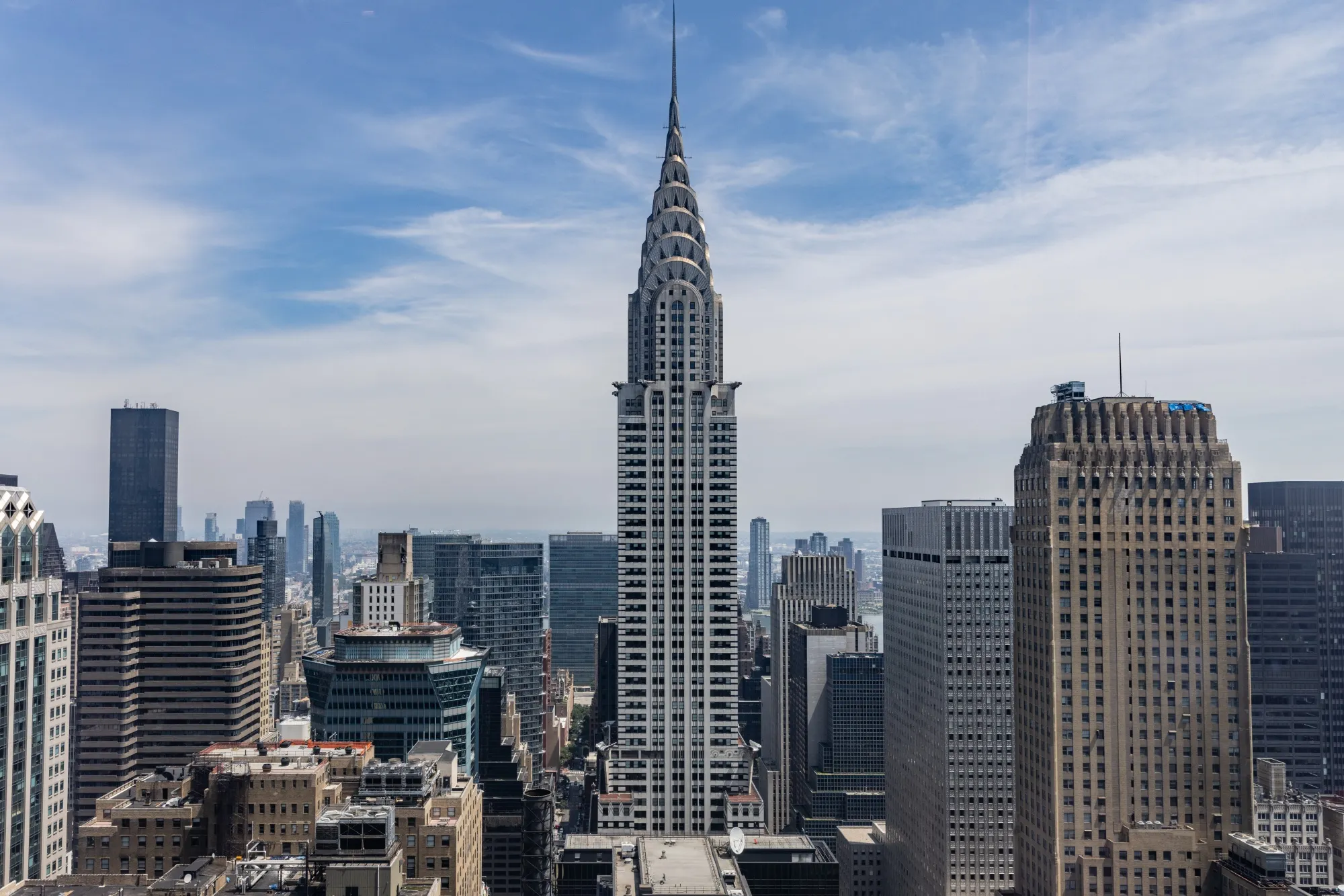
What will change
According to Dezeen, the work includes restoring the facade, polishing the crown, and redesigning the interiors into high-end offices with modernised mechanical systems. The article gives two framings of the scale: at least 75 per cent of the interiors, and interiors for 75 per cent of the office space so tenants can move in quickly.
The 61st floor, home to the building's famed Art Deco gargoyles, will become an amenity space with a lounge, wellness elements and terraces. Renderings show pared-down spaces with slight Art Deco-inflected furnishings and luxury stone and wood flooring.
Dezeen's account suggests the aim is speed as well as polish: by fitting out interiors for much of the office space in advance, the developer hopes to let tenants move in quickly rather than wait for bespoke build-outs. Modernising the mechanical systems, the building's heating, cooling and services, is the least glamorous part of the plan and arguably the most important, since it determines whether a century-old tower can meet the expectations of today's occupiers.
The constraints of a landmark
Not everything can change. Because of historic landmark designations, many of the building's public spaces must be maintained. That sets a creative boundary: designers must update the private floors while treating the protected spaces as fixed points. The original architect was William Van Alen, who designed the building for the Chrysler Corporation in the 1920s. Dezeen did not name the architects or designers for the new interiors, and no completion date was given.
The renderings' restrained look is notable. Rather than recreating 1920s ornament throughout, the proposal suggests a quieter backdrop, with Art Deco cues in the furnishings and heavy use of stone and wood. It is a familiar strategy in heritage projects: protect the showpiece, calm the surroundings.
Dezeen also notes that the building's declining condition was already public knowledge by 2024, which means the restoration is as much about reputation as about stone and steel. Landmark status brings obligations, and owners of protected buildings are often judged by how visibly they care for them. A well-executed facade restoration is the most public proof of that care.
Why the plan matters
Cooper Union president Steven W. McLaughlin said the building "helped sustain Peter Cooper's vision of opening access to education," and described the agreement as "an integrated financial plan." In practice, the arrangement ties the landmark's upkeep to the school's long-term funding.
Tishman Speyer is also making a market bet: that tenants will pay for a premium office in an icon. New York's best office buildings have recently been outperforming older stock, and the Chrysler Building, with its crown and gargoyle terraces, can promise something no glass tower can. A restored facade also helps the skyline itself, since the building's silhouette is shared by everyone, not just its tenants.
The lease structure matters too. Because payments go directly to Cooper Union, the building continues to serve the school that has owned the land beneath it for more than a century. McLaughlin's remark about Peter Cooper's vision of opening access to education points to the idea that an architectural icon can also be a working asset for an institution.
Part of a wider reuse wave
The announcement arrived in a week of heritage news. Dezeen also reported that the Zaha Hadid Foundation will open a public arts venue in the former London headquarters of Hadid's studio, and that renovation has begun on the Royal College of Art's modernist Kensington campus. Taken together, the stories point to a design culture focused more on renewal than on tearing down and starting again.
What this means for you
For New Yorkers and visitors, a restored facade and polished crown mean a better skyline for years to come, though the report does not say whether the public spaces will see changes beyond maintenance. For anyone working in offices, the project signals how workplaces are being redesigned: wellness spaces, terraces and lounges are now selling points alongside the desk.
For homeowners and designers, the lessons scale down. Keep what is distinctive, update the systems nobody sees, and let a few well-chosen materials, such as stone and wood, do the work of ornament.
The bottom line
The Chrysler Building has always been a symbol of ambition. Its next chapter asks a more modern question: how do you keep a 1920s masterpiece useful? Tishman Speyer's $235 million answer is to polish the crown, quiet the interiors and let the icon keep shining.



