The 188-year-old Place Vendôme institution Charvet has quietly powered French tailoring since 1838. Now it belongs to the house Gabrielle Chanel built — and the deal says everything about where luxury fashion is placing its bets
PARIS
In the tightly guarded, rarely disrupted world of French heritage maisons, an acquisition rarely arrives with a backstory this good. Chanel confirmed earlier this month that it has acquired Charvet, the Paris shirtmaker widely credited as the world's first dedicated shirt house, ending 188 years of independent ownership and bringing the brand's storied headquarters and boutique on Place Vendôme under the same roof — figuratively, and soon perhaps literally — as one of fashion's most powerful names.
Financial terms were not disclosed, as is customary for deals of this kind among privately held French houses. But the strategic and symbolic weight of the acquisition has been the subject of intense conversation across the industry since it was confirmed, not least because of the story that connects the two brands going back nearly a century.
A Relationship That Predates Either Company's Current Leadership
Charvet was founded in 1838 by Joseph-Christophe Charvet, and for nearly two centuries it has operated out of a single workshop in Saint-Gaultier, in France's Indre region, producing bespoke shirts, suits, and accessories with a level of precision that has made it a fixture among European aristocracy, statesmen, and the kind of quietly wealthy clientele who have never needed to advertise their taste.
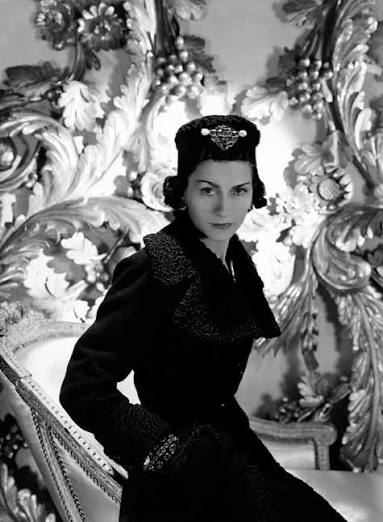
The connection to Chanel, though, runs back to the house's very founder. Gabrielle "Coco" Chanel is said to have purchased Charvet shirts for her lover, Arthur "Boy" Capel — the English businessman widely credited as one of the most formative influences on Chanel's early aesthetic and business sensibility. That thread, dormant for decades, was pulled taut again last October, when Chanel's artistic director Matthieu Blazy tapped Charvet to produce three oversized cotton button-up shirts for his debut collection at the house.
Those shirts weren't marketed as a typical fashion collaboration. As one industry account put it, the project was framed as "not a collaboration, rather an expression of expertise" — with labels stitched on the outside of the garments, deliberately crediting Charvet's tissu et technique rather than folding the shirtmaker's identity quietly into Chanel's own. It was an unusual, almost old-fashioned gesture of respect between houses, and in retrospect, it now reads as the opening move in a much larger play.

Blazy's Long Game
Blazy, who joined Chanel after a widely admired run reshaping Bottega Veneta, has been vocal about resisting the industry's compressed timelines for delivering a signature "vision." "I think a lot of designers — and it was really problematic over the last season — they were expected to set a vision within a year, or a year and a half," Blazy has said. "To get to the culture of the company, bring them with you. It's not just the vision. It takes time."
That philosophy — patience over spectacle, technique over trend — runs directly through the Charvet acquisition. Blazy has spoken about his formative years working under Raf Simons, describing an education steeped in menswear precision: "If you make a blazer, it needs to be well made. It was not just about the impact of the froufrou, it was always something very precise, so methodical." Acquiring Charvet doesn't just secure Chanel a heritage supplier; it embeds that exact philosophy of craft directly into the house's supply chain, at a moment when Blazy is clearly angling to build out Chanel's menswear identity in earnest.
The Bigger Play: Chanel Wants Menswear
Charvet's acquisition should be read alongside a broader pattern reshaping the luxury sector: major houses moving to acquire — rather than simply license or collaborate with — the specialized artisanal workshops that keep their most prestigious pieces possible to produce at all. As the tailoring and leather-goods talent pool has thinned across Europe, houses with the capital to do so have raced to lock down suppliers before competitors can.
For Chanel specifically, the deal signals an unmistakable intent to expand seriously into high-end menswear, a category the house has historically approached cautiously compared to its dominance in womenswear, ready-to-wear, and accessories. Owning Charvet outright gives Chanel not just a supplier relationship but genuine tailoring pedigree — the kind that can't be manufactured through marketing alone.
Notably, Chanel has stated that Charvet will continue operating independently, preserving its name, its Saint-Gaultier workshop, and its existing craftsmanship rather than absorbing it into Chanel's broader manufacturing operation. It's a structure increasingly common among these heritage acquisitions: buy the expertise, protect the brand equity, let the atelier keep doing exactly what made it valuable in the first place.

What This Means for Shoppers
For the vast majority of shoppers, Charvet's bespoke shirts — often costing hundreds of dollars and requiring fittings at the Place Vendôme atelier — will remain firmly out of reach, regardless of who owns the company. But the acquisition matters beyond the rarefied tier of clientele who will ever set foot in Charvet's boutique.
Expect Charvet's influence to show up in Chanel's ready-to-wear menswear lines over the next several seasons — sharper shirting, more considered tailoring details, perhaps eventually a diffusion-level product informed by techniques previously reserved for bespoke clients. It's also a signal for anyone tracking where luxury fashion's investment dollars are heading: not toward flashier logo-driven collaborations, but toward the quiet, expensive work of owning craftsmanship outright.
The Takeaway
Chanel's acquisition of Charvet is a deal built on a century-old love story, but its real significance is forward-looking. It's a bet that the next era of luxury competition will be won not by whoever generates the loudest collaboration, but by whoever controls the ateliers capable of actually producing exceptional menswear — and Chanel, under Matthieu Blazy's patient, craft-first direction, has just made sure it controls one of the very best.
Published By | Features Editor