Written By | Health News Agencies
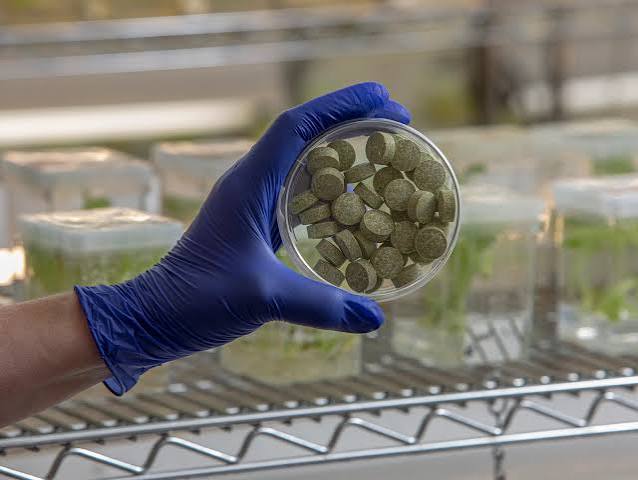
Penn researchers engineered a bean-based gum that slashed cancer-linked HPV levels by 93% in patient samples — and nearly wiped out two bacteria tied to deadly throat cancers
HEALTH
Forget the floss. Forget the mouthwash. The next weapon against one of America's most alarming cancer trends might be sitting in a foil wrapper, waiting to be popped in your mouth and chewed.
Scientists at the University of Pennsylvania's School of Dental Medicine say they have engineered a chewing gum that annihilated up to 93% of cancer-linked human papillomavirus (HPV) in saliva samples taken from real head and neck cancer patients — and came close to wiping out two dangerous bacteria strains blamed for helping those cancers take hold. The findings, published in the journal Scientific Reports and first detailed publicly this month, have researchers, dentists and cancer doctors buzzing about what could become the cheapest, simplest cancer-prevention tool since the vaccine needle.
It sounds almost too good to be true: a gum you chew that fights a virus known to trigger one of the fastest-rising cancers in the country. But the science, while still early, is real, peer-reviewed, and aimed squarely at a health crisis that has quietly exploded over the past two decades — and shows no sign of slowing down.
A Cancer On The Rise
Head and neck squamous cell carcinoma, or HNSCC, isn't a household name the way breast or lung cancer are. But it should be on your radar. The American Cancer Society estimates roughly 60,480 new cases of oral cavity and oropharyngeal cancer will be diagnosed in the United States this year alone, with about 13,150 deaths. And the fastest-growing slice of that grim statistic is being driven by one culprit: HPV.
Research tracking National Cancer Institute data found that HPV-positive oropharyngeal squamous cell carcinoma cases jumped a staggering 225% between 1984 and 2004 — and the trend hasn't reversed. Public health experts now project that HPV-driven throat and mouth cancers will become the single most common form of head and neck cancer in the United States by 2030, overtaking the traditional smoking-and-drinking-driven cases that once dominated the disease.
What makes this shift especially unsettling is who it's hitting. Unlike classic oral cancer patients — older, longtime smokers and heavy drinkers — the new wave of HPV-driven cancer patients tend to be younger, healthier, nonsmoking men in their 40s and 50s, people who never thought they were "cancer types." The virus is typically transmitted through oral sex, and most people who carry it never know until a lump shows up in their neck years, sometimes decades, later.
The Science Behind The Stick Of Gum
Enter Henry Daniell, a professor at Penn's School of Dental Medicine, and his research team, who set out to see whether they could build a delivery system that could reach the exact tissue where HPV and its bacterial allies do their dirty work — the mouth and throat — without needles, pills, or systemic side effects.
Their answer built on a foundation Daniell's lab had already been developing: a chewing gum made from lablab beans that naturally contains a protein called FRIL, which carries antiviral properties. The team then went a step further, bioengineering the gum to also produce protegrin-1, a potent antimicrobial peptide capable of destroying bacterial cell walls.
The combination was designed to hit both threats at once. In lab testing using real oral samples collected from head and neck cancer patients, the team measured levels of three cancer-associated microbes: HPV itself, plus two bacterial species called Porphyromonas gingivalis (Pg) and Fusobacterium nucleatum (Fn), both of which have been increasingly linked in scientific literature to inflammation that helps oral cancers develop and spread.
The results were striking. Extracts from the bioengineered gum cut HPV levels by up to 93% in saliva samples and by roughly 80% in oral rinse samples. Even more dramatic: a single dose of the antibacterial gum reduced the two cancer-linked bacteria, Pg and Fn, by more than 99% in both saliva and oral-rinse samples.
Just as important as what the gum destroyed is what it left alone. Unlike broad-spectrum antimicrobial mouthwashes, which can wipe out the "good" bacteria that keep your mouth's microbiome in balance, the engineered gum appeared to spare beneficial bacteria — a detail researchers say could make it a far gentler, more sustainable option for long-term or preventive use.
A Cheaper Path Than The Drugs Already On The Market
Part of what has scientists excited isn't just the effectiveness — it's the cost and simplicity. Daniell's team has pointed out that many of the newest cancer drugs to reach the market in recent years come with eye-watering price tags and, in many cases, disappointing real-world improvements in patient survival or quality of life. A bean-based chewing gum, by comparison, could be manufactured cheaply and distributed widely, potentially making it accessible in lower-income communities and countries where expensive biologic cancer drugs are simply out of reach.
"Our findings support the value of advancing these therapies to clinical trials as adjuvants with current treatments or as prophylaxis to prevent infection and transmission," Daniell said in comments accompanying the study's publication, signaling the team's next move: proving the gum works not just in a lab dish, but inside an actual living, chewing human mouth.
The Important Caveat
Before you run out to raid the gum aisle expecting a cancer shield, there's a critical asterisk hanging over these results. The study was conducted ex vivo — meaning the testing was done on saliva and oral rinse samples taken out of patients' bodies, not measured in real time inside a living mouth over weeks or months. An effect seen in a test tube or lab sample doesn't automatically translate into the same effect happening continuously in a person who's chewing the gum daily.
That means the gum is not yet approved, not yet sold, and not yet proven in the kind of large, randomized clinical trial that regulators like the FDA require before something can be marketed as a cancer-prevention product. Daniell's team is now pushing to move the work into that next phase: human clinical trials designed to test the gum either as a companion treatment alongside existing cancer therapies, or as a preventive measure for people known to carry high-risk HPV strains.
Expert Perspective
Oncologists and infectious disease specialists who study HPV-driven cancers have generally welcomed the findings as a promising, if early, addition to the prevention toolbox — while cautioning that it complements, rather than replaces, existing defenses. The HPV vaccine, first approved in the U.S. in 2006 and now recommended for preteens as young as 9, remains the single most effective tool against HPV-driven cancers, since it prevents infection in the first place rather than treating it after the fact. Public health researchers have long lamented that HPV vaccination rates in the U.S. still lag behind targets, leaving millions of adults who missed the vaccine window vulnerable to the virus that a gum like this is designed to fight after the fact.
Dental and oncology researchers not involved in the study have noted that a low-cost, easy-to-distribute gum could be especially valuable for the millions of already-infected adults for whom the vaccine offers no benefit, since it only prevents new infections rather than clearing existing ones. If future trials confirm the gum can meaningfully reduce viral load in real time in the mouths of living patients, it could become a companion tool prescribed alongside standard cancer treatment, or even handed out as a low-cost prophylactic in dental offices.
What This Means For You
If you're an adult who never got the HPV vaccine, or if you're a survivor of head and neck cancer worried about recurrence, this is a story worth watching closely over the next one to two years as clinical trials get underway. For now, there is nothing you can buy or chew today that has been proven, in a real clinical trial, to reduce your HPV levels or cancer risk. But the pipeline is moving, and the fact that a major research university is pursuing a technology this simple and this cheap is a meaningful signal for a field where most new weapons against cancer come with five- and six-figure price tags.
In the meantime, doctors continue to recommend the tried-and-true defenses: HPV vaccination for anyone under 45 who hasn't already been vaccinated, routine dental and ENT checkups that can catch a suspicious lump early, and honest conversations with your doctor about any personal risk factors, including smoking, heavy alcohol use, and HPV exposure.
Anyone who notices a persistent lump in the neck, an ongoing sore throat, difficulty swallowing, or an unexplained voice change that lasts more than a few weeks should see a doctor. Head and neck cancers are highly treatable when caught early, and far more dangerous when they're not.
The Bottom Line
A stick of engineered gum slashing cancer-linked virus levels by 93% in a lab sample is a genuinely exciting scientific milestone — and a reminder that some of the most promising cancer research doesn't always come from a billion-dollar biotech lab, but sometimes from a bean, a peptide, and a piece of gum. Whether it becomes the over-the-counter cancer-fighting tool researchers hope for will depend on what happens next: real trials, in real mouths, over real time. Until then, consider it one of the most intriguing "watch this space" stories in cancer prevention this year.



