Written By | Health Agencies
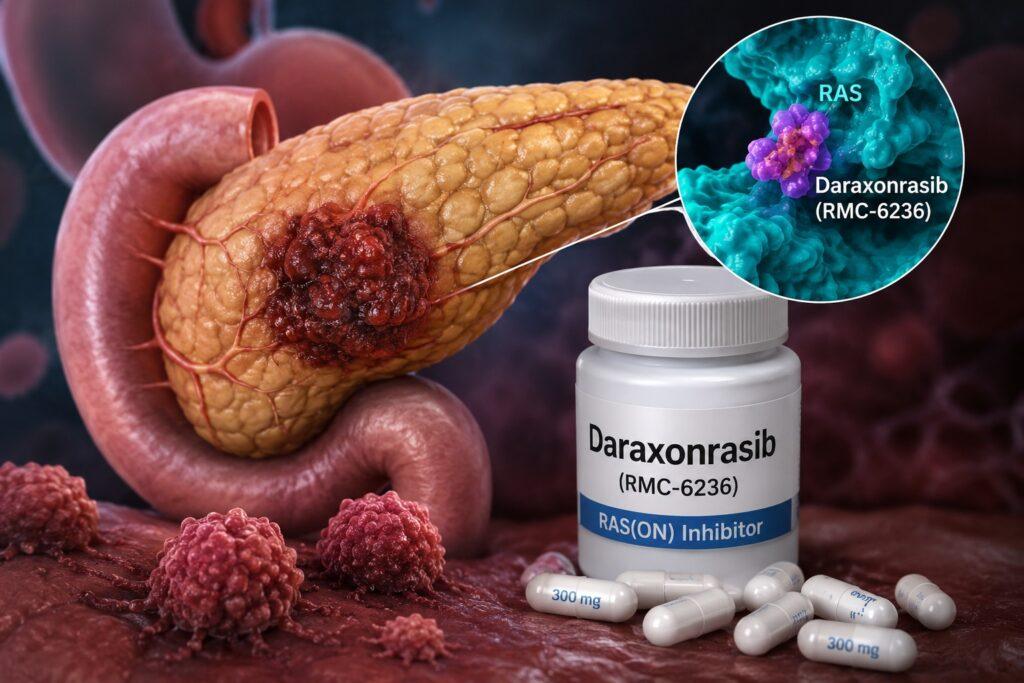
The company's drug, daraxonrasib, nearly doubled median overall survival in previously treated metastatic pancreatic cancer
For four decades, pancreatic cancer patients have faced a verdict that amounted to a death sentence. Diagnosed late, spread early, and resistant to nearly every weapon in medicine's arsenal, pancreatic ductal adenocarcinoma — the most common form — has a five-year survival rate of just 13%. Even with treatment, metastatic patients typically live less than a year. This week, that struggle recorded its most dramatic breakthrough yet.
On May 31, Revolution Medicines presented results from its pivotal Phase 3 trial — RASolute 302 — at the American Society of Clinical Oncology annual meeting. The results were so striking that assembled oncologists broke into applause.
The company's drug, daraxonrasib, nearly doubled median overall survival in previously treated metastatic pancreatic cancer: from 6.7 months on standard chemotherapy to 13.2 months on daraxonrasib. The drug reduced the risk of death by 60%. Taken as a once-daily oral pill, it was generally well tolerated.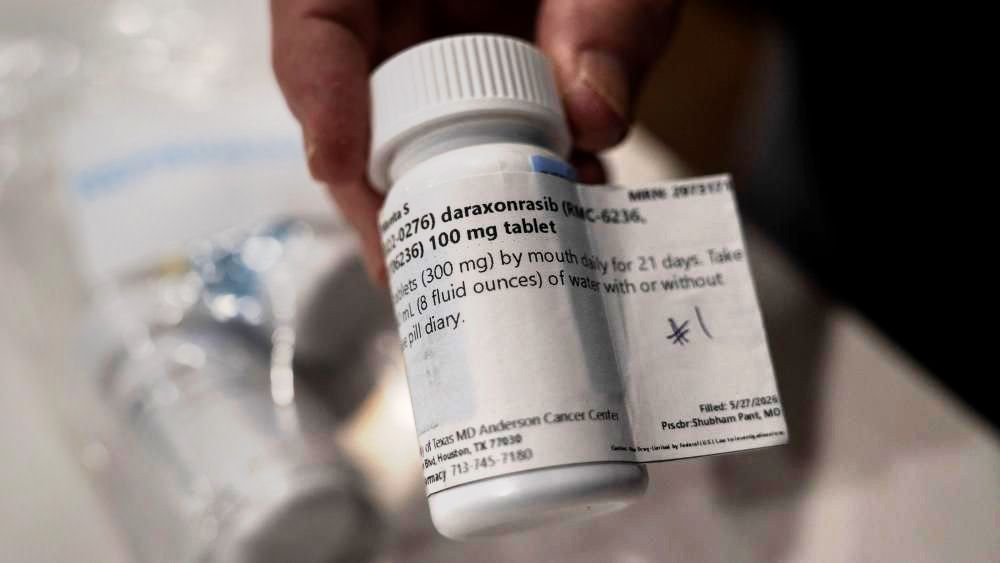
The results, simultaneously published in the New England Journal of Medicine, have set the oncology world on fire. "The results were jaw-dropping and represent the most significant advance we have ever seen in pancreatic cancer," said Dr. Anna Berkenblit of the Pancreatic Cancer Action Network. "This is what decades of scientific investment look like when they finally pay off."
The Enemy Within: What Is KRAS?
To understand why daraxonrasib matters, you need to understand a small protein called KRAS — and why scientists spent 40 years convinced it could never be stopped.
KRAS is an oncogene: a gene that, when mutated, transforms normal cells into cancer cells. In its healthy form, KRAS acts as a molecular switch. In its mutated form — a single letter change in the genetic code at position G12 — the switch jams permanently "on." The cell multiplies relentlessly.
KRAS mutations are found in roughly 90% of all pancreatic cancers. For oncologists, KRAS has always been the most obvious therapeutic target — and the most maddeningly unreachable.
The problem is structural. The surface of the KRAS protein is almost perfectly smooth. There are no deep grooves where a drug can lodge itself. Every attempt to design a direct blocker failed. The protein earned a nickname that haunted the field for 40 years: "undruggable."
A brief moment of optimism came with KRAS G12C inhibitors for lung cancer. But the most common KRAS mutation in pancreatic cancer — G12D — resisted those agents. The "undruggable" label persisted.
Revolution Medicines decided to try a completely different approach.
The Backdoor Attack: How Daraxonrasib Works
Instead of blocking KRAS directly — like jamming a lock with no keyhole — scientists designed a drug that attacks KRAS indirectly, through a molecular side door.
Daraxonrasib binds to a different protein called cyclophilin A, creating a new complex — a molecular hook — that grabs onto active, cancer-driving KRAS and blocks its deadly signals.
This belongs to a class called RAS(ON) inhibitors. Unlike earlier drugs that only worked against specific mutations, daraxonrasib works against multiple KRAS mutations simultaneously, making it effective for a broader population.
Crucially, daraxonrasib is a once-daily pill — avoiding IV infusions is a meaningful quality-of-life benefit.
The Trial That Changed Everything: RASolute 302
The Phase 3 trial enrolled 500 patients with metastatic pancreatic cancer who had received at least one prior treatment. These are patients in the hardest situation — their cancer has progressed despite chemotherapy, and options are limited. Standard second-line treatment extends life by 6 to 7 months.
The results were not close:
Measure
Chemotherapy
Daraxonrasib
Median overall survival
6.7 months
13.2 months
Risk of death reduction — 60%
Statistical significance - p < 0.0001
Progression-free survival improved significantly. A meaningful proportion of patients saw their tumors shrink, some with durable responses lasting many months.
"These are results we have never seen in this disease," said Dr. Brian Wolpin of Dana-Farber Cancer Institute, a principal investigator. "Daraxonrasib is poised to become the new standard of care."
From Lab To Patients: The Regulatory Path
On May 1 — before the Phase 3 results were even announced — the FDA granted an expanded access program, allowing eligible patients to receive daraxonrasib outside a clinical trial.
Demand has been intense. STAT News reported on June 4 that the program was struggling to keep up with inquiries from oncologists and patients.
Daraxonrasib has received FDA Breakthrough Therapy and Orphan Drug designations. The company intends to submit a New Drug Application. A follow-on trial, RASolute 303, is evaluating daraxonrasib as a first-line treatment for newly diagnosed patients — with the possibility of even more dramatic benefit.
Expert Perspective: A New Era Begins
The reaction within oncology has been exceptional. Presentations rarely generate standing ovations at scientific conferences; the daraxonrasib data, by multiple accounts, did.
"For 40 years, we've told pancreatic cancer patients we have very limited tools," said Dr. Eileen O'Reilly of Memorial Sloan Kettering. "These results represent a fundamental shift. KRAS is no longer undruggable. The whole field changes from here."
There is also significant interest in what daraxonrasib may mean for other KRAS-driven cancers — lung, colorectal, and others. Clinical trials in those indications are being planned. The potential patient population runs into the hundreds of thousands.
What This Means For You
If you or someone you love has pancreatic cancer — particularly metastatic disease — here is what you need to know.
First, ask your oncologist if the cancer has been tested for KRAS mutations. Roughly 90% of pancreatic cancers carry one.
Second, ask about access to the expanded access program. Daraxonrasib is not yet FDA-approved, but eligible patients can receive it outside a trial. Your oncologist or a major cancer center can help.
Third, consider seeking care at a major cancer center with expertise in pancreatic cancer and access to clinical trials — Dana-Farber, Memorial Sloan Kettering, MD Anderson, or UCSF.
For anyone affected by pancreatic cancer — as a patient, caregiver, or someone who has lost a loved one — this moment is worth pausing to acknowledge. The progress is real. The suffering of every patient who participated in daraxonrasib's trials is bearing fruit in the most direct way possible: in lives extended.
The Road To A Cure
It would be premature to declare victory. Doubling survival from 6.7 to 13.2 months is profound, but 13.2 months is not a cure. Most patients will eventually develop resistance. Combination strategies — pairing daraxonrasib with other agents — are already being explored.
Early detection remains the field's most urgent unmet need. At stage I, the five-year survival rate is above 40%. Expanding access to early detection technologies could ultimately save more lives than any single therapeutic advance.
But in a disease that has resisted nearly every advance for decades, daraxonrasib represents something unmistakable: proof that KRAS can be beaten, that "undruggable" was never a verdict on what medicine is capable of. For the 67,530 Americans who will be diagnosed with pancreatic cancer this year, that proof has arrived at last. The cancer killer they said was impossible has become, if not yet cured, then finally and fundamentally challenged. Medicine's most stubborn fortress has begun to fall.



