Written By | Fashion and Design Desk
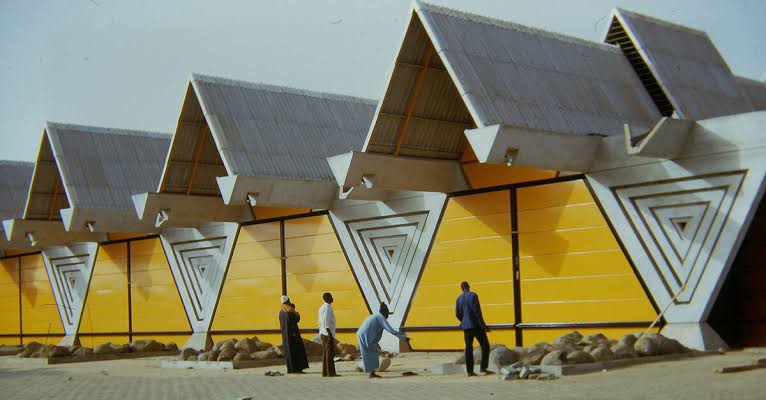
MoMA's sweeping new exhibition "Architects of Liberation" resurrects the forgotten modernist architects who gave newly free West African nations a visual language of their own
NEW YORK
Walk through the Robert B. Menschel Galleries on the third floor of the Museum of Modern Art this month, and you'll encounter a version of architectural history most visitors have never seen: soaring parliament buildings, university campuses, and civic monuments designed not by the famous European modernists museums usually celebrate, but by architects — many working in newly independent nations for the first time — who used concrete, steel, and glass to physically build the idea of freedom.
"Architects of Liberation: Modernism in Western Africa," which opened July 5 and runs through January 2, 2027, is the first major museum exhibition to seriously examine the explosion of architectural ambition that accompanied decolonization across West Africa from the late 1950s through the early 1980s. It's a show about buildings, but really it's a show about what it looks like when a nation designs its own future from scratch.
A CONTINENT, SEVEN COUNTRIES, ONE MOMENT
The exhibition spans work from Benin, Cameroon, Côte d'Ivoire, Ghana, Nigeria, Senegal, and Togo — seven countries that, within a few years of one another, threw off colonial rule and immediately faced the same question: what should independence look like, physically? The answer, as MoMA's show argues, was an extraordinary burst of architectural experimentation that fused international modernist technique with distinctly local materials, climate strategies, and symbolism.
The scale of the undertaking is significant. The exhibition features roughly 450 objects — drawings, models, and archival photographs — sourced from more than 50 lenders across 17 countries. Perhaps most striking is how much of this material has never been seen by the public before: curators note that the vast majority of the objects on display have never been publicly exhibited, and most of the architects featured have never before been the subject of a dedicated exhibition or scholarly publication anywhere. In other words, MoMA isn't just displaying history — it's actively excavating it.
THE CURATORS' CASE
The exhibition is organized by Martino Stierli, MoMA's Philip Johnson Chief Curator of Architecture and Design, alongside guest curator Ikem Stanley Okoye, an associate professor at the University of Delaware whose scholarship has long focused on African architectural history. Stierli has described the show as the concluding chapter in a loose trilogy of MoMA architecture exhibitions built around moments of political emancipation — situating West Africa's independence-era buildings alongside architecture's role in other historic transitions the museum has previously explored.
The curatorial argument is that this period of West African architecture wasn't derivative or secondary to European modernism, but a distinct and deliberate act of nation-building. As newly independent governments across the region sought to define themselves in opposition to their colonial pasts, architecture became one of the most visible tools available for expressing Pan-Africanist ideals and a process the exhibition's framing calls "Africanization" — reshaping imported modernist forms into structures that expressed local identity, climate-responsive design, and political aspiration simultaneously.
WHY THESE BUILDINGS DISAPPEARED FROM THE STORY
It's worth asking why an architectural movement this ambitious — spanning seven nations and multiple decades — has taken until 2026 to receive this kind of institutional attention. Part of the answer lies in how architectural history has traditionally been written: canonized largely through European and American figures, with modernist work produced outside those centers frequently overlooked, under-documented, or simply left out of major museum collections. Many of the architects behind these independence-era landmarks worked without the institutional support, publication networks, or archival preservation infrastructure that kept their European contemporaries' legacies intact. Buildings fell into disrepair, drawings were lost or scattered across private collections on multiple continents, and the architects themselves rarely received the retrospectives or biographies that cemented other modernists' reputations.
MoMA's exhibition is in part an act of historical repair — assembling material from dozens of scattered lenders specifically because no single archive or collection held enough of this material to tell the story on its own.
WHAT THIS MEANS FOR HOW WE SEE MODERNISM
For design enthusiasts and casual museum-goers alike, "Architects of Liberation" offers a genuine recalibration of what "modernist architecture" means as a global category. The familiar modernist canon — Le Corbusier, Mies van der Rohe, Niemeyer — gets expanded to include architects who were solving many of the same formal and technical problems (climate control without air conditioning, cost-efficient concrete construction, symbolic civic monumentality) under entirely different political stakes: not commissions from wealthy patrons, but state-building projects for brand-new nations trying to visually assert their sovereignty on the world stage.
The show arrives at a moment of renewed global interest in architectural history beyond the traditional Western canon, part of a broader trend across major museums toward reexamining whose work gets remembered and whose gets forgotten. For readers who care about design, travel, or history, the exhibition is also a practical prompt: many of the buildings represented in the show still stand across West Africa's capital cities, offering a tangible itinerary for anyone curious enough to seek them out in person after seeing the drawings and models at MoMA.
A LEGACY STILL UNDER CONSTRUCTION
"Architects of Liberation" doesn't just document a moment that's passed — it makes a case for why that moment still matters. As debates continue globally over which historical figures and movements deserve institutional recognition, MoMA's decision to devote its architecture and design galleries to seven countries' worth of independence-era buildings signals a shift in how major cultural institutions are willing to allocate their curatorial resources and prestige.
The exhibition runs through January 2, 2027, giving visitors nearly six months to encounter a chapter of architectural history that, until now, existed mostly in scattered private archives rather than in the public record it has long deserved.



