Written By | Staff Writer
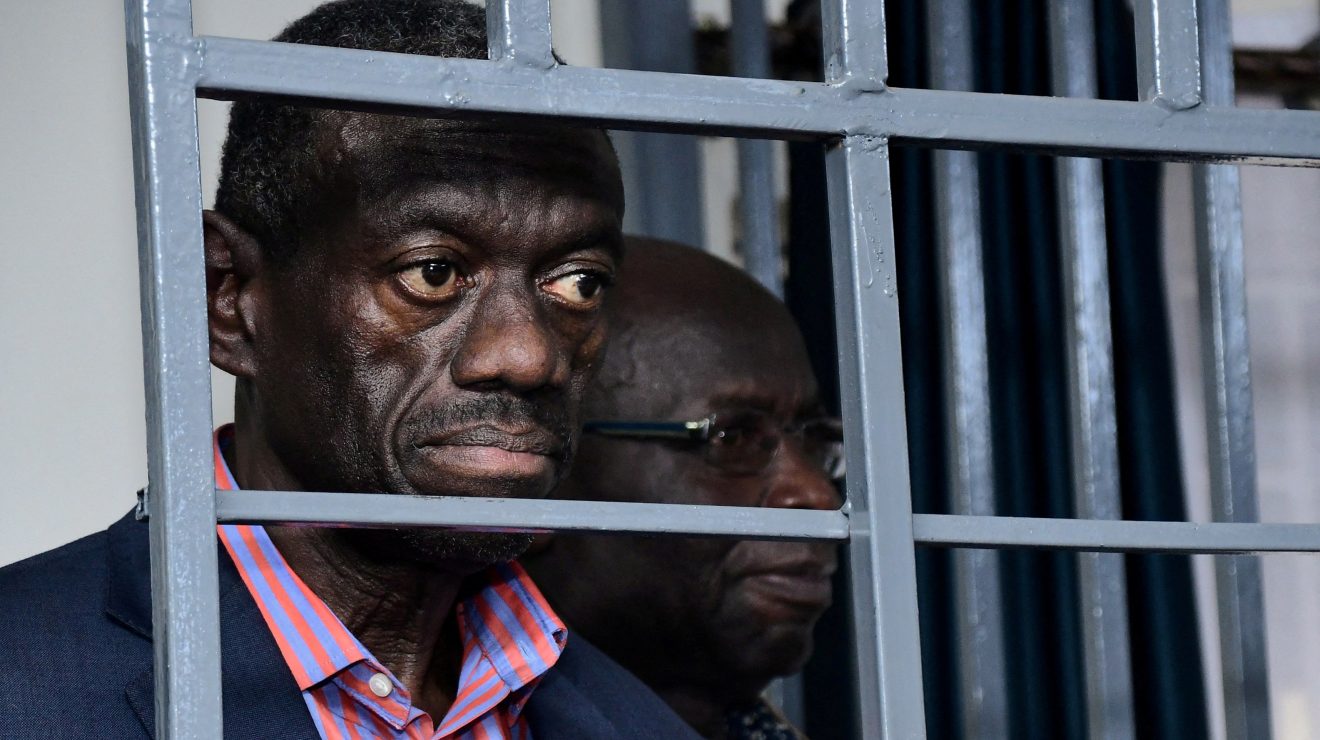
Dr Besigye, a four-time presidential candidate, is being tried alongside his aide Obeid Lutale and Captain Denis Oola of the Uganda People's Defence Forces.
POLITICS
Uganda's most closely watched political trial entered a new phase this week. The treason case against veteran opposition leader Dr Kizza Besigye resumed before the High Court in Kampala on 5 October 2026, even as reports of behind-the-scenes negotiations over his possible release have grown louder. The two tracks, one judicial and one political, now run in parallel, and nobody outside the negotiating rooms can say with confidence which will decide the outcome.
What is happening
Dr Besigye, a four-time presidential candidate, is being tried alongside his aide Obeid Lutale and Captain Denis Oola of the Uganda People's Defence Forces. The State alleges the three took part in meetings in Uganda and abroad, in places including Geneva, Athens and Nairobi, as part of a plan to overthrow the government. All of the accused deny the allegations. The case is being heard by Justice Emmanuel Baguma.
The most recent sessions have been marked by delay. On 23 September, the judge adjourned the matter to 5 October after state prosecutors were not in court when the 11 am session was due to resume. Justice Baguma entered the courtroom at about 11:10 am and found them absent. The defence said the prosecutors were handling another matter on the court premises. The judge, irritated that the prosecution had not said so, remarked that this was "not a court of games" and described the adjournment as his last. Defence lawyer Farouk Kizito Kamulegeya complained that the parties had agreed to be in court at 11:00 but that by 11:14 the prosecution still had not appeared. The ruling due that day, on whether a flash disk of secretly recorded audio and video could be admitted as evidence, was not heard.
When the trial resumed on 5 October, the court was expected to hear more evidence from the prosecution's second witness, Dr Medadi Erisa Ssentanda, a senior lecturer in African Languages at Makerere University. His evidence concerns transcripts of audio and video recordings said to come from a flash disk supplied by the Criminal Investigations Directorate. Reporting on the trial says Makerere received about Shs59.32 million to transcribe the material, which allegedly covers meetings in Geneva, Athens and Nairobi totalling more than 25 hours.
The evidence so far
The prosecution's first witness was Andrew Wilson, a British-American security investigator. He testified that he worked for the Ugandan government while secretly recording meetings involving Dr Besigye and his associates. He described the 16 November 2024 Nairobi operation that preceded Dr Besigye's arrest, including an apartment in Riverside that had been arranged in advance and already contained two pistols. Under cross-examination he agreed with the defence that the firearms and so-called fake money were planted as part of an intelligence operation, and he described the Nairobi operation as a "sting". The defence challenged his credibility, his handling of evidence, his qualifications and his knowledge of the co-accused.
The defence is also contesting the recordings themselves. It says the original flash disk has not been produced in court and questions the chain of custody. These are the issues the judge must resolve when he rules on admissibility, and they are likely to shape how much weight the court gives the transcripts.
The absent defendant
Dr Besigye has not attended court since he collapsed in the dock on 29 July, while protesting against the lawyers assigned to represent him. The court has allowed the trial to continue in his absence. Separate coverage has described him as having been hospitalised during the trial. His absence adds a layer of uncertainty to a case that already depends heavily on contested electronic evidence.
The political track
Alongside the courtroom drama, reports say negotiations are under way to secure Dr Besigye's release. According to PML Daily, General Caleb Akandwanaho, widely known as Salim Saleh, is reportedly leading efforts toward a political settlement. The talks reportedly involve figures from the ruling National Resistance Movement, opposition groups including the People's Front for Freedom and the Forum for Democratic Change, religious leaders and other prominent Ugandans.
There is no official confirmation of a deal to release Dr Besigye or to drop the charges. In August, Chief of Defence Forces General Muhoozi Kainerugaba said that General Saleh had been authorised by President Yoweri Museveni to handle the matter. An earlier meeting that was meant to bring Dr Besigye and former Kampala Lord Mayor Erias Lukwago together with General Saleh reportedly failed because both opposition figures were too ill to travel.
Why it matters
The case sits at the intersection of several questions that go beyond one man's liberty: how far the security services shape political life, how the courts handle intelligence-derived evidence, and whether the government prefers a negotiated end to a confrontation with its most persistent opponent. Observers have also noted that the treason case has unsettled other opposition figures, some of whom have been named in proceedings without being charged.
For the opposition, the trial is a test of whether it can hold together and keep attention on a leader who is largely invisible to the public. For the government, the evidence presented so far, including a witness who accepted that weapons were planted as part of a sting, carries reputational risk, even as the court has not yet ruled on any of it.
What to watch next
Three things will signal direction. First, the judge's ruling on whether the flash disk recordings are admissible, which could make or break the prosecution's central evidence. Second, whether prosecutors keep to the court's timetable now that the judge has warned against further adjournments without good reason. Third, whether the reported political talks produce anything public, such as a statement from the negotiators, a change in the charges, or a request to withdraw the case. The reports note that Dr Besigye's absence, combined with the talks, creates uncertainty about how the case would proceed if a political agreement were reached. Until one of these developments materialises, the trial is likely to continue its slow, contested pace.



