HEALTH
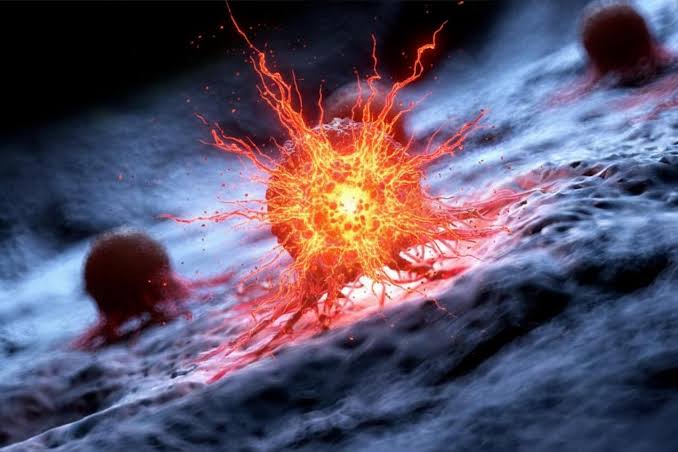
Half a billion years before the first human heart ever beat, before blood even had somewhere to circulate to, a molecule called complement C3 was already on patrol — floating through the simple fluid-filled bodies of ancient sponges and jellyfish, tagging invaders for destruction. It is, by evolutionary standards, ancient technology. And according to a new study out of Nagoya University in Japan, published this month in Nature Communications, it may also be one of modern oncology's most overlooked weapons.
The findings, released in early August, describe something researchers didn't fully expect: cancer tumors that make their own local supply of C3 protein are dramatically better at responding to immunotherapy — the class of cancer drugs, including blockbuster treatments like anti-PD-1 antibodies, that work by unleashing a patient's own immune system on their tumor. Tumors that don't produce enough local C3, the study found, are far more likely to resist treatment entirely. And critically, the C3 circulating in a patient's bloodstream — the kind doctors can currently measure with a simple blood test — turned out to be almost completely irrelevant. It's what's happening inside the tumor, molecule by molecule, that matters.
"Until now, the role of complement C3 produced by these cancer-associated fibroblasts within tumor tissue was not known," said Yuki Miyai, the study's lead author and an assistant professor at Nagoya University's Graduate School of Medicine. His team set out to answer a question that had gone strangely unexamined for decades: what does an ancient, blood-based immune protein actually do when it's manufactured locally, inside the dense, chaotic ecosystem of a solid tumor?
THE TRAITOR CELLS THAT LET CANCER HIDE
To understand why this matters, you have to understand what's usually going wrong when immunotherapy fails. Modern checkpoint-blockade drugs work by releasing a kind of biological handbrake, allowing the immune system's T cells to recognize and attack tumor cells they'd otherwise ignore. But tumors fight back by recruiting an army of their own: immunosuppressive myeloid cells that flood into the tumor microenvironment and effectively run interference, physically and chemically shielding cancer cells from the immune assault. When those myeloid cells build up unchecked, even the most powerful immunotherapy drug can walk right past them and do nothing.
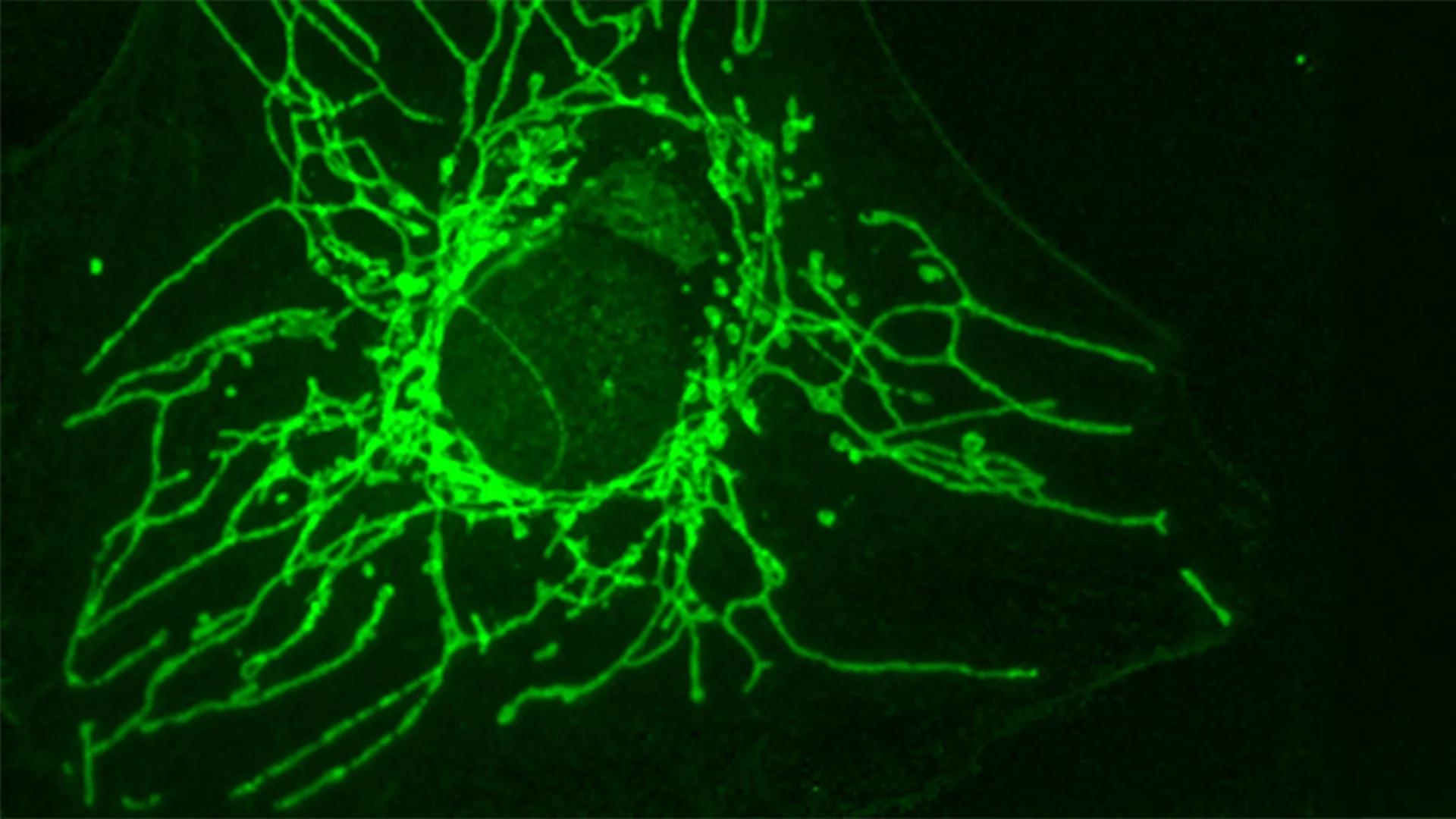
What Miyai's team discovered is that locally produced C3 — specifically, made by cancer-associated fibroblasts, the normal connective-tissue cells that surround and infiltrate tumors — acts as a gatekeeper against exactly those traitorous myeloid cells. When C3 breaks down inside tumor tissue, it forms a smaller fragment called iC3b, and that fragment is what does the real work: it blocks the immunosuppressive myeloid cells from ever infiltrating the tumor in the first place. With the gate closed, the immune system's attacking cells get a clear shot at the cancer.
To prove the local-versus-circulating distinction wasn't a fluke, the researchers ran a clever experiment in mice. First, they slashed liver-produced C3 — the kind that floats through the bloodstream — by 90%. The anti-PD-1 immunotherapy drug kept working exactly as well as it did in mice with completely normal C3 levels. Then they did the opposite: they blocked C3 production specifically inside the tumor, by the fibroblasts, while barely touching the bloodstream supply, which dropped by a measly 9%. This time, the same immunotherapy drug stopped working nearly as well. The tumor, not the bloodstream, was calling the shots.
"What determined the efficacy of the immunotherapy treatment was not the C3 in the blood, but the local C3 produced at the tumor site," Miyai explained. "When this C3 breaks down, it forms a fragment called iC3b that stops harmful myeloid cells from entering the tumor. As a result, immunotherapy is more likely to work."
TURNING RESISTANT TUMORS INTO TARGETS
The most striking part of the study wasn't just the discovery — it was what the researchers did with it. Having established that local C3 was the deciding factor, the team tested whether they could artificially recreate its protective effect in tumors that don't naturally make enough of it and that normally shrug off immunotherapy entirely.
Using a drug engineered to mimic C3's blocking action on immunosuppressive myeloid cells, the researchers were able to force previously treatment-resistant tumors in mice to respond to immunotherapy after all — and survival in those mice improved significantly. In cancer research, "significantly extended survival in previously resistant tumors" is about as close to a headline result as it gets. It suggests that low local C3 levels aren't just a marker of which patients will fail immunotherapy; they might be a fixable problem.
The team didn't stop at mice. They pulled tumor tissue samples from actual lung cancer patients and measured C3 levels in the tissue immediately surrounding the cancer cells. The pattern held up in humans just as cleanly as it had in the lab: about half of patients with high local C3 levels responded to treatment and had better survival outcomes. Among patients with low local C3 levels, the response rate was zero. Not "worse." Zero. And once again, C3 levels measured in the patients' blood made no measurable difference either way.

WHY AN "ANCIENT" PROTEIN IS SUDDENLY CUTTING-EDGE
There's a certain irony to the fact that one of the newest tools in the fight against cancer might be one of the oldest molecules in the animal kingdom. Complement C3 predates the evolution of a closed circulatory system entirely — it was doing immune work in simple, blood-free organisms long before vertebrates figured out how to pump fluid through vessels. For most of modern medical history, C3 has been understood mainly as a bloodstream molecule, part of the "complement system" that helps antibodies and phagocytic cells clear pathogens and dying cells from circulation.
What Nagoya University's team has effectively shown is that C3 has been moonlighting locally, inside tissue, doing an entirely separate job that clinicians never thought to look for — because nobody had a reason to distinguish "C3 in your blood" from "C3 made three millimeters away, inside your tumor." That distinction turns out to be the whole ballgame.
It's also, notably, not the first time this research group has probed the strange local lives of immune and tumor cells. The same lab has previously published work on how ovarian cancer manipulates its surrounding tissue to spread, and on new tumor-targeting systems for cancer-fighting immune cells — suggesting Nagoya's cancer immunology program has built a specialty in exactly the kind of overlooked, hyper-local biology that keeps producing results like this one.
EXPERT PERSPECTIVE
Miyai and his colleagues are careful not to overclaim: this is mouse data plus a retrospective look at human lung cancer samples, not a clinical trial, and there is no approved C3-boosting drug sitting on pharmacy shelves waiting for patients. But the mechanistic clarity of the finding — a specific protein fragment, iC3b, doing a specific, provable job of keeping specific bad-actor cells out of the tumor — is exactly the kind of clean biological story that drug developers get excited about, because it points directly at a druggable target rather than a vague correlation.
The research team's next moves, according to the published study, are focused on two practical questions: how to safely boost local C3 levels inside tumors that don't naturally produce enough, and what the ideal timing would be to pair a C3-boosting approach with existing immunotherapy drugs for maximum effect. They also note that understanding local, tissue-based C3 activity could ripple outward into completely different fields of medicine — including wound healing and inflammation control, two processes that share some of the same underlying biology as the tumor microenvironment.
WHAT THIS MEANS FOR YOU
If you or someone you love has ever been told that immunotherapy "isn't working" or that a tumor is "immunologically cold" — oncology jargon for a cancer that doesn't respond to immune-based treatment — this research points toward a future explanation and a future fix. Right now, oncologists have limited tools to predict, ahead of time, which patients will respond to expensive, sometimes brutal immunotherapy regimens and which won't. A test that measures local tumor C3 levels, rather than a simple blood draw, could eventually help doctors identify likely non-responders before they spend months on a drug that was never going to work for them — and, if a C3-mimicking drug makes it through clinical development, potentially convert some of those non-responders into responders instead.
It's important to be clear-eyed about the timeline: this is early-stage, laboratory-driven science. Any therapy based on artificially boosting local C3 would need to clear years of additional animal studies, safety testing, and human clinical trials before it could reach a hospital near you. Patients currently undergoing immunotherapy should not expect this discovery to change their treatment plans anytime soon, and should continue to follow their oncologist's guidance. But for a field that has spent years trying to understand why checkpoint blockade drugs work brilliantly in some patients and do almost nothing in others, identifying a concrete, measurable, and — crucially — recreatable biological switch is a genuine step forward.
CONCLUSION
Complement C3 spent hundreds of millions of years quietly guarding simple sea creatures from infection long before humans, tumors, or immunotherapy existed. Now a team in Nagoya has shown that this same ancient molecule, when produced in exactly the right place, might hold the key to unlocking cancer treatments for patients whose tumors have so far refused to respond. It's a reminder that some of the most promising frontiers in modern cancer research aren't new inventions at all — they're old biology, hiding in plain sight, waiting for someone to ask the right question about where, exactly, a familiar molecule is coming from.
Published By | Features Editor