Written By |

Lake Mburo National Park is Uganda's smallest savannah park — and, increasingly, its most quietly persuasive argument for slowing down.
TOURISM
The tarmac of the Kampala–Mbarara highway runs dead straight through the Ankole hills, and for three hours it gives you nothing but roadside pineapple stands and the long grey shimmer of the cattle corridor. Then, somewhere past Lyantonde, the fences fall away. A herd of Ankole long-horns drifts across the verge, horns swept back like the handlebars of some impossible bicycle, and behind them — close enough that the eye refuses it at first — stands a zebra. Not in a park. Not behind a gate. Just there, cropping the same grass, entirely unbothered.
That single image is the whole argument of Lake Mburo National Park compressed into one glance: a place where the line between Uganda's pastoral heartland and its wild savannah was never fully drawn, and where the tourism industry is finally starting to treat that blurriness as the attraction rather than the problem.
At roughly 370 square kilometres, Mburo is the smallest of Uganda's savannah national parks — a fraction of Murchison Falls, a rounding error beside Queen Elizabeth. It is also, for anyone driving the classic southwestern circuit toward Bwindi, almost impossible to avoid: roughly 245 kilometres and four hours from Kampala, sitting precisely where a long drive starts to ache. For decades that geography condemned it to the role of the overnight stop, the place you slept before the gorillas. That reputation is beginning to look badly out of date.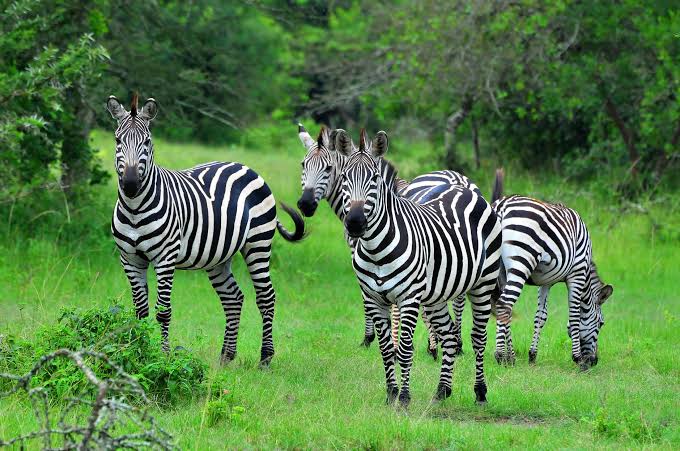
A park with a complicated inheritance
Mburo's history is unusually candid about the costs of conservation. The area was first gazetted as a controlled hunting ground in 1933, upgraded to a game reserve some thirty years later, and elevated to national park status in 1983 — a promotion that, at the time, came at the direct expense of the Banyankole Bahima pastoralists who had grazed these valleys for generations. Families were displaced. Boundaries were redrawn in offices far away. When political change swept Uganda in the mid-1980s, much of the park was reoccupied and its infrastructure dismantled by people reclaiming what they considered theirs.
What makes Mburo interesting today is that this rupture was never papered over. The park that re-emerged is smaller than the one gazetted, and the management model that grew out of the conflict leans hard on negotiation with the surrounding communities rather than on walls. Revenue-sharing, community grazing arrangements in adjacent land, and cultural tourism partnerships are not decorative add-ons here; they are the terms on which the park exists. Visitors who arrive expecting a sealed wilderness will be briefly disoriented and then, if they are paying attention, quite moved.
Five lakes, no lions, and the only impala in Uganda
The landscape is a mosaic rather than a panorama: rolling hills, open acacia savannah, rocky outcrops, seasonal papyrus swamp and a chain of five interconnected lakes with Lake Mburo itself at the centre. The absence of Uganda's headline predators — there are no resident lions, and leopard and hyena are present but seldom seen — changes the character of a visit entirely. Because nothing large is hunting you, Mburo is one of the few Ugandan parks where you can legally and routinely get out of the vehicle.
That single permission unlocks the park's best experiences. Guided walking safaris put you at eye level with a herd that does not scatter. Horseback safaris, run from the Mihingo escarpment, let riders drift among zebra and eland in a way no engine allows — grazing animals read a horse as another herbivore and simply keep eating. Both are quietly among the most distinctive wildlife encounters available anywhere in East Africa.
The cast is worth the trip on its own. Mburo holds Uganda's largest zebra population, commonly estimated around five thousand animals, and is the only Ugandan national park where impala occur naturally — a fact of some civic consequence, given that the nearby city of Mbarara is widely held to take its name from the animal. Eland, topi, waterbuck, bushbuck, buffalo, warthog and introduced giraffe fill out the plains. Hippo and crocodile hold the shorelines. African rock pythons haunt the rocky clefts and swamp margins, a reliable thrill for the herpetologically inclined.
Birders, meanwhile, treat the place as serious business: more than 350 recorded species, with the acacia and research tracks ranked among the finest woodland birding in the country, and the papyrus fringes offering shoebill, papyrus gonolek and African finfoot to those with the patience for a boat and a long silence.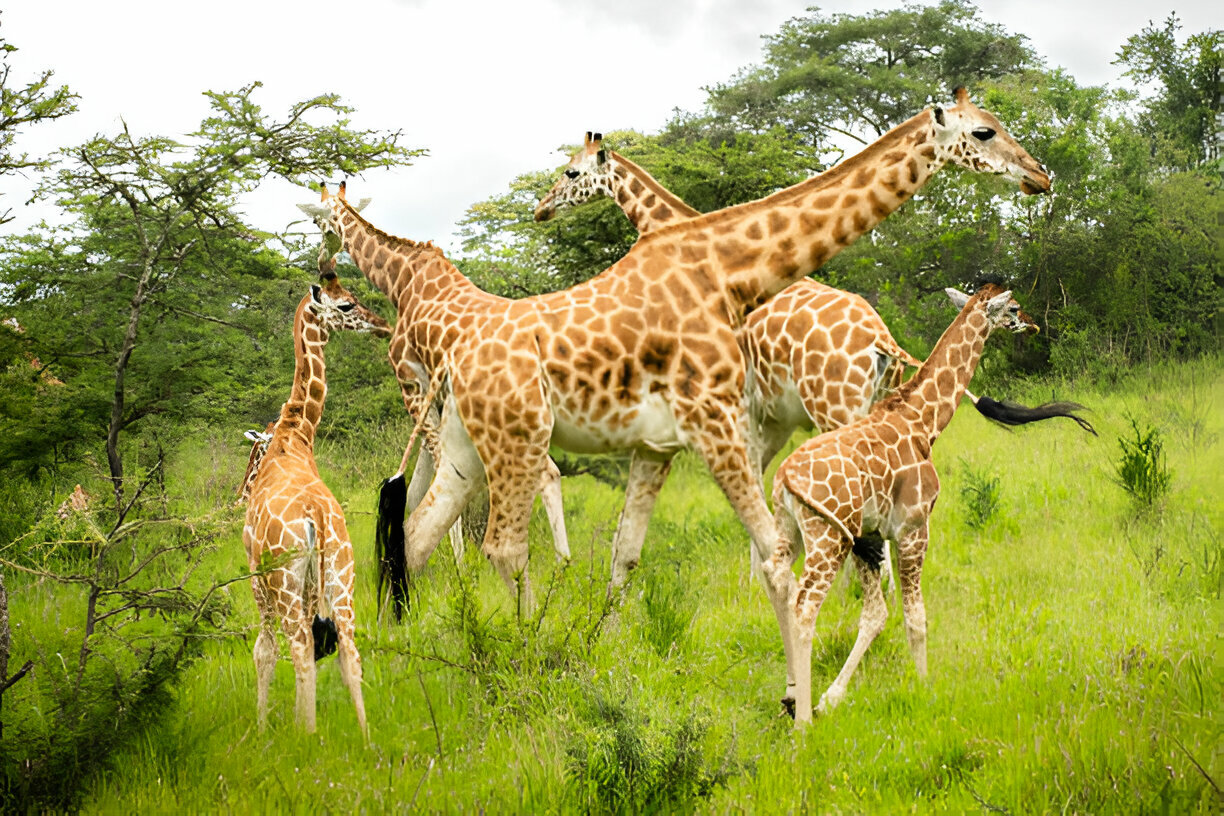
Practical notes for the traveller
Under the Uganda Wildlife Authority conservation tariff that has governed the current cycle, entry to Lake Mburo has run at roughly USD 40 per day for foreign non-residents, USD 30 for foreign residents, and UGX 20,000 for East African citizens, with a ticket valid twenty-four hours from the moment of entry. Activities are charged separately: boat safaris on Lake Mburo, guided nature walks and night game drives have each sat in the region of USD 30 per person, while horseback safaris, run by a private operator rather than the Authority, cost substantially more. Travellers should confirm current rates directly with UWA before budgeting — a revised tariff structure took effect on 1 July 2026, and published operator figures have not all caught up.
Access is straightforward. Coming from Kampala, the first turning on the left leads about five kilometres to Nshara Gate; the second, at Sanga trading centre, runs roughly thirteen kilometres to Sanga Gate. Rwonyo, near Nshara, is the administrative heart of the park — headquarters, ranger post, information office and a serviceable budget rest camp. Accommodation elsewhere spans the full range, from campsites to the well-regarded lodges on the escarpment.
The park is open year-round, but the dry months of June to September and December to February concentrate game around the lakes and keep the murram tracks firm. The green seasons are lusher, emptier and better for birds, and — usefully — now cheaper across much of Uganda's protected-area system.
This Week in Ugandan Tourism
▪ Ankole cattle formally enter the tourism package. In an August 2026 development with direct relevance to the Mburo circuit, the Uganda Tourism Board confirmed the inclusion of the long-horned Ankole cow in the national tourism product portfolio, citing sufficient critical mass to market it. Paired with the Ministry of Tourism's Explore Ankole campaign, it points toward farm-stay and agritourism circuits built around pastoral ranches, dairy, breeding heritage and cattle poetry — exactly the country Mburo sits in.
▪ A revised UWA conservation tariff took effect on 1 July 2026. The Uganda Wildlife Authority's new pricing framework replaced the July 2024–June 2026 schedule, and is presented as a means of strengthening conservation financing and improving visitor experience across protected areas. Operators and travellers alike should re-check every line item before quoting.
▪ Gorilla permit rules continue to tighten. Two changes from earlier this year are still working through the market: from 1 March 2026 the Authority discontinued the old "soft hold" reservation system, requiring full payment at the time of booking, and a letter dated 14 April 2026 confirmed that extra permits are no longer being issued to individuals or licensed operators. A discounted low-season tier announced on 26 February 2026 prices April, May and November treks at USD 600 for foreign non-residents, down from USD 800.
▪ The Uganda Tourism Association launched its 2026–2030 strategic plan at Speke Resort Munyonyo, framing a private-sector-led push on standards, accountability and public–private coordination. Its stated pivot — from volume to value, with weight on quality, sustainability and innovation — is the sort of language Mburo has been living out for years.
▪ The numbers are moving in the right direction. Uganda received 739,815 international visitors between January and June 2026, up 3.7 percent year on year, with receipts up 25.6 percent to roughly UGX 2.3 trillion and average length of stay rising from 7.4 to 8.3 nights. On the aviation side, Air Serv launched scheduled Entebbe–Arua flights in early August, and Uganda Airlines' long-haul expansion is expected to open bookings for London, New York and Frankfurt across late 2026 and early 2027.
The case for staying an extra night
The longer-stay figure — 8.3 nights, up from 7.4 — is the most quietly encouraging number in Uganda's tourism ledger this year, and Lake Mburo is precisely the kind of place that benefits when visitors stop rationing their days. Nothing here demands a pre-dawn scramble or a permit bought six months out. The reward is subtler and slower: a boat idling past a hippo pod at five in the afternoon, the light going gold on the water; a horse picking its way through eland; a Bahima herdsman on the boundary explaining, without rancour, what his grandfather lost and what his children now earn from the same ground.
For years the industry's shorthand for Mburo was "a good place to break the drive." That was always a little unfair. On the evidence of this season — with Ankole culture entering the national product mix and the sector openly reorienting from volume toward value — it is starting to look like a misreading of what the park was offering all along.



