Written By |
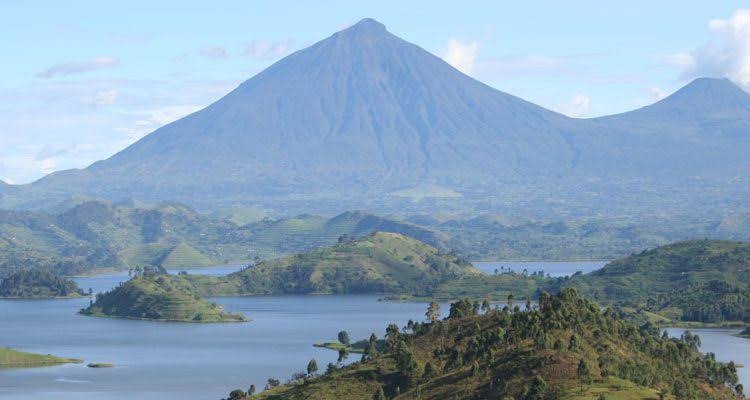
Mgahinga Gorilla National Park covers just 34 square kilometres in the far south-west corner of the country, in Kisoro District, where Uganda meets Rwanda and the Democratic Republic of Congo
TOURISM
At first light on the slopes above Kisoro, the mist lifts off three sleeping volcanoes like steam off a cup of tea. Somewhere in the bamboo, a family of eleven mountain gorillas is already awake. In Mgahinga, Uganda's smallest national park, the forest is small, the stakes are large, and the welcome is unhurried.
Mgahinga Gorilla National Park covers just 34 square kilometres in the far south-west corner of the country, in Kisoro District, where Uganda meets Rwanda and the Democratic Republic of Congo. It was gazetted in 1991, upgraded from a game reserve to protect the mountain gorillas that wander these slopes and to ease conflict with the farming communities pressed against its boundary. Its size is deceptive. The park forms the Ugandan third of the Virunga Massif, a transboundary landscape of volcanic peaks that shelters roughly half of the world's remaining mountain gorillas.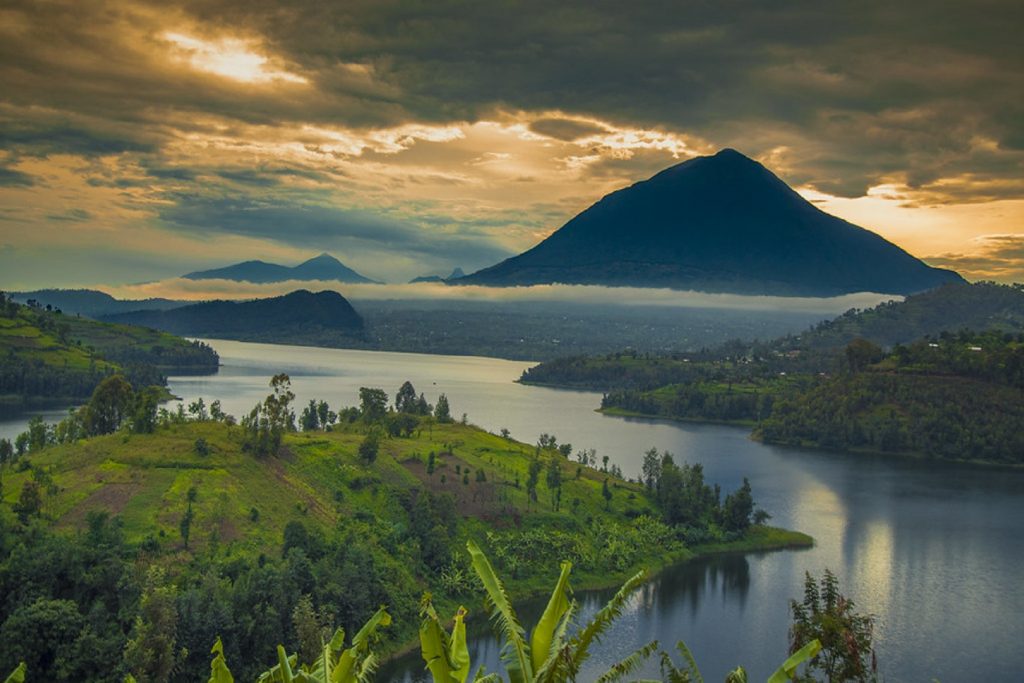
Three Volcanoes and One Famous Family
The park is defined by its extinct volcanoes. Sabyinyo, at 3,645 metres, is a jagged, tooth-like ridge whose summit is the point where three countries converge. Gahinga, at 3,474 metres, is the gentlest of the three, with a swampy crater lake at its top. Muhabura, at 4,127 metres, is the tallest and demands a full day, roughly eight hours for the round trip, with the reward of a crater lake and sweeping views across the Virungas.
Between those peaks lives the Nyakagezi gorilla family, the only habituated group in the park. It numbers about eleven animals, including several silverbacks, and it has a reputation for wandering. Because Nyakagezi has historically crossed freely into neighbouring Rwanda and Congo, trekkers are told to expect variable days: sometimes the gorillas are found within an hour, sometimes the search fills the morning. Only eight permits are issued daily, which keeps groups tiny and encounters quiet. The permit costs US$800 for foreign non-residents, with reduced rates for East African citizens.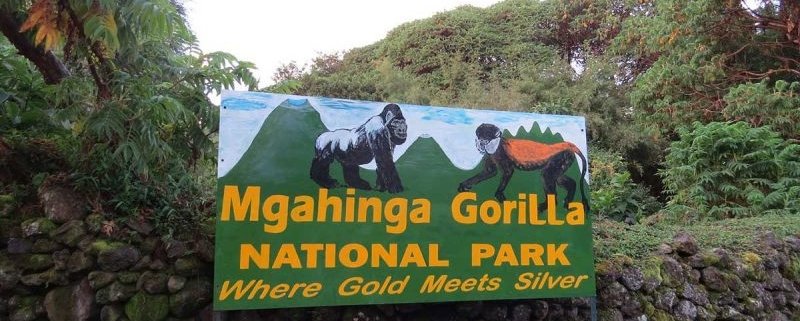
Golden Monkeys, Bamboo and the Batwa
Gorillas are not the only primate draw. Mgahinga is among the few places on earth to see the golden monkey, an endangered Virunga specialist with a burnished orange back that seems to glow against the green bamboo. Golden monkey tracking is available year-round and costs US$60, making it one of the most affordable primate experiences in the country. The animals live in large, restless troops, and photographers tend to leave with memory cards full.
The most moving experience may be human rather than animal. The Batwa, the original forest people of this region, lived in these forests for generations before the park was created and their eviction changed their lives. Today the Batwa Trail, a four-to-five-hour guided walk led by Batwa hosts, shares their knowledge of medicinal plants, hunting methods and forest ceremonies, and ends at Garama Cave, a lava tube more than 340 metres long that once served as a royal court and refuge. The experience costs US$80, and the income goes directly to a community that is still working to rebuild its livelihood.
Planning the Trip
Trekking operates year-round, but the driest months, June to September and December to February, offer the easiest trails. The wettest stretches, around April, May and November, mean muddier climbs but fewer visitors, and Uganda has traditionally offered discounted gorilla permits in those low-season months. Whatever the month, pack sturdy waterproof boots, gloves for gripping vegetation, rain gear and layers, since the altitude keeps mornings cool.
Getting there is easier than the remote location suggests. Kisoro town is roughly a 10 km drive from the park's Ntebeko gate. Travellers coming from Kigali can reach the area in about two and a half to three hours by road, which makes a combined Rwanda and Uganda itinerary practical. Charter flights from Entebbe take under two hours, compared with a long full day's drive from Kampala. Park fees for foreign non-residents include US$40 for entry, US$80 for volcano hikes, and the primate and cultural activities noted above. Gorilla trekking is limited to visitors aged 15 and over. Permits should be booked well ahead through the Uganda Wildlife Authority or a licensed operator, especially for the July to September peak.
This Week in Ugandan Tourism
Mbale takes the spotlight. Uganda marked World Tourism Day 2026 in Mbale, in the shadow of Mount Elgon, under the theme "Digital Agenda and Artificial Intelligence to Redesign Tourism." Reports from around 27 to 28 September say President Yoweri Museveni urged Ugandans, especially communities with little farmland, to see tourism as a route to household income. He unveiled a Tourism Conservation Strategy for the Elgon region and commissioned the Mbale Wildlife Conservation Education Centre, also known as the Mbale Zoo.
The numbers are moving. According to figures cited by the Ministry of Tourism, Wildlife and Antiquities ahead of the celebration, Uganda welcomed 739,815 international visitors in the first half of 2026, growth of 3.7 per cent. Tourism receipts rose 25.6 per cent to about 2.3 trillion shillings, and the average stay lengthened from 7.4 to 8.3 nights. Permanent Secretary Doreen Katusiime stressed that the digital transition must be inclusive so smaller operators are not left behind.
Europe is a growth market. At the World Tourism Day event, the Netherlands ambassador, Angèle Samura, said European arrivals to Uganda rose from about 38,000 in 2024 to about 150,000 in 2025, a figure that reinforces the Uganda Tourism Board's push into European markets.
Sports tourism gets a new event. On 26 August the Uganda Tourism Board launched Race the Nile, the country's first 800-kilometre, five-day, self-supported gravel bike race, starting and finishing in Arua across the West Nile region, a bid to draw adventure travellers to a lesser-visited corner of the country.
Expect caution around permit rumours. In September, a travel-industry outlet reported that it could not verify circulating claims of a new 10-metre gorilla viewing rule, mandatory masks and a universal eight-visitor cap in Uganda and Rwanda. Travellers should confirm any changes directly with the Uganda Wildlife Authority or their operator. Earlier this year, new gorilla families, Happy in Buhoma and Nshanjare in Rushaga, were opened to trekkers in Bwindi, and golden cat tracking began in Kibale.
Why Mgahinga Matters
Mgahinga will never be the busiest gorilla destination, and that is its charm. There are no crowds, only a few permits, and a landscape that feels like the edge of a map. For travellers willing to let the gorillas set the schedule, it offers something increasingly rare: a wild encounter that still feels like a privilege. As the mist lifts from Sabyinyo, Gahinga and Muhabura, it is easy to see why the region's guardians, from rangers to Batwa guides, work so hard to protect it.



