Written By |
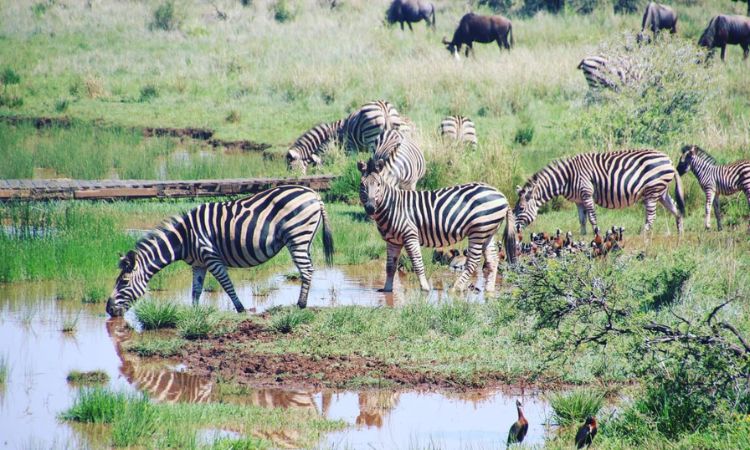
Lake Mburo National Park is, by Ugandan standards, small — just 260 square kilometers, making it the smallest of the country's savanna parks
FEATURE
There is a moment, just after sunrise on the water at Lake Mburo, when the mist still sits low over the reeds and a fish eagle calls somewhere unseen, that visitors describe as the one they didn't expect. Uganda sells itself, understandably, on gorillas in cloud forest and chimpanzees crashing through canopy. But tucked into Kiruhura District in the country's southwest, a four-hour drive from Kampala along a road that steadily trades wetland for rolling acacia hills, sits a park that behaves like nowhere else in Uganda: an open, breathing savanna where zebra move in loose herds across the grass and a boat, not a vehicle, is often the best way to get close to the wildlife.
Lake Mburo National Park is, by Ugandan standards, small — just 260 square kilometers, making it the smallest of the country's savanna parks. That modest footprint is precisely the point. Where Murchison Falls or Queen Elizabeth ask for days of driving to cover their range, Mburo rewards a shorter, denser visit, and its compact size concentrates wildlife sightings in a way larger parks rarely manage. It is also, notably, the only park in Uganda where the endangered eland, Africa's largest antelope, still roams, alongside impala found nowhere else within Uganda's protected-area system, giving the park a checklist all its own even for travelers who have already ticked off the country's marquee species.
The park's name carries its own local legend. According to Banyankole oral history, two brothers, Kigarama and Mburo, once lived in the valley now covered by the lake. Mburo, the story goes, ignored a warning delivered to him in a dream and the valley flooded overnight, drowning him and forming the lake that now bears his name — while his brother fled to the hills that still carry his. That braid of myth and landscape is typical of how western Uganda's communities have long narrated their terrain, and it gives the park a texture beyond its species list.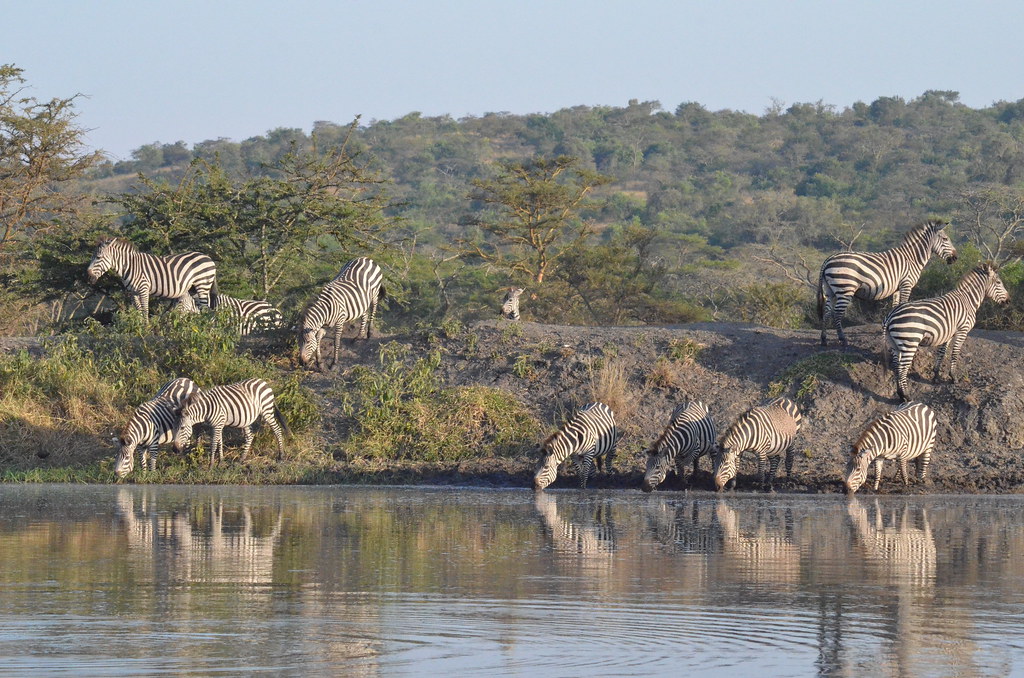
Its conservation history has been less gentle than its legend. The area was gazetted as a controlled hunting zone in 1933, elevated to a game reserve in 1963, and finally declared a national park in 1983 — a status that, unusually, was partly revoked six years later when the government resettled pastoralist communities on roughly two-thirds of the original land amid post-conflict land pressures. What remained was aggressively poached through the late 1980s and early 1990s, and the eland, zebra, and impala populations that visitors see today are the product of a deliberate, decades-long recovery managed by the Uganda Wildlife Authority. Zebra numbers alone are now estimated above 5,000, a striking turnaround for a species that was locally rare a generation ago.
What makes Lake Mburo worth the detour, beyond the wildlife itself, is the range of ways visitors are allowed to experience it. Because the park has no dangerous predators in large numbers beyond a notably dense, hard-to-spot leopard population — guides here consistently argue this is the best place in Uganda to encounter one — Mburo is one of the only parks in the country where walking safaris are permitted year-round, at roughly $30 for foreign visitors, putting travelers on foot among zebra, buffalo, and antelope with an armed ranger for company. Horseback safaris, offered by a private operator inside the park boundary, extend that same idea further: animals that startle at the sound of an engine will often let a rider approach quietly on horseback, producing some of the closest wildlife encounters available anywhere in East Africa. Boat cruises on the lake itself, meanwhile, drift past hippo pods, basking crocodiles, and a shoreline thick with birdlife, and remain the park's signature activity for travelers who prefer water to wheels. More conventional day and night game drives round out the options, alongside quad biking, sport fishing, and birding for a park that hosts over 350 recorded species, including the elusive African finfoot and the shoebill in the surrounding wetlands.
The dry seasons, roughly June through September and again December through March, are the most reliable windows, when thinning grass cover makes for easier sightings and dirt tracks stay passable. Entry costs for foreign non-residents run $40 for adults and $15 for children aged five to fifteen, with additional vehicle fees ranging from $30 for motorcycles to $50 for minibuses and pickups — modest by regional standards, and a fraction of the cost of the country's gorilla permits. For travelers threading together a Uganda itinerary, Mburo's position just off the highway to Bwindi and the southwestern parks makes it a natural stopover rather than a standalone destination, a place to break a long drive with wildlife rather than simply fuel and a meal.
This Week in Ugandan Tourism
Uganda closed out its tourism month with its largest set-piece event of the year: World Tourism Day was marked on September 27 at Mbale Secondary School grounds in the east, under the global theme “Digital Agenda and Artificial Intelligence to Redesign Tourism,” with President Yoweri Museveni attending as chief guest. Permanent Secretary Doreen Katusiime used the platform to push the sector toward digital inclusion, telling attendees that “our digital transformation must be inclusive — no tourism business should be left behind,” and pointing to AI's growing role in destination marketing and personalized visitor experiences. The Ministry used the occasion to release fresh performance data: 739,815 international arrivals in the first half of 2026, up 3.7 percent year-on-year, with tourism receipts climbing 25.6 percent to roughly 2.3 trillion Ugandan shillings and average visitor stays lengthening from 7.4 to 8.3 nights.
That eastern-Uganda momentum continues through September 30 with an “Explore Eastern Uganda” domestic tourism campaign designed to capitalize on the Mbale spotlight and encourage Ugandans to travel within their own country. Looking further ahead, the Uganda Tourism Board used a launch reception this month to announce the 2027 Future Hospitality Summit Africa, scheduled for February 2–3 at Kampala's Speke Resort Convention Centre in partnership with Kampala Serena Hotel; UTB chief executive Juliana Kagwa framed it as a venue where “investors, developers, and professionals meet, exchange knowledge, build relationships, and discover opportunities” across hotel development, aviation, and tour operations.
On the regulatory side, gorilla trekking economics remain in flux following the Uganda Wildlife Authority's biggest permit overhaul in years: a new low-season discount tier announced in late February set non-resident permits at $600 during April, May, and November against a standard $800, while a policy shift effective March 1 scrapped the old seven-day reservation hold, now requiring full payment at the time of booking. And on the festival calendar, organizers of Nyege Nyege confirmed its eleventh edition will run November 19–22 at Kalagala Falls on the Nile, this year built around a “Wakaliwood Edition” theme that turns part of the festival grounds into an active set for Uganda's homegrown DIY action-film studio, with more than 200 artists booked across the lineup.
Taken together, the week's headlines point to a tourism sector trying to do two things at once: modernize its marketing and booking systems while doubling down on the raw, physical experiences — a boat gliding past zebra at dawn, a horse stepping quietly through long grass — that no algorithm can replicate.



