Written By |
Semuliki National Park, Uganda's only true lowland rainforest, rewards the traveller who goes the extra mile
TOURISM
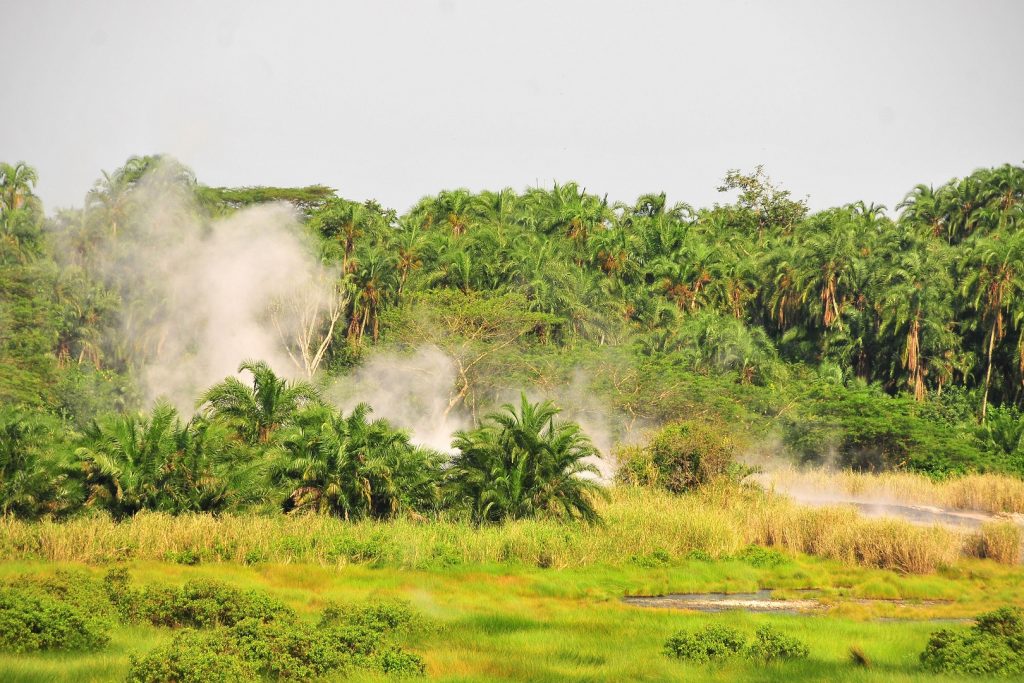
Before dawn in Bundibugyo, the forest hums like a held breath. Mist lifts off the canopy, a hornbill's wings clatter overhead like a rattling shutter, and somewhere beneath your boots the planet is quietly cooking. Walk a few hundred metres further and you find it: a pool of water so hot it bubbles and hisses, a plume of steam rising from the ground into the green gloom. This is Sempaya, and it is a reminder that Uganda sits astride a restless continental seam.
A Slice of the Congo Basin in Uganda
Semuliki National Park occupies roughly 220 square kilometres in Bundibugyo District, in Uganda's far west, pressed against the border with the Democratic Republic of Congo. It was gazetted as a forest reserve in 1932 and upgraded to national park status in 1993. Sitting at only 670 to 760 metres above sea level, far lower than the mountain parks that dominate Uganda's postcards, it is the country's only genuine lowland tropical rainforest, an eastern extension of the great Congo Basin forest that stretches across the continent.
That geography explains everything. Species that exist nowhere else in Uganda live here because this is the one place the Central African forest crosses the border. More than 120 mammal species have been recorded, among them forest elephants, chimpanzees, baboons, forest antelopes, hippos and crocodiles along the sinuous Semliki River. Some of the park's smaller residents, from flying squirrels to the pygmy antelope, are best met on a patient walk with a ranger rather than from a vehicle window.
A Birder's Pilgrimage
For serious birdwatchers, Semuliki is close to sacred ground. Around 435 bird species have been recorded, including some 35 Guinea-Congo forest biome species and 23 Albertine Rift endemics. Names that make listers' pulses quicken appear regularly in the trip reports: the Congo serpent eagle, Hartlaub's duck, the spot-breasted ibis, and a parade of hornbills, forest robins and rare kingfishers. Many of these birds are found nowhere else in East Africa, which is why dedicated birding itineraries often make the long drive west just for this forest.
The Hot Springs of Sempaya
The park's signature attraction is the pair of geothermal springs at Sempaya, known locally as the male spring, Bintente, and the female spring, Nyasimbi. Bintente is a wide, steaming pool where the water roils at a temperature hot enough that guides will happily boil an egg in it while visitors watch; Nyasimbi, a short walk away, jets steam from a smaller vent. Local legend gives each a personality, and rangers tell the stories with relish. A short trail through the forest leads to both, and the contrast between the cool, shadowed forest and the scalding water is one of the more surreal moments Uganda offers.
Beyond the springs, the Kirumia Trail winds through the forest along the Semliki River, with the chance of primates, elephants and birds on the way, and guided chimpanzee and nature walks are available through the Uganda Wildlife Authority. Community experiences with the nearby Batwa and Bamaga people add a cultural dimension, and the Ntandi side of the park serves as the usual gateway for visitors.
Planning Your Visit
Semuliki lies about 180 kilometres from Fort Portal, and the drive from Kampala to Fort Portal typically takes four to five hours via Mubende before the final leg west over the Rwenzori foothills and down into the Bundibugyo basin. Most visitors combine it with Kibale National Park, Fort Portal's crater lakes or the Rwenzori Mountains, and break the journey with a night in or near Fort Portal.
The dry seasons, broadly December to February and June to August, are the most comfortable for walking, although the rains create dramatic flooded forest scenes and the birding can be excellent year-round. Bring waterproof layers, sturdy boots, insect repellent and plenty of water, since the lowland air is hot and humid. Current park entry fees listed by the Uganda Wildlife Authority are US$35 for foreign non-residents, US$25 for foreign residents and UGX 15,000 for East African citizens; guide fees and activity charges are extra, and prices change, so confirm with UWA or your operator before travelling.
This Week in Ugandan Tourism
Ebola-free declaration (27 September 2026). The World Health Organization and Africa CDC formally declared Uganda free of the 2026 Bundibugyo Ebola virus outbreak, an announcement that coincided with World Tourism Day on 27 September and removes a major cloud over travel to the country.
US$1.6 billion tourism push launched in Mbale (30 September 2026). Government used World Tourism Day celebrations in Mbale to unveil a US$1.6 billion tourism strategy. President Museveni declared that Uganda is open for business and open for tourism. The plan leans on AI-driven destination marketing and diversifies beyond safaris toward the Elgon region, with waterfalls, hiking, culture and Arabica coffee experiences.
The numbers behind the push. Officials cited 1.64 million international arrivals and about US$1.62 billion in foreign exchange earnings for 2025, with the sector budget for 2026/27 set at Shs 567 billion and the industry supporting more than 876,000 jobs, close to 6 percent of GDP. The main challenge named was converting online interest into actual bookings.
New wildlife education centre for Mbale. A wildlife education centre in Mbale City is intended to anchor a new Elgon tourism circuit and encourage visitors to stay longer in the region.
UTB courts the media ahead of AFCON 2027 (18 September 2026). The Uganda Tourism Board hosted editors and producers at a Kampala breakfast to shape the national tourism narrative, with sports tourism around the 2027 Africa Cup of Nations a stated priority.
The Last Word
Semuliki will never draw the crowds of Bwindi or Murchison Falls, and that is precisely its charm. It asks for a long drive and a little patience, and returns a forest that feels older than the borders drawn through it, birds that cannot be ticked off anywhere else in the country, and the unforgettable sight of the earth boiling in the shade of giant trees. With Uganda newly declared Ebola-free and a fresh marketing drive under way, the far west may soon find itself on more itineraries. Go before it does.



