Written By |
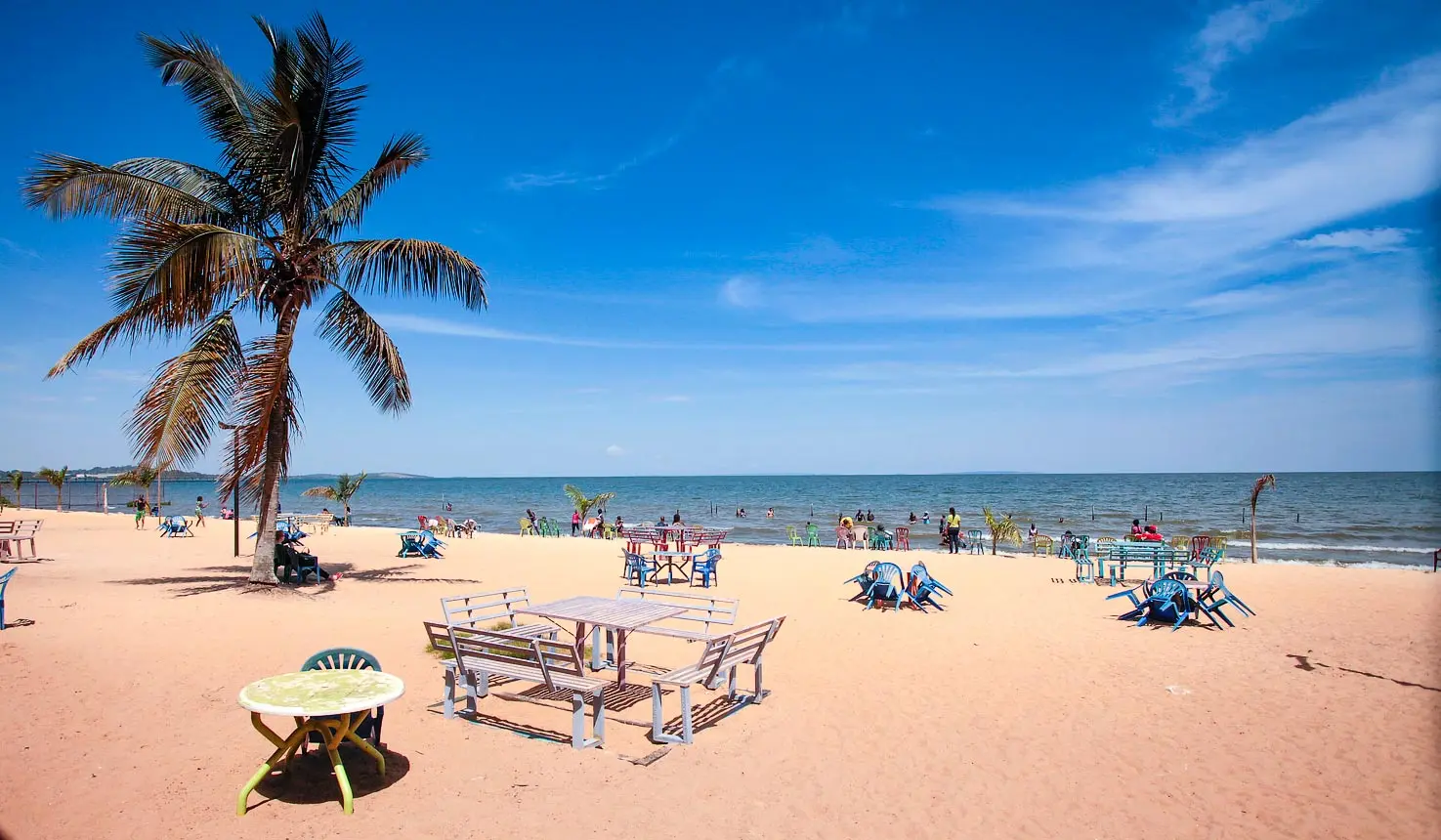
Entebbe's Lake Victoria beaches, where Uganda's oldest capital still keeps its feet in the water
The light goes first. By six in the evening the sun drops behind the papyrus on the far side of the bay and the whole of Lake Victoria turns the colour of weak tea, then copper, then nothing at all. On the sand at Lido, somebody kills the music for a moment. A fisherman poles a wooden boat past the swimming buoys, close enough that you can hear the water slapping the hull, and a line of marabou storks stands along the shore like badly dressed ushers waiting for a wedding to end. Kampala is thirty-four kilometres away and might as well be on another continent.
This is Entebbe, and it does not really behave like a city. It behaves like a long green thumb pushed into the largest lake in Africa, which is precisely what it is.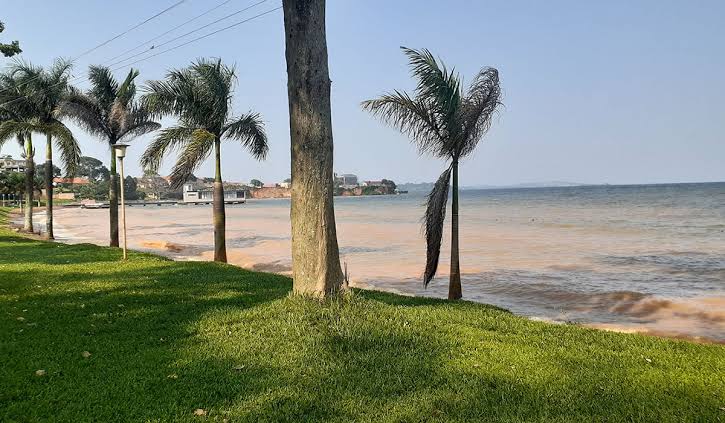
A Peninsula Named for a Chair
The name comes from Luganda: e ntebe, the seat or the chair. Long before any European saw it, this ground belonged to the Mamba clan, and the settlement was known as entebbe za Mugula after the title of the chief who held court here. The seat, in other words, was already a seat.
In 1893 Sir Gerald Portal, casting about for somewhere healthy and defensible to run a new protectorate from, chose the peninsula. By 1894 Entebbe was the administrative capital of the Uganda Protectorate, and it stayed that way for sixty-eight years, until independence in 1962 moved the machinery of government up the road to Kampala. What Entebbe kept was the layout: low buildings, wide verges, absurd quantities of greenery, and a deliberate refusal to build anything tall enough to block the view of the water. The Botanical Gardens, laid out in 1898, are still there at the bottom of the hill, seventy-odd acres of equatorial planting that now double as one of the best casual birding sites in the country.
Losing the capital turned out to be the making of the place. Entebbe became the town people pass through rather than the town people fight over, and it settled into the role with obvious relief.
The Shoreline
Lake Victoria covers some 68,800 square kilometres, which makes it the second-largest freshwater lake on the planet and gives Entebbe a horizon rather than a far bank. The town's beaches string out along the northern shore, and each has a distinct personality.
Lido Beach is the elder statesman, the oldest private beach on this stretch of coast, with the manicured lawn and the slightly formal air of a place that has been hosting Sunday afternoons for decades. Aero Beach, a few minutes along, is the eccentric: a beach built around a small graveyard of retired aircraft, where children clamber over a grounded fuselage while their parents order tilapia, and where entry runs around UGX 11,000. White Sands trades in noise and motion — jet skis, beach volleyball, a DJ who does not believe in quiet afternoons. Imperial Resort Beach is the polished option, with day passes in the region of UGX 50,000 buying access to pools, loungers and a version of the lake with the rough edges sanded off. Further east, past Kampala, the Munyonyo Commonwealth Resort keeps its own stretch of shore for a more corporate crowd.
Beyond the sand the day fills itself easily. The Uganda Wildlife Education Centre — everyone still calls it the zoo — sits on the lakeshore and charges around USD 15 including a guide, with behind-the-scenes access at USD 70. An hour out by boat, Ngamba Island shelters roughly fifty orphaned chimpanzees, and half-day visits run USD 50 to 80. West of town, the Mabamba wetland is the near-certain place in Uganda to stand in a dugout and look a shoebill in the eye; going directly to the site costs about USD 8 in entry with a boat and guide near USD 50, while packaged trips from Nakiwogo landing run from roughly USD 30 to USD 75 per head depending on group size. And for anyone with a spare two days, the ferry from Nakiwogo crosses to the Ssese Islands, an archipelago of eighty-four islands with the finest beaches in the country and almost nobody on them.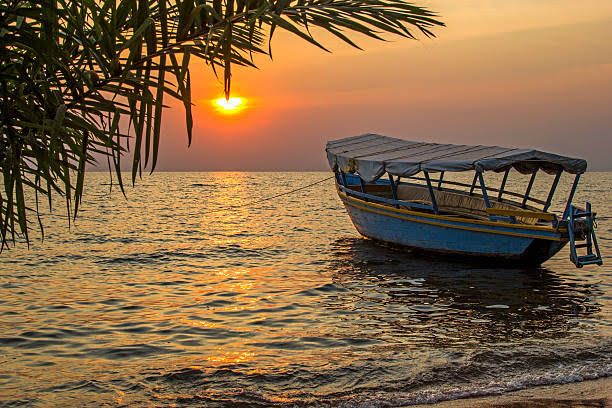
Practical Information
Getting there is the easy part: Entebbe International Airport is in the town, not an hour from it, and most visitors are on the sand within twenty minutes of clearing customs. That proximity is Entebbe's real asset — it is the natural bookend to any Ugandan itinerary, the place to shed jet lag on arrival or to decompress before a long flight home.
The best weather falls in the drier windows of December to February and June to August, with July through September reliably pleasant; daytime temperatures sit around 25 to 28 degrees Celsius year-round, which is what sitting on the equator at 1,130 metres will do. April is the wettest month by a wide margin, though rain here tends to arrive as a decisive afternoon downpour rather than a grey all-day drizzle.
One genuine caution. Bilharzia is present in Lake Victoria, and it concentrates where the snails that carry it live — in the reeds, the shallows and the muddy margins. Swim from a jetty, a pontoon or a boat in deep clear water rather than wading out through vegetation, use the designated swimming areas at the established beaches, and if you do swim, towel off briskly. Plenty of lodges on the shore offer pools for exactly this reason. It is a manageable risk, not a reason to stay dry, but it is worth knowing before you wade in.
This Week in Ugandan Tourism
The last ferry back from Ssese has gone and the beach bars are filling. Somewhere out past the buoys a fish eagle makes the sound that every documentary about Africa has borrowed at least once. Entebbe has been the seat for a very long time, and on an evening like this it is easy to see why nobody has ever felt much need to get up from it.
Prices and dates were current at the time of writing and should be confirmed with operators before travel.



