Written By |
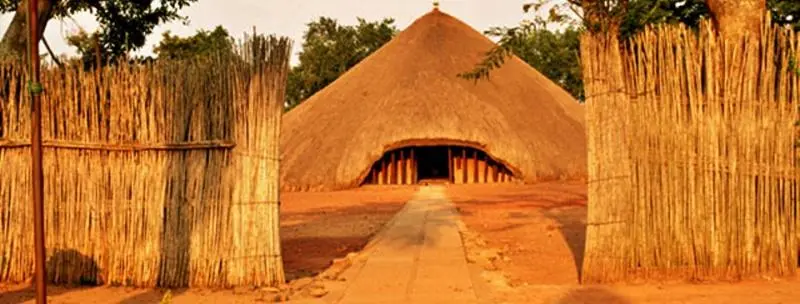
The Kasubi Tombs sit on a hill in Kampala's Lubaga division, a short drive from the city centre, and they are among Uganda's most important cultural places.
Kasubi Tombs, Kampala
At the Muzibu Azaala Mpanga, the great thatched house at the heart of Kasubi Hill, the air changes before you cross the threshold. Voices drop. Shoes come off. A bark-cloth curtain hangs across the dark interior, and behind it, by tradition, rest the Kabakas of Buganda. For sixteen years that curtain was closed to the public. Now, rebuilt largely by hand from reed, wood and the memory of elders, it is open again.
A Kingdom's Spiritual Heart
The Kasubi Tombs sit on a hill in Kampala's Lubaga division, a short drive from the city centre, and they are among Uganda's most important cultural places. The site is a UNESCO World Heritage Site and the burial ground of four Buganda kings. Kabaka Mutesa I built the original palace structure in 1882, two years before he died. In keeping with Buganda custom, a king's palace became his burial place when he died, and his successor built a new palace nearby. The compound grew into a complex of royal houses, courtyards and shrines on roughly 63 acres.
The centrepiece is the Muzibu Azaala Mpanga, about 25 feet tall and shaped like an upturned basket. It is not seen as a house so much as a vessel: a spiritual space where the living and the royal dead meet. Behind the bark-cloth curtain lie the burial chambers. Royal widows, in one-month shifts, receive visitors, and the keepers of the site still follow clan roles that determine who may touch what.
Fire and Recovery
On 16 March 2010, a fire destroyed the main building. Because the structure was built almost entirely of plant materials, it burned quickly. The cause has never been made public. Grief and anger followed across Buganda, and unrest in Kampala turned deadly in the days that followed. UNESCO placed the site on its list of World Heritage in Danger.
The rebuilding took far longer than anyone hoped. Architect Jonathan Nsubuga, who led the work, prefers to call it "recovery, not reconstruction," and the distinction matters. Many of the traditional skills needed, from thatching to the preparation of bark cloth, were at risk of disappearing, so new craftspeople had to be trained. Work was bound by clan roles and by ritual guidance. The Buganda Kingdom declared the restoration complete after a visit on 12 December 2025, noting new protections for the site, including a perimeter wall, on-site firefighting equipment and a water reservoir. By April 2026, international coverage reported that the tombs had reopened to pilgrims and tourists. Reports at that time indicated that a further ceremonial step, tied to the thatch at the entrance, was still to come, so visitors should check the current status of any ceremonies with the site before they travel.
What You Will See
A visit begins with a guide, usually a member of the site's custodial community, who walks you through the history of the four kings and the symbolism of the architecture. You will see the Muzibu Azaala Mpanga from its courtyard and, as a respectful visitor, you may be invited inside the outer area. Pilgrims kneel before photographs of the Kabakas, and you are expected to observe quietly. Look for the drum house, the surrounding huts of the widows and custodians, and the thatching, whose reed-and-grass textures are the real subject of the restoration story.
Etiquette is part of the experience. Dress modestly, remove your shoes where asked, ask before photographing people or interiors, and follow your guide's instructions about which spaces are off limits. This is a living shrine, not a museum.
Planning Your Visit
Kasubi lies in Kampala, so it is simple to combine with other city sights such as the Buganda Parliament at Bulange, the Kabaka's Lake, the Uganda Museum and the Namugongo shrine. It works well as a half-day outing and is a good choice on a rainy afternoon, when national park activities are less appealing. Boda-bodas, ride-hailing cars and taxis all reach the hill; a private driver or a guided city tour avoids the Kampala traffic. The dry months of December to February and June to August are the most comfortable for walking, though the site is visitable year-round.
I could not confirm current entrance fees, opening hours or the status of the remaining ceremonies from the sources available for this story, and prices for foreign and East African visitors usually differ. Confirm these with the Buganda Kingdom, the site management or the Uganda Tourism Board before you go, and carry small cash for guide tips and craft purchases.
This Week in Ugandan Tourism
Please note that the sources I could find for this edition were dated across recent months, so the items below are the most recent confirmed developments rather than strictly from the past seven days. Dates are given for each.
Free national park entry (25 to 27 September 2026). The Ministry of Tourism, through State Minister Susan Nsambu Nakawuki and the Uganda Wildlife Authority, announced in July that Uganda's national parks would open free of entrance fees for three days in late September, for both Ugandans and foreign visitors. Officials said the aim was to show that Uganda is safe and welcoming after a recent Ebola outbreak and to counter some foreign travel advisories. Activities such as game drives and boat cruises may still carry charges. The window has now closed, but the campaign signals a push to win back confidence.
Kasubi Tombs reopen (April 2026). International reporting on 21 April 2026 described the reopening of the Kasubi Tombs to the public after sixteen years, following the Buganda Kingdom's December 2025 declaration that the restoration was complete.
10th Pearl of Africa Tourism Expo (launched 25 May 2026). President Yoweri Museveni launched the tenth Pearl of Africa Tourism Expo at Speke Resort Munyonyo in Kampala. Reports said the tourism budget had risen by 12 percent, visitor numbers from Europe were up, and officials expected the Africa Cup of Nations to boost arrivals. Museveni also spoke of friendlier visa arrangements, including longer tourist visas, and said the Ebola outbreak could be managed through early detection and targeted measures rather than border closures.
Record sector figures (published 30 April 2026). The Ministry of Tourism, Wildlife and Antiquities reported that in 2025 Uganda received more than 1.6 million international visitors, with tourism earnings of UGX 5.8 trillion (about USD 1.62 billion). Visitors stayed an average of 8.8 nights and spent about USD 986 per trip. The sector contributed an estimated 5.9 percent of GDP and supported more than 876,000 direct jobs.
The Takeaway
Kasubi matters because it is more than a rebuilt monument. It is evidence that a skill-based, community-held tradition can be revived when a kingdom, craftspeople and conservationists work together. For travellers who come to Uganda for gorillas and savannah, a few hours at Kasubi adds a dimension no park can offer: a sense of who has lived on this land, what they hold sacred and how they have refused to let it disappear.



