Written By |
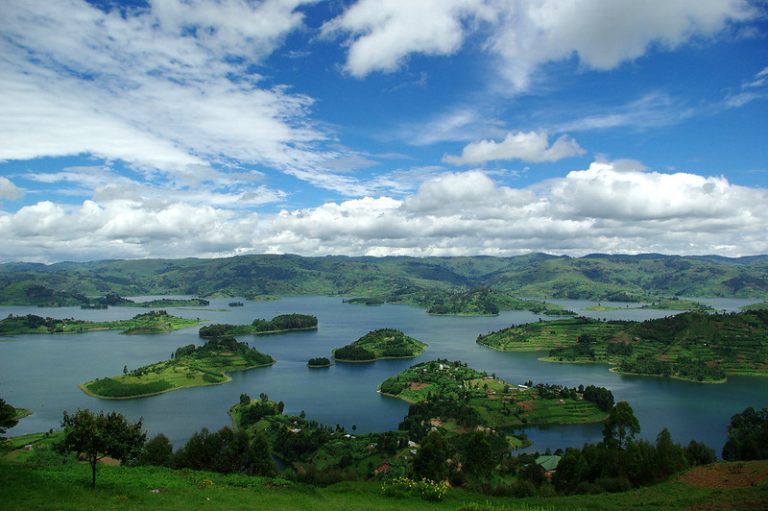
Lake Bunyonyi sits in Kabale District, about 15 kilometres from Kabale town and roughly 466 kilometres by road from Kampala, at an elevation of around 1,960 metres
Kabale District
At dawn, the water of Lake Bunyonyi is so still that the terraced hills seem to hang in it twice: once green and steep against the sky, once upside down beneath the dugout canoes. Woodsmoke drifts up from the slopes, a fisherman's paddle breaks the mirror, and somewhere in the papyrus a bird begins a song that will be answered a hundred times before breakfast. This is south-western Uganda at its quietest, and for the traveller coming down from the gorilla forests of Bwindi or the bustle of Kampala, it feels like exhaling.
Lake Bunyonyi sits in Kabale District, about 15 kilometres from Kabale town and roughly 466 kilometres by road from Kampala, at an elevation of around 1,960 metres. The name is usually translated as "place of little birds," and the lake lives up to it, with more than 200 bird species recorded around its shores. It stretches some 25 kilometres in length and is dotted with about 29 islands, its shoreline so crinkled by drowned river valleys that from above it resembles a dropped ribbon. The Bakiga people farm the surrounding hillsides in patient terraces of beans, sorghum and potatoes, and their pace of life seems to have infected the visitors too.
A word on depth, because it is the most repeated claim about the lake. Many tour operators describe Bunyonyi as the second deepest lake in Africa, with figures of around 900 metres quoted. That number should be treated with caution; measured surveys cited elsewhere put the lake's depth at only a few dozen metres. Either way, the water is dark, cold-looking and quiet, and one of the lake's great selling points is that it is widely described as free of bilharzia, making it one of the few places in Uganda where swimming is considered safe.
The lake's history is as layered as its scenery. Its islands carry names and stories that guides will tell on the standard two-hour boat cruise. The best known is Akampene, Punishment Island, a tiny islet where, according to local tradition, unmarried girls who became pregnant were once left to die or be rescued by men unable to afford a bride price. Visitors today see a single tree and a patch of grass, and the guides tell the tale with a gravity that tends to quiet the boat. Other islands tell of a more recent past, including missionary history and the wild settings that now host small lodges.
What to do here is, happily, mostly nothing in a hurry. The classic activity is paddling a dugout canoe, often hand-carved by local craftsmen, between islands and along reed-fringed channels. Birders can find herons, kingfishers, cormorants and, with luck, the grey crowned crane and papyrus specialists, while walkers can follow village trails over the ridges for views that stretch toward the Virunga volcanoes on a clear day. Community walks led by local guides take visitors into homesteads to see farming, basket weaving and traditional dance. Many travellers fold a night or two at Bunyonyi into a southwestern circuit, using it as a recovery stop after a hard morning gorilla trek in Bwindi or Mgahinga, which are within a few hours' drive.
Accommodation spans the full range, from simple backpacker campsites and island hostels to boutique lodges with lake-view cottages and spas. Prices vary widely by season and operator, so check directly with lodges before booking. Lake Bunyonyi welcomes visitors all year, but the drier months, roughly June to August and December to February, make for easier road travel and clearer views, while the rainy seasons turn the hills intensely green and the trails slippery.
Getting there is part of the story. From Kampala, the drive to Kabale takes around eight hours by bus or private car, after which it is a 20 to 25 minute transfer down to the lakeshore. From Kigali in Rwanda, the journey is about two hours by car via the Katuna border, which has made Bunyonyi a popular add-on for travellers combining Rwanda's gorillas with Uganda's. Most lodges arrange boat pick-ups from the public landing sites, so confirm your landing point before you set off.
This Week in Ugandan Tourism
Digital and AI push (1 October 2026). Uganda's tourism sector used the fourth annual Tourism Development Programme Performance Review Conference, themed "Digital Agenda and Artificial Intelligence to Redesign Tourism," to argue that emerging technologies can improve destination marketing, visitor experience and data-driven planning. Hon. Henry Musasizi, Minister of State for Finance, Planning and Economic Development, was chief guest, according to the Uganda Broadcasting Corporation.
Record earnings (reported May 2026). The Daily Monitor reported that tourism earnings reached a record US$1.7 billion in 2025, up from US$1.28 billion in 2024, while international arrivals rose from 1.3 million to 1.65 million. Uganda Tourism Board CEO Juliana Kagwa said familiarisation trips by buyers from Turkey, Egypt, China and Canada were helping business partnerships move faster ahead of the Pearl of Africa Tourism Expo.
Outreach in Ethiopia (2026). Uganda showcased its offerings at Oromia Tourism Week 2026 in Addis Ababa, part of a continuing effort to court regional and high-value markets, as reported by ChimpReports and SoftPower News.
Tighter primate permit controls (January 2026). AllAfrica reported that the Uganda Wildlife Authority overhauled how gorilla and chimpanzee permits are issued in order to tighten controls, a change that matters to anyone planning a Bwindi or Mgahinga trip that includes a stop at Bunyonyi. Travellers should confirm current rules and prices directly with UWA or a licensed operator.



