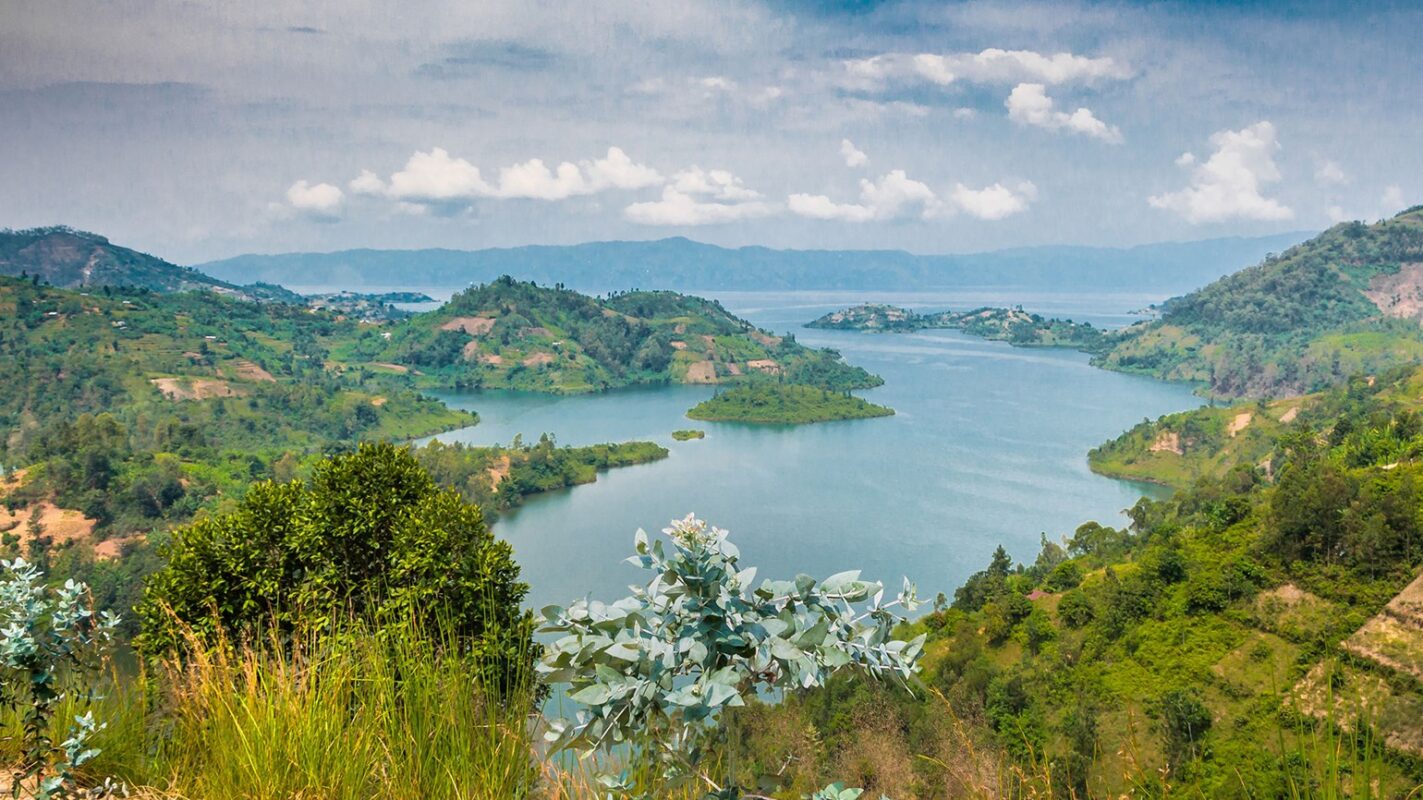
Eighty-four islands sit in the northwest corner of Lake Victoria, holding Buganda’s oldest shrines, some of Uganda’s quietest beaches, and a question the country is now asking out loud: what should a Ugandan holiday actually feel like?
Kalangala District
The MV Kalangala pulls away from Nakiwogo pier at two in the afternoon and for the first hour there is nothing to look at but water. Entebbe thins to a green smudge. The lake goes from brown to grey to a blue that does not look like a lake at all. Then, sometime after four, a long dark line rises on the horizon and keeps rising — forest, not cloud — and the passengers who have made this crossing before start gathering their bags. Bugala Island is fifty-three kilometres end to end, and from the deck of an approaching ferry it reads less like an island than like a coastline.
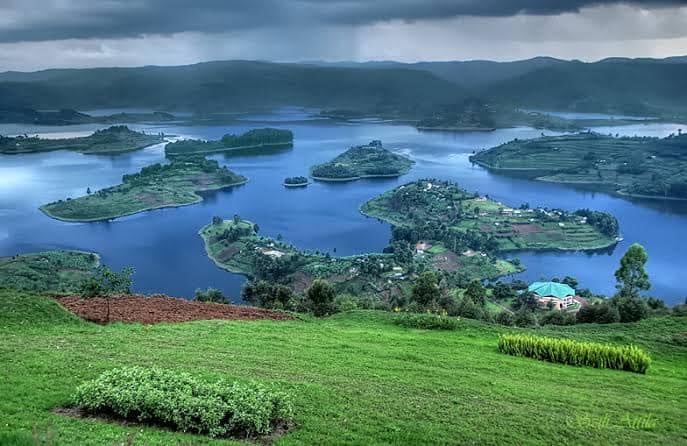
This is Ssese: eighty-four islands scattered across the northwestern corner of Lake Victoria, roughly forty-three of them inhabited, all of them administered from a small town called Kalangala on Bugala’s southern shore. It is the closest thing Uganda has to a beach holiday, and one of the very few places in this landlocked country where a traveller can end the day with sand underfoot and the sun going down over open water. It is also, by some distance, the most spiritually loaded ground in the Buganda Kingdom.
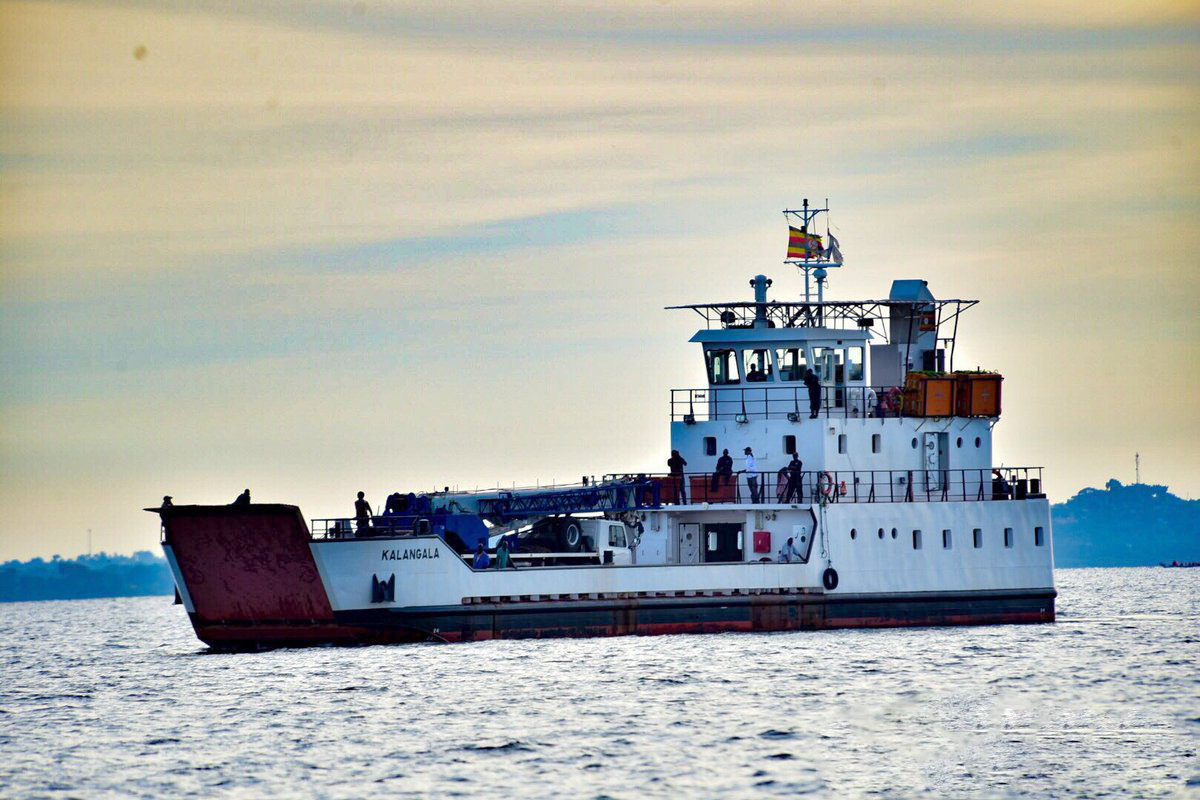
MV Kalangala
Where Kintu may have begun
The first people of these islands were the Bassese, close kin of the Baganda and Basoga but speakers of their own language, Lussese. Their own accounts of how they came to be here do not bother with modesty. One tradition holds that Kintu — the first Muganda, the founding ancestor of the kingdom — lived on these islands, and that Buganda itself began out here on the water rather than on the mainland. Another describes the Mbirimu, enormous spirit beings who could take human or animal form; in one telling, a spirit who had become a woman gave birth to twins, a boy and a python. The boy grew into a traditional healer and built his brother a shrine.
Whatever a visitor makes of the stories, the practice built on them was real and institutional. The Baganda regarded Ssese as the islands of the gods, and in pre-colonial times the kings of Buganda made the crossing to pay tribute at the shrines of the Balubaale — among them Musisi, who governed earthquakes, and Waneema on Bukasa Island. The greatest of them was Mukasa, the lake god, whose favour decided whether a fishing canoe came home. Shrines survive across the archipelago, and on the smaller islands they are not museum pieces; they are still visited, still maintained, still approached with the appropriate quietness.
Then the islands were nearly emptied. Between 1902 and 1909 a sleeping sickness epidemic killed roughly two thirds of the population, and the British colonial administration evacuated the survivors to the mainland. Ssese spent decades close to abandoned, which is a large part of why its forests are as intact as they are. Repopulation was slow and then sudden: about 35,000 people in 2002, roughly double that by 2015, driven mostly by fishing and by oil palm. Bidco’s plantation on Bugala now covers something in the order of 6,100 hectares, and the plantation is the argument that runs underneath every conversation about the islands’ future — the same crop that paid for the roads and the electricity is the one eating the forest the tourists come to walk in.
What there is to do, and the case for doing very little
Ssese rewards the traveller who arrives without a plan. Mutambala Beach, a short ride from Kalangala town, is the one most people end up on — a long sweep of sand where swimming is genuinely pleasant, which cannot be said of much of Lake Victoria’s shoreline. Lutoboka, where the Entebbe ferry docks, has its own strip of beach and most of the island’s lodges within walking distance of it.
Behind the beaches the equatorial forest starts almost immediately, and it is full of birds: this is one of the better birding destinations in central Uganda, and one of the least worked. Guided forest walks turn up black-and-white colobus and vervets, and the walk from Kalangala over the ridge to the western shore is a couple of unhurried hours through palm, bush and old forest. Fishing villages ring the island, and a morning spent going out with a crew — arranged informally, usually the evening before, usually cheaply — is the single best way to understand how these islands actually make their living. Sport fishing for Nile perch can be arranged through the larger lodges. Quad biking, kayaking and sunset cruises fill the gaps.
A caution worth stating plainly: bilharzia is present in Lake Victoria, and while the deeper, wave-washed beaches on the islands are considered lower risk than sheltered mainland shallows, travellers who swim should plan on praziquantel treatment afterwards. Malaria prophylaxis is sensible. Neither is a reason not to come; both are reasons to prepare.

Practical information
Getting there. The MV Kalangala sails once daily from Nakiwogo pier in Entebbe at 2:00 p.m., arriving at Lutoboka on Bugala around 5:30 p.m.; the return leaves Kalangala at 8:00 a.m. and docks in Entebbe around 11:30 a.m. Boarding opens at 1:00 p.m. and the schedule is kept. Fares have run around UGX 10,000 economy and UGX 14,000 first class, though travellers should confirm current rates before travelling. The cheaper and more flexible route is via Masaka: drive to Bukakata and take the free government ferry across to Luuku on Bugala, a forty-five-minute crossing with departures roughly every half hour through the day. From Kampala, allow four to five hours to Bukakata. Charter flights to the island airstrip are available for those with the budget.
Staying. Bugala now carries more than forty hotels and guesthouses with something approaching 700 rooms between them — three of them genuinely high-end. Simple guesthouses in Kalangala town start around UGX 28,000 a night; full-board beach resorts at the top of the market run to roughly UGX 500,000. Brovad Sands Lodge, Mirembe Resort, Ssese Habitat and Panorama Cottages are among the established names, and Victoria Forest Resort sits on Bunyama with a forest setting of its own. Book ahead for weekends and public holidays, when Kampala arrives in force.
When to go. Ssese is a year-round destination with no park entry fee. The drier stretches — roughly December to February and June to August — give the calmest water and the best crossings. The rains bring green and quiet and cheaper rooms, and the lake can get rough enough to delay small boats. Midweek is emptier than weekends, everywhere and always.
Getting around. All roads on Bugala have been under reconstruction with Uganda Road Fund money, and boda bodas remain the default way to move between Kalangala, Lutoboka and the beaches. More than 5,000 homesteads on the island now have electricity from local solar and thermal generation, with undersea cable laid to connect Kalangala to the national grid — an unglamorous detail that has done more for the island’s hospitality sector than any marketing campaign.
This Week in Ugandan Tourism
Free entry to every national park, 25–27 September. The Uganda Wildlife Authority has confirmed its 2026 Open Park Days for the last weekend of this month, with no entry fee at national parks countrywide for three days, open to Ugandans and foreign visitors alike. Dorcus Rukundo, UWA’s acting Commissioner for Tourism and Business Development, framed it simply at the launch: before Ugandans celebrate tourism, they should first go and see the country. Expect the parks to be busy.
Mbale hosts World Tourism Day on 27 September. The national celebrations move to Mbale City this year, a deliberate push to pull visitors and spending into the east and to put Mount Elgon, Bugisu coffee and local heritage in front of a national audience. Ssuna Ben, Spice Diana, Fik Fameica and Ykee Benda headline. This year’s global theme — “Digital Agenda and Artificial Intelligence to Redesign Tourism” — is unusually well matched to a country whose attractions are still under-represented in the places travellers search, compare and book.
From volume to value. Sector leadership has spent the year reframing the target away from headline arrival numbers and towards standards, spend per visitor and service quality, with the Pearl of Africa Tourism Expo awards launched around that shift. Uganda recorded more than 1.6 million international arrivals in 2025 against tourism earnings of roughly UGX 5.8 trillion; the working expectation for 2026 is in the region of 1.5 million arrivals and about UGX 4.8 trillion — a deliberate trade of volume for value that will be judged on receipts rather than headcount.
Gorilla permits settle at the new tariff. Under the UWA tariff structure that took effect this year, a Bwindi or Mgahinga gorilla permit costs USD 800 for foreign non-residents in high season and USD 600 in the April, May and November low season, USD 700 for foreign residents, USD 500 for Africans and UGX 300,000 for East African citizens; habituation permits run USD 1,800. The seven-day courtesy hold is gone — since 1 March, full payment is due at booking, and foreign visitors book through licensed Ugandan operators. Anyone planning a 2027 trek should treat permits as the first booking made, not the last.
Marketing abroad, investment at home. Uganda showed at FITUR in Madrid earlier this year and has continued a European push alongside more than €40 million in tourism-linked investment and a growing MICE and business-tourism programme that pairs conference infrastructure with coffee and aviation. The through-line is consistent with what is happening on Ssese: less shouting about the Pearl of Africa, more building of the things a visitor actually uses.
Published By | Features Editor