Written By |

Somewhere in that green tangle, a silverback the size of a small refrigerator is finishing his breakfast of wild celery
The fog does not lift so much as loosen.
At first light on a ridge above the Buhoma valley, the Bwindi Impenetrable Forest is a single grey exhalation, and then, tree by tree, it becomes a place: buttressed mahoganies dripping with epiphytes, the metallic ring of a mountain greenbul, a trail of crushed vegetation disappearing downhill. Somewhere in that green tangle, a silverback the size of a small refrigerator is finishing his breakfast of wild celery. You have paid eight hundred United States dollars, flown across a continent, and hiked for three hours through mud that grips your boots like a handshake, for one hour in his company. Almost everyone who does it says the same thing afterward, quietly, on the walk back out: it was worth it.
This is the strange economy of Bwindi Impenetrable National Park, a UNESCO World Heritage Site tucked into the far southwestern corner of Uganda where the country crumples up against the Democratic Republic of Congo and Rwanda. It is one of the most biologically dense forests in East Africa, one of the oldest, and — for the mountain gorilla, an animal that exists nowhere in captivity anywhere on Earth — one of the last refuges. Today, Bwindi is the flagship of Uganda's tourism ambitions and a working case study in whether wild animals can pay for their own survival.
A forest older than the last ice age
Bwindi's name, in the local Runyakitara, comes from “mubwindi” — a place of darkness — and the forest earns it. Draped across steep Albertine Rift ridges between roughly 1,160 and 2,607 metres above sea level, its canopy is so tightly woven that colonial-era surveyors gave up and simply labelled it “impenetrable.” The forest is estimated to be more than 25,000 years old, having survived the last ice age as a refuge for species that vanished elsewhere. That deep continuity is why its 321 square kilometres hold such extraordinary variety: over 120 mammal species, more than 350 species of birds including some two dozen Albertine Rift endemics, upwards of 200 butterfly species, and eleven primates, among them the boisterous L'Hoest's monkey and troops of black-and-white colobus that pour through the treetops like spilled ink.
Protection came in fits and starts. Two forest reserves, Kayonza and Kasatora, were combined in 1942 into the Bwindi Impenetrable Central Crown Forest Reserve; the area was made a gorilla sanctuary in 1964, and finally gazetted as a full national park in 1991. Gorilla tourism began in 1993–94, and it changed everything — for the animals, for the state's finances, and, most contentiously, for the Batwa, the forest's original hunter-gatherer inhabitants, who were moved out when the park was created and whose fraught, still-unresolved relationship with the forest remains part of Bwindi's story.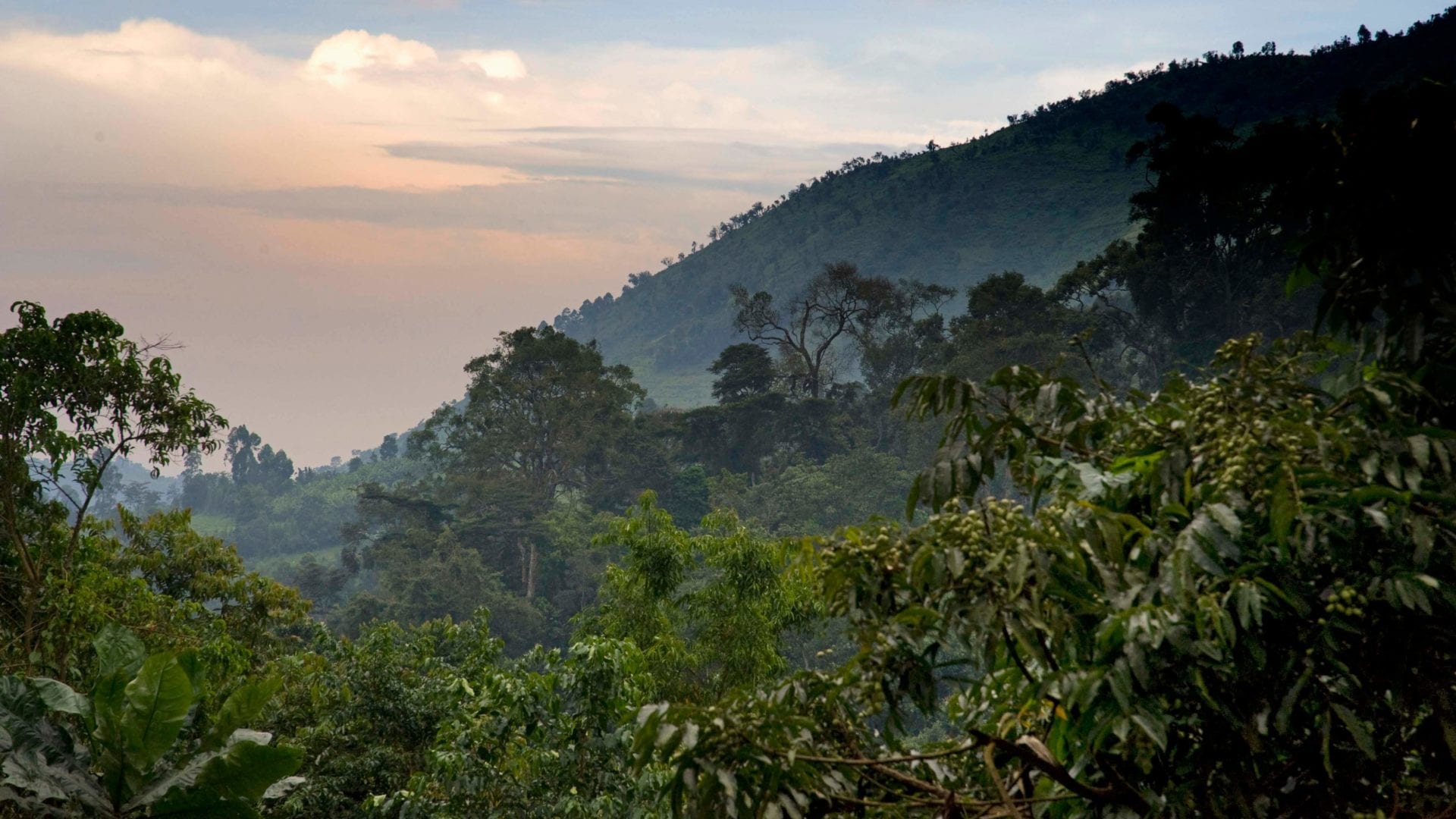
The one hour that anchors an industry
More than half the world's mountain gorillas live in Bwindi — on the order of 460 individuals by recent counts — and the park now offers around 20 habituated gorilla families for trekking, spread across four sectors: Buhoma in the north, Ruhija in the east, and Rushaga and Nkuringo in the south. Each family can be visited by a single group of eight tourists per day, led by Uganda Wildlife Authority rangers and trackers who have often known the individual gorillas for years. Once the family is found, the clock starts: exactly one hour, no more, a rule designed to limit stress on the animals and the risk of passing human diseases to a population that shares roughly 98 percent of our DNA.
For visitors who want more, Bwindi offers something found almost nowhere else: the Gorilla Habituation Experience in the Rushaga sector, which places a small number of guests alongside researchers with a semi-habituated family for up to four hours. It is the deepest gorilla encounter money can buy — and, as of this month, it is also more expensive, a change detailed below.
The trek itself is unpredictable in the best way. Gorillas do not keep appointments. A group might find its family within forty minutes of the trailhead or spend the better part of a day climbing and descending near-vertical slopes slick with rain. Porters, drawn from surrounding communities and hired for a modest fee at the trailhead, are one of the great quiet bargains of the trip: they carry your pack, haul you up the steep bits, and channel tourist dollars directly into the villages that ring the park — the economic logic that keeps a live gorilla worth more than a poached one.
Beyond the gorillas
It would be a mistake to treat Bwindi as a single-species destination. The forest is one of Africa's premier birding sites, and the fabled Mubwindi Swamp trail in Ruhija is a pilgrimage for anyone hoping to glimpse the African green broadbill, a bird so localised that serious birders plan entire trips around it. Guided nature walks thread through waterfalls and old-growth stands; community and cultural walks in Buhoma introduce visitors to local coffee, craft, and cuisine; and the Batwa Cultural Trail offers a window — imperfect, much debated, but sincere in its intent — into the knowledge of the people who lived in this forest long before it had a gate or a ticket office.
If you go
Bwindi is open for trekking year-round, but the drier stretches of June through August and December through February make the trails less punishing and the photography brighter; the wetter months of March through May and September through November bring lower lodge rates, thinner crowds, and greener scenery for those who don't mind mud. A standard gorilla permit for foreign non-residents costs 800 US dollars for the single trekking hour, with reduced rates for foreign residents (700), other African nationals (500), and East African citizens (300,000 Ugandan shillings). Permits are strictly limited and sell out months ahead for the peak season — booking six months or more in advance is prudent.
Getting there is part of the adventure. Bwindi lies roughly 550 kilometres from Kampala, an eight-to-nine-hour drive through the rolling tea country of the southwest, best undertaken in a 4WD vehicle, particularly in the rains. Travellers short on time can charter a light aircraft from Entebbe or Kajjansi to the Kisoro or Kihihi airstrips in about ninety minutes, followed by a short road transfer to the lodges. Accommodation ranges from community-run bandas to some of the most celebrated safari lodges on the continent, several of them perched on the forest edge with gorillas occasionally wandering through the gardens.
This Week in Ugandan Tourism
New habituation pricing takes effect (1 July 2026). As of this week, the Uganda Wildlife Authority's premium Gorilla Habituation Experience in Bwindi's Rushaga sector rises to 1,800 US dollars per foreign non-resident, up from 1,500, part of a mid-year tariff review. The standard one-hour gorilla permit remains 800 dollars in high season.
Low-season permit discount now in force. A policy introduced earlier in 2026 continues to offer standard gorilla permits at 600 dollars for foreign non-residents during the designated low-season months of April, May, and November — a 200-dollar saving aimed at smoothing visitor numbers across the year and easing pressure on peak-season capacity.
Licensed-operator booking rule in effect (from 1 March 2026). All gorilla permits for foreign visitors must now be booked through a Uganda Tourism Board-licensed tour operator, a measure intended to stamp out fraudulent permit sales by unlicensed agents and social-media sellers. Travellers are advised to confirm an operator's UTB licence number before paying.
Rhinos return to Kidepo after four decades. In a landmark for Ugandan conservation, white rhinos have officially been reintroduced to Kidepo Valley National Park in the far northeast, more than forty years after they disappeared from the country's wild spaces — a milestone the UTB is spotlighting as evidence of the sector's broadening appeal beyond the gorilla parks.
POATE turns ten; sector tops 1.7 billion dollars. The Pearl of Africa Tourism Expo marked its tenth edition at Speke Resort Munyonyo in May 2026 under the theme “Wanderlust — It's Your Time to Thrive,” introducing new Sustainable Tourism Awards. Officials report the sector generated some 1.7 billion dollars in 2025 on the back of roughly 1.65 million international arrivals, with government targeting 50 billion dollars in annual tourism earnings by 2040.
Sources & further reading
Uganda Tourism Board (utb.go.ug); Uganda Wildlife Authority permit tariffs



