Written By | Torch Media Africa
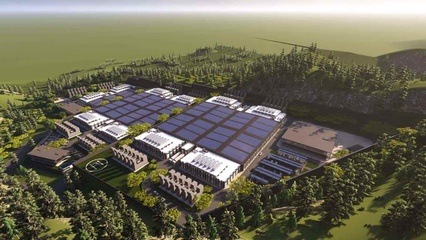
Nairobi still leads Africa in startup funding and digital identity rollout, but a $1 billion Microsoft-G42 project shows the power constraint behind the hype.
A Billion-Dollar Project Hits a Power Wall
In May 2024, President William Ruto stood alongside Microsoft and UAE's G42 to announce a $1 billion geothermal-powered AI data center at KenGen's Green Energy Park near Olkaria. Two years on, the project has stalled. Reporting from May 2026 describes the plan as suspended after the Kenyan government declined to guarantee the electricity capacity and long-term payment commitments Microsoft and G42 were asking for.
The scale explains the impasse. The first phase carried 100 megawatts, with a long-term vision of scaling to 1,000 megawatts—roughly half of Kenya's peak-hour electricity demand. Officials balked at the financial exposure and questioned whether the national grid could deliver that much capacity to a remote site without compromising supply elsewhere.
The episode is a corrective to the narrative that geothermal-rich Kenya was a prime location for hyperscale AI compute. The stall suggests assumptions undersold how much new generation and transmission capacity such projects actually require.
Kenya Still Leads Africa's Startup Funding Table
Even as the data center cooled, Kenya's broader tech ecosystem outperformed regional peers. Kenyan startups attracted roughly $984 million in 2025—close to a third of all VC raised across Africa, a 52% increase year-over-year. Fintech remains dominant, with over 450 companies and a digital payments market projected to grow at 14.1% annually through 2028.
That headline masks a structural gap: fewer than 10% of entrepreneurs secure formal venture backing, with the binding constraint at pre-seed and seed stage. Climate tech, agritech, healthtech and edtech are gaining share, but none approach fintech's scale.
Digital Identity: From Backlog to Integrated Database
Kenya has pushed forward with Maisha Namba, its third attempt at a unified national digital ID system. Launched in October 2023, it assigns every citizen a unique 14-digit identifier from birth, paired with a durable Maisha Card embedding encrypted biometrics. As of 2026, the government has cleared a 600,000-card backlog, printed over 1.7 million new cards, and pushed digital birth notification past 90% of new births.
The system is being consolidated into a single Maisha Integrated Database, with two-factor mobile authentication targeted across all critical citizen services by end of 2026.
Electric Mobility Moves From Pilot to Policy
On February 3, 2026, Kenya formally launched a National Electric Mobility Policy, shifting the EV sector from scattered pilots into structured strategy. By February, Kenya had crossed 39,000 registered electric vehicles, with momentum concentrated in commercial and public transport.
BasiGo, the homegrown electric bus operator, now runs over 130 buses in Nairobi, has logged 8 million electric kilometers, and raised $42.5 million to fund expansion toward 1,000 buses by 2027. Its model keeps bus ownership with BasiGo while operators pay per kilometer—designed around Kenya's matatu informal transit economy. A second operator, Roam, offers full ownership with lease-to-own financing. Alongside them, firms like Ampersand and Spiro are scaling electric motorcycle fleets.
The Pattern Beneath the Headlines
These four threads—a stalled gigawatt-scale data center, continent-leading but uneven startup funding, a maturing digital ID system, and a fast-scaling EV sector—describe a tech ecosystem that is real but not uniformly so. Kenya's strongest results come from sectors where private capital, government policy, and existing infrastructure already aligned. Its weakest result is precisely where foreign infrastructure ambitions outran what the state was willing to underwrite.
That gap between sector-specific momentum and economy-wide infrastructure capacity is likely to be the defining tension in Kenyan tech policy through the rest of this decade, as the government weighs further AI pitches against a power system that cannot yet promise a gigawatt to any single buyer.



