Written By | Torch Media Africa
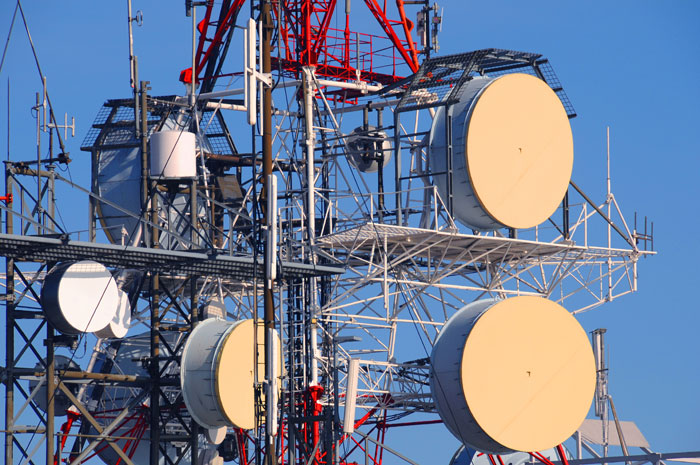
Uganda has more than 40 million active network subscribers, and MTN Uganda's own figures put mobile subscriptions at about 47 million, with roughly 19 million people actively using mobile internet.
SCIENCE & TECH
The Gap Between the Signal and the Screen
Uganda has built a mobile network that reaches almost everyone and a digital economy that serves far fewer. A GSMA report presented in Kampala found that 96 percent of the population lives within 4G coverage, yet only 22 percent of Ugandans actively use mobile internet, leaving a usage gap of 75 percent. The country has more than 40 million active network subscribers, and MTN Uganda's own figures put mobile subscriptions at about 47 million, with roughly 19 million people actively using mobile internet. The numbers measure slightly different things, but they tell one story: connection is no longer the main obstacle. Participation is.
That is the phrase MTN Uganda chief executive Sylvia Mulinge used in June 2026 when the operator announced a UGX54.27 billion contribution to the Universal Service and Access Fund: connectivity is not the finish line, participation is. This article looks at how Uganda reached that point, what the state has built, and why affordability, taxation and trust now matter more than towers.
Building the Backbone
The infrastructure story is a genuine achievement. Uganda's national fibre-optic network has grown to 56,486 kilometres, up from 12,369 kilometres in 2020, more than a four-fold expansion in about five years. Even so, only about 29 percent of the population lives within 10 kilometres of a fibre node, which shows how much of the network still runs along trunk routes rather than into communities. Phase V of the National Backbone Infrastructure, launched in December 2024, plans a further 5,845 kilometres, reaching 63 additional districts and connecting 2,800 more public institutions such as schools, health facilities and local government offices.
The budget has followed. The ICT allocation in the 2025/26 budget was Sh381.75 billion, a 55 percent increase on the previous year. The sector itself is expanding quickly, with ICT growing at an average of 14.8 percent a year, contributing around 9 percent of GDP and employing roughly 2.3 million people according to the same report. Uganda scored 42.04 on the Digital Nations Index in 2025, above the African average of 36, a sign that policy and investment are paying off at the continental level even if household uptake lags.
The Affordability Wall
Why, then, do three in four Ugandans within coverage stay offline? The clearest explanation is the cost of the device. An entry-level smartphone costs about US$38.91, roughly Sh150,000. That equals around 39 percent of monthly GDP per capita for the average citizen and a striking 96 percent of the monthly income of the poorest 40 percent. Taxes make up about 35 percent of that price. For a family choosing between a handset and a month of food, the calculation is not close.
The GSMA estimates that closing the usage gap could add Sh14.6 trillion to the economy by 2030, create 1.79 million jobs and generate Sh2.1 trillion in additional tax revenue. Those figures reframe the policy question. A tax on handsets or data may bring in revenue today, but a larger base of users would likely bring in far more later. Lowering device costs through tax adjustments, financing schemes or local assembly is therefore not a subsidy but an investment in future fiscal capacity.
Mobile Money, Levies and the Cost of Using the Rails
Mobile money remains the most successful digital product in the country, and MTN and Airtel together carry most of the payments traffic. Uganda has also moved toward shared merchant payment arrangements, including a single code usable across both networks, which should reduce friction for small businesses. But the sector has been pressing Parliament for cuts to the tax on mobile money transactions, arguing that charges discourage the small, frequent payments that drive adoption among low-income users. Operators also pay a statutory 2 percent levy into the Universal Service and Access Fund, and a record Shs118 billion was reported collected from telecoms for digital inclusion, according to Ugandan press accounts.
This creates a policy tension that Uganda has not yet resolved: the same transactions are expected to fund both state revenue and inclusion programmes, and users feel the combined cost. If the levy and tax design push people back to cash, the digital rails will carry less value and generate less revenue for either purpose.
Trust: The January 2026 Shutdown
The most serious threat to the digital economy in 2026 was not technical. Around the general election on 15 January 2026, in which President Yoweri Museveni won 72 percent of the vote against 25 percent for Bobi Wine, a digital blackout affected communications, and mobile money services were switched off. MTN and Airtel restored mobile money days later, according to TechMoran reporting on 22 January, and the question of compensation for affected customers and merchants came into view.
For an economy in which mobile wallets are used for wages, school fees and trade, even a short interruption is costly, and it signals risk to investors and fintech founders who depend on predictable access. Digital trust is an economic asset. Uganda's ambitions for a larger fintech and startup sector rest not only on fibre and spectrum but also on assurance that payment systems will remain available.
Digital Public Services and Skills
The state is also trying to make public services a reason to go online. The launch of the first Service Uganda Centre in Gulu, aimed at expanding digital public services outside Kampala, is one example of bringing government interactions closer to citizens, with assisted access for those who lack devices or confidence. On skills, the Airtel Africa Foundation announced investment in Uganda's digital workforce in February 2026, adding to a growing training pipeline for young Ugandans, who make up the bulk of the population.
These efforts matter because the usage gap is partly a skills and relevance gap. People who see no local-language content, no useful service and no safe way to pay are unlikely to buy a data bundle regardless of coverage.
What Needs to Happen Next
Uganda's priorities follow from the data. First, device affordability: reducing the tax share of a US$39 smartphone and expanding instalment financing would address the biggest barrier. Second, a stable, predictable approach to taxing mobile money and telecom revenue, so that inclusion levies and transaction taxes do not cancel each other. Third, a credible commitment against shutdowns, so the payments system that millions depend on is treated as critical infrastructure. Fourth, a fibre strategy that moves from kilometres laid to households and institutions actually connected, using Phase V to push beyond the 29 percent living near a node.
The country has already shown it can build networks at speed. The next phase is harder and less visible: turning 96 percent coverage into participation. If it succeeds, the GSMA's projection of 1.79 million jobs and Sh14.6 trillion in added output by 2030 is within reach. If it does not, Uganda will have a world-class backbone serving a minority of its people.



