Written By | Torch Media Africa
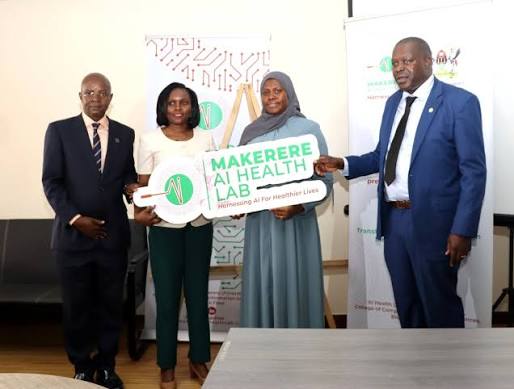
On 13 March 2026 the National AI Research Cloud was launched at Makerere University during the AI Innovation Demo Day hosted by the College of Engineering, Design, Art and Technology.
SCIENCE AND TECHNOLOGY
Artificial intelligence is moving from conference slides into clinics, cattle pens and bank apps in Uganda, while the government drafts the rules it wants to live by. No single breakthrough dominated Uganda’s science and technology news this week; the most notable recent reporting found is a 21 September analysis in The Independent that takes stock of how the country is using AI, supplemented by earlier announcements in 2026 on a national AI research cloud and local satellite building. This briefing treats AI adoption as the most notable available item and notes that some of the supporting material is older than a week.
Where AI is already in use
The Independent’s Ian Katusiime, writing for the magazine’s “Ai@70” series (the field’s name dates to the 1956 Dartmouth project), argues that Uganda is not where AI began but is increasingly where its consequences are felt. He lists examples across sectors.
In agriculture, Agric-Care Uganda’s IntelliFarmAI app lets a farmer in Napak district, Karamoja, identify maize pest damage on a smartphone and receive a treatment approved by the agriculture ministry; in one case it flagged a chemical as banned in the EU. In livestock, Jaguza Livestock makes solar-powered smart ear tags that use machine learning to track the health and movement of cattle, goats and pigs, and the company says they can detect illness up to 48 hours before symptoms appear.
In healthcare, the Mak Ocular System, developed at Makerere University with support from Google.org, attaches a smartphone to a microscope and uses AI to spot malaria, tuberculosis and cervical cancer cells in blood smears, which could help rural labs that have few pathologists. In finance, Centenary Bank’s GonzaPay wallet and Post Bank Uganda use alternative credit scoring based on mobile money, airtime, utility and retail data to assess borrowers who lack formal credit histories, and FINCA Uganda’s AI agent, Flora, handles more than 91,000 interactions a month across WhatsApp, Messenger and web chat.
The state’s role: infrastructure and ambition
Government-backed projects are a second strand. On 13 March 2026 the National AI Research Cloud was launched at Makerere University during the AI Innovation Demo Day hosted by the College of Engineering, Design, Art and Technology. Science, Technology and Innovation Minister Monica Musenero presided, and the event showcased tools such as Cervisight, an AI cervical cancer screening tool, and Ventrascan, an AI-assisted tuberculosis screening solution. Three startups — Novita Diagnostics, Feyti Limited and Impala Health — received UGX 50 million each. Musenero said Uganda should be “a creator of advantage rather than a latecomer” and referred to the country’s first sovereign cloud infrastructure for national data storage.
The health stakes are concrete. Event materials cited about 96,000 people developing tuberculosis each year, of whom around 86,000 are diagnosed, with roughly 30 deaths a day because many cases are found late — the gap AI screening tools aim to close.
The ambition extends beyond software. At National Science Week in May, officials said Uganda has the technical capacity to design and build satellites locally, following the April launch of the ClimCam payload to the International Space Station. Abraham Muwanguzi, who heads the ClimCam team, said the team could build five satellites a year, and students from 11 universities are being trained in subsystem design. The government frames this as part of a push toward a US$500 billion economy.
Policy: writing rules, not just receiving them
According to The Independent, the Ministry of ICT is developing a National AI and Emerging Technologies Strategy covering AI, cloud, big data, blockchain and quantum computing. In June 2026 Uganda and UNESCO validated the country’s AI Readiness Assessment. In July, at the first UN Global Dialogue on AI Governance in Geneva, Minister of State for ICT Alioni Yorke Odria delivered a statement on behalf of President Museveni: “Uganda does not come to this Dialogue to receive policies and guidelines written for us by others.” The delegation included Permanent Secretary Aminah Zawedde, UCC Executive Director Nyombi Thembo and NITA-U Executive Director Hatwib Mugasa.
The critical view
The same article is not uncritical. It describes the Intelligent Transport Monitoring System, built with Russian firm JSC Global Security, which combines digital number plates, tracking devices, CCTV and analytics. An Independent investigation found it strengthens state power, police have shown little evidence that it reduced vehicle theft, and CIPESA and Human Rights Watch have raised mass-surveillance concerns. The author also warns that AI could close development gaps or reproduce them digitally, citing obstacles of electricity, connectivity, affordable devices, local health data and skills, and the risk of dependence on technologies that do not reflect African languages or realities. The World Bank’s 2026 World Development Report, he notes, suggests developing countries can benefit from AI without building frontier models by adopting and adapting existing tools.
Why it matters
Uganda’s approach is pragmatic: apply existing AI tools to problems with clear payoffs such as disease screening, crop losses and credit access, while building enough domestic infrastructure to keep data and talent at home. The tension is between that ambition and the capacity to govern the technology, especially in state surveillance. Whether the strategy under development sets enforceable limits will determine whether AI in Uganda widens or narrows existing gaps.
What to watch next
Watch for publication of the National AI and Emerging Technologies Strategy, any data protection or oversight measures attached to surveillance systems, funding follow-through for the National AI Research Cloud and the startups it supports, and progress toward locally built satellites. Dartmouth’s late-October 70th-anniversary conference on what must remain human, mentioned in the article, may also feed the wider debate.



