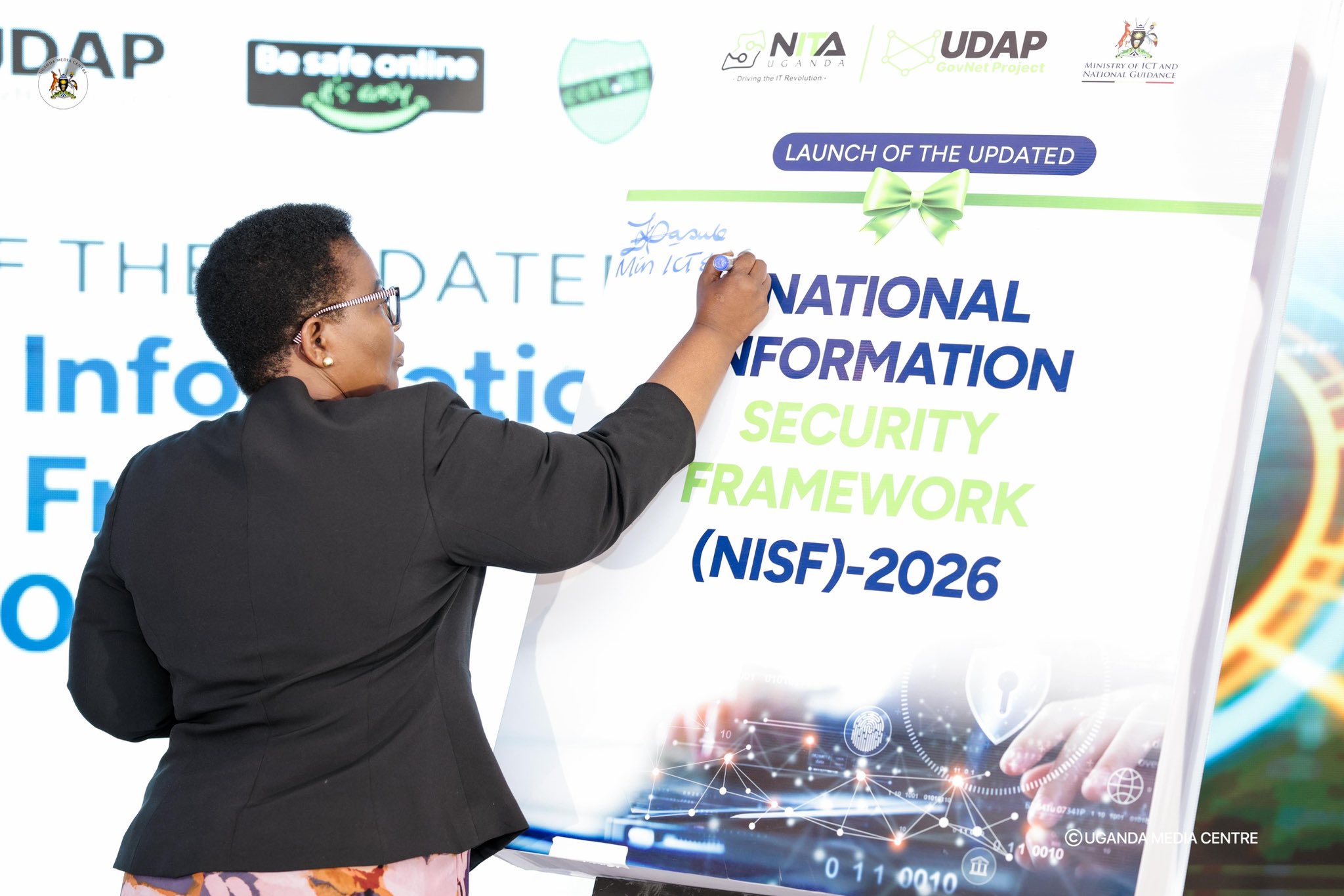
Uganda's government has rolled out an updated National Information Security Framework (NISF) 2026, a policy overhaul aimed at hardening the country's digital infrastructure against a growing volume of cyber threats. ICT and National Guidance Minister Justine Kasule Lumumba launched the framework this week at an event held at the Four Points by Sheraton in Kampala, organized by the National Information Technology Authority–Uganda (NITA-U) under the Uganda Digital Acceleration Project–Government Network (UDAP-GovNet). The update replaces a framework that dates back to 2014 and is built on the country's original 2011 National Information Security Strategy, and it arrives at a moment when Uganda's public agencies, banks, telecoms and other essential service providers are increasingly reliant on interconnected digital systems that are also increasingly attractive targets for attackers.
What is happening
The Updated NISF 2026 introduces a set of practical cybersecurity assessment tools, tightens governance requirements for government bodies, and establishes minimum baseline security controls specifically for critical information infrastructure and operational technology — the industrial and control systems that underpin sectors like energy and utilities as much as conventional IT networks. Government officials say the goal is to improve institutional resilience, better protect national information assets, and build public confidence in digital government services, which Uganda has been steadily expanding as part of its broader digital transformation push. Minister Lumumba used the launch to directly appeal to the private sector, urging organizations operating critical infrastructure — including banking, telecommunications, energy, transport and health — to collaborate with government in defending Uganda's increasingly interconnected digital ecosystem, an acknowledgment that the framework's success depends on buy-in well beyond government ministries and agencies (MDAs).
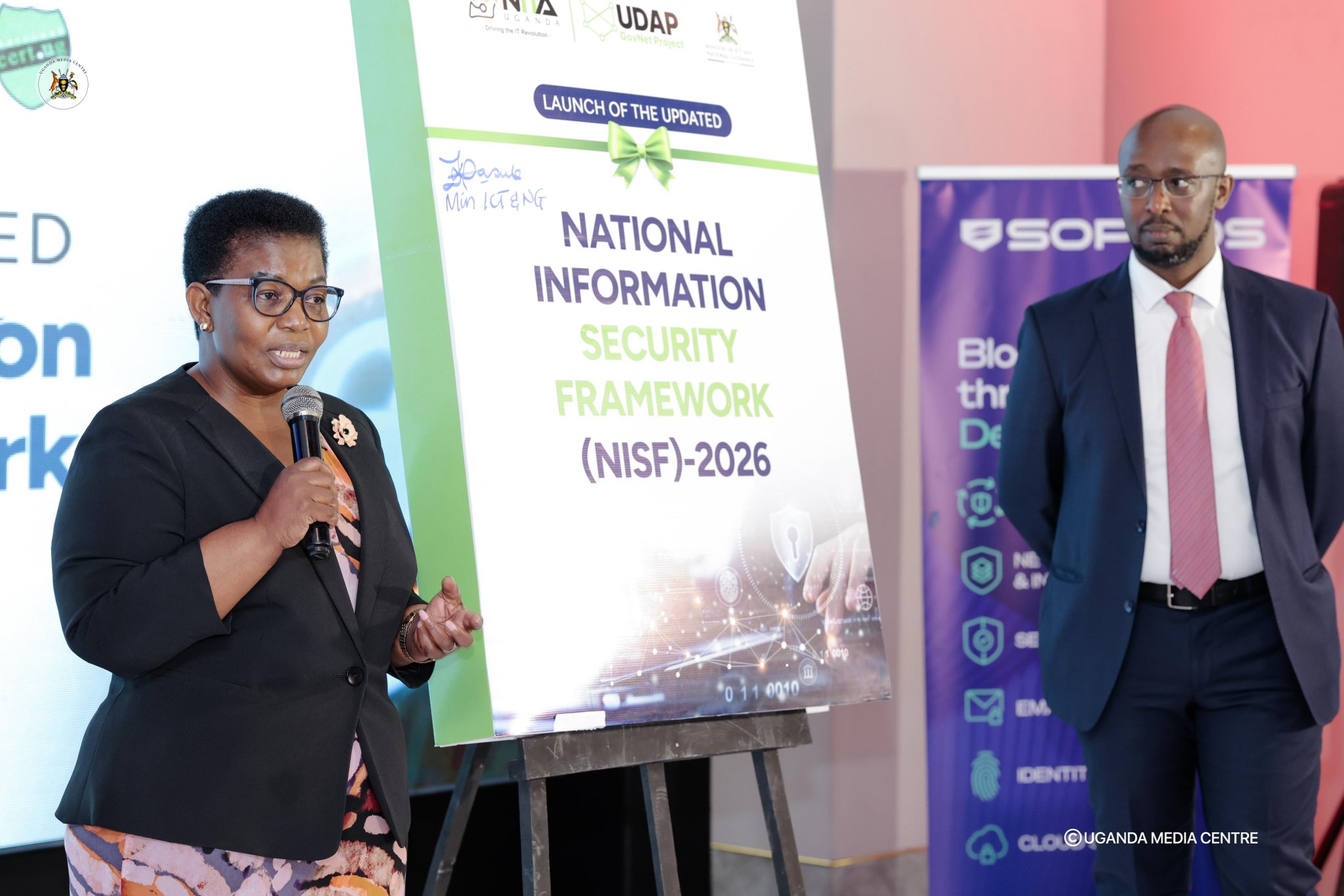
NITA-U, which will coordinate implementation, monitor compliance, and provide technical support to government bodies rolling out the new standards, framed the update as a natural evolution of work it has been doing for well over a decade. The agency has continued to build out secure digital transformation initiatives across government even as the underlying threat landscape has shifted substantially since the original framework was introduced in 2014 — a period that has seen the proliferation of mobile money, cloud-hosted government services, and far greater dependence on digital systems for basic public functions.
Background and context
The NISF launch does not arrive in isolation. It follows a series of steps NITA-U has taken over the preceding weeks to strengthen the institutional architecture around Uganda's digital economy. In early July, NITA-U's leadership, led by Executive Director Dr. Hatwib Mugasa, briefed Minister Lumumba during a familiarization visit on the authority's broader mandate and strategic priorities, including plans to expand digital infrastructure and improve public service delivery — effectively laying the groundwork for the cybersecurity announcement that followed. Separately, the Public Procurement and Disposal of Public Assets Authority (PPDA) recently became the first government agency under a NITA-U-led project to earn a global information security certification, a marker officials are holding up as an early proof point for what compliance with the new framework can look like in practice.
The push also sits within a wider pattern of Uganda investing in digital economy infrastructure and governance this year. The government has been vocal about using technology and research to unlock the potential of the country's overwhelmingly young population — 73 percent of Uganda's nearly 50 million people are under the age of 30 — a theme regularly invoked by agencies like the UN Population Fund (UNFPA) in describing Uganda's development priorities. At the same time, lawmakers have been debating changes to mobile money taxation as part of broader efforts to expand financial inclusion through digital channels, another sign that Uganda's digital and cybersecurity policy conversations are increasingly intertwined with its economic development agenda.
Who the main players are
Justine Kasule Lumumba, the Minister of ICT and National Guidance, is the political face of the initiative, having personally launched the framework and issued the direct appeal to critical-infrastructure operators in the private sector. NITA-U, under Executive Director Dr. Hatwib Mugasa, is the implementing body responsible for coordination, compliance monitoring and technical support across ministries, departments and agencies. The framework's scope also implicates a wide swath of private industry — commercial banks, telecom operators such as MTN Uganda and Airtel Uganda, energy utilities, transport operators and health providers — all of which the government is now formally asking to align with the new baseline security controls, even though compliance mechanisms and enforcement details for the private sector have not been fully spelled out publicly.
Why it matters
Cybersecurity policy tends to attract less public attention than more visible political or economic news, but the stakes are considerable. Uganda has been steadily digitizing government services, financial transactions and increasingly essential infrastructure like power and water utilities, all of which raises the potential cost of security failures — whether through data breaches, service disruptions, or compromise of systems that citizens and businesses now depend on daily. A credible, enforced set of minimum security standards for critical infrastructure and operational technology could meaningfully reduce Uganda's exposure to the kind of attacks that have disrupted government and utility systems elsewhere in the world in recent years. It also signals to international partners and investors that Uganda is treating digital governance as a maturing policy area rather than an afterthought, which can matter for everything from foreign direct investment decisions to international development partnerships tied to digital infrastructure.
There is also a domestic political backdrop worth noting: the cybersecurity push comes in the same month that Uganda's military has been at the center of intense scrutiny over press freedom and a shutdown of the country's largest independent media group. A more tightly governed "national information security" regime — one that gives the state greater authority over what it defines as critical digital infrastructure — will likely draw close attention from civil society groups and journalists already concerned about the state's broader posture toward information control, even though the NISF's stated purpose is technical and defensive rather than aimed at speech or media.

What to watch next
The framework's real test will be implementation rather than the launch event itself. Key things to watch include how quickly NITA-U issues detailed compliance guidance and timelines for the banking, telecom, energy, transport and health sectors named in Minister Lumumba's appeal, and whether the government backs the framework with any regulatory or legal enforcement mechanism, as opposed to voluntary cooperation. The PPDA's recent certification may be an early template other agencies are pushed to follow, so watching which agencies pursue similar certifications next could indicate how seriously the rollout is being prioritized. It will also be worth watching whether the private sector — particularly banks and telecom operators managing enormous volumes of mobile money and customer data — publicly commits resources to aligning with the new baseline controls, or whether the appeal for collaboration remains largely rhetorical in the near term.
Published By | Tech Wiz