SCIENCE & TECH
What happened
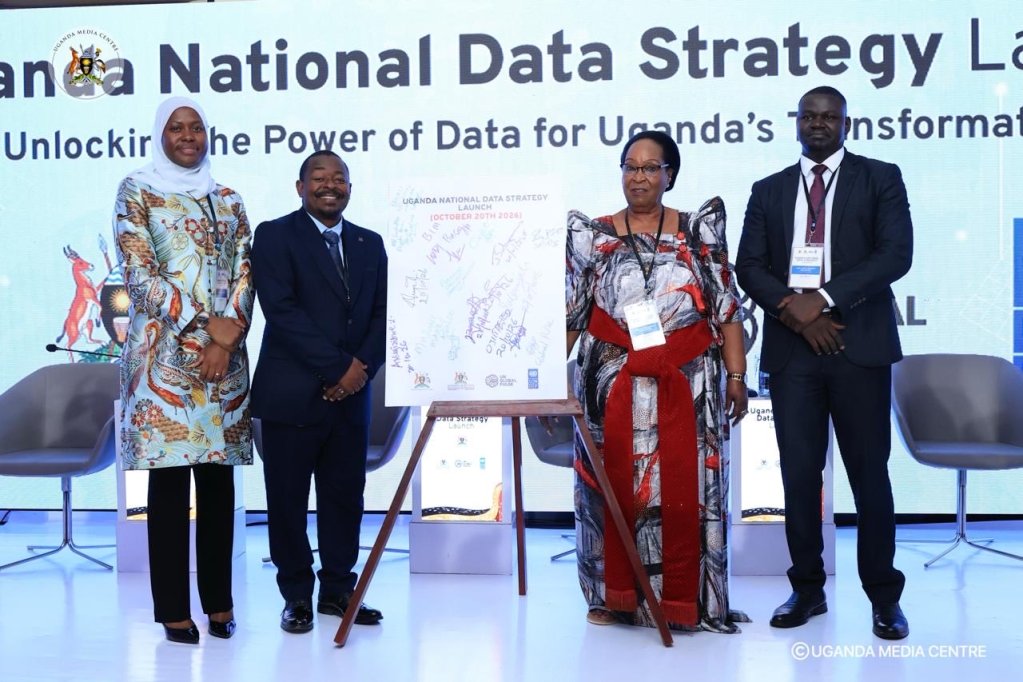
Uganda has launched a National Data Strategy covering the five years from 2026/27 to 2030/31. The Ministry of ICT and National Guidance, with UNDP Uganda and UN Global Pulse Uganda, held the launch in Kampala on 20 October 2026, according to PC Tech Magazine; iAfrica reported it on 23 October. State Minister of ICT Joyce Nabbosa Ssebugwawo officially launched the strategy, and Permanent Secretary Dr Aminah Zawedde set out its ambitions and governance. Officials describe it as the foundation for the forthcoming National AI Strategy.
The problem it aims to solve
A baseline survey found that Uganda holds data for just 36 percent of the indicators in its Fourth National Development Plan (NDP IV). The strategy targets 80 percent within five years. Government bodies including the Uganda Bureau of Statistics, the National Identification and Registration Authority and the Directorate of Citizenship and Immigration Control run separate databases with different standards, so citizens and agencies often resubmit the same records. The strategy names fragmented systems, inconsistent standards, limited data sharing and inadequate infrastructure as the core challenges.
The digital base is sizeable. The 2024 census counted 45.9 million people, and the Uganda Communications Commission reported 47.1 million mobile subscriptions, 18.5 million active mobile internet subscriptions and 36.3 million mobile money accounts in the quarter ending December 2025.
Structure and targets
The strategy rests on three pillars, data governance, data infrastructure and strategic data utilisation, plus two enablers: people and culture, and research, innovation and entrepreneurship. Consultation began in 2022 and the document was validated by 131 state and non-state organisations. It aligns with NDP IV, Vision 2040, the Digital Uganda Vision and the African Union Data Policy Framework, and builds on the Digital Transformation Roadmap for 2023/24 to 2027/28.
Targets for 2030/31 include growing the number of government platforms integrated through the UG Hub from 135 to 300, cutting man-hours spent processing government services by 40 percent, saving 20 percent in direct costs through shared resources across ministries, departments and agencies, and saving 40 percent on previously imported systems. For the private sector, it aims for an 80 percent increase in data-driven startups, 600 intellectual property rights for data innovations and a 10 percent rise in external investment in Ugandan digital enterprises.
Cost and financing
The five-year cost is UGX 1,662.6 billion. Data infrastructure takes UGX 684.9 billion, data governance UGX 553.3 billion, research, innovation and entrepreneurship UGX 319 billion, strategic data utilisation UGX 71.4 billion, and people and culture UGX 34 billion. Government budgets are expected to supply UGX 1,220 billion through ministry and agency prioritisation, with UGX 333.6 billion from non-tax revenue by commercialising data services, UGX 55 billion from development partners and UGX 54 billion from private co-investment. The Hewlett Foundation provided financial backing for developing the strategy, and UN Global Pulse supplied technical expertise and foresight modelling.
The reliance on government budgets, roughly three quarters of the total, means delivery depends on ministries actually budgeting for it. Zawedde urged accounting officers to do so, an indication that this is not yet assured.
Governance and privacy
A National Data Steering Committee, chaired by the Ministry of Finance, Planning and Economic Development and co-chaired by the Office of the Prime Minister, will oversee delivery. A National Data Office at the ICT ministry, led by a Chief Data Officer at commissioner rank, will manage implementation, with data focal points across government. The Personal Data Protection Office will enforce the Data Protection and Privacy Act, 2019. The strategy sets rules for collecting, processing, storing and sharing personal records, separates public from confidential files, and requires anonymisation and pseudonymisation.
Why it matters
Zawedde stressed that the quality of AI depends on the data behind it, which is why the data strategy comes first. Better data is expected to help identify communities needing schools, health facilities and roads and to forecast demand for essential medicines. Uganda joins Nigeria, Senegal and Mauritius in adopting a national data policy. For businesses and startups, shared and better-governed data could lower the cost of building services; for citizens, the privacy provisions will determine how far they trust the system.
What to watch next
The UNDP Resident Representative, Nwanneakolam Vwede-Obahor, warned that success depends on what happens after the launch. Dr Martin Mubangizi of UN Global Pulse Uganda recommended starting with pilot programmes to test how better data improves decisions. Watch for the appointment of the Chief Data Officer, the first budget allocations in 2026/27 and 2027/28, the publication of the National AI Strategy, and early pilots. Zawedde said success will not be measured by the terabytes stored or documents published, but by outcomes citizens experience. This article reflects reporting available as of 28 October 2026.
Published By | Tech Wiz