Written By | Torch Media Africa

Noam Shazeer, the engineer who literally wrote the math behind ChatGPT, Gemini, and Claude, walked out on Google for the second time in five years
Mountain View, Carlifornia
Imagine inventing the engine that powers every car on the road — and then watching your two biggest rivals fight over who gets to keep you in the garage. That's roughly what just happened in Silicon Valley, and the man at the center of it is barely a household name outside the AI industry, even though his fingerprints are on nearly every chatbot you've ever talked to.
On June 18, 2026, Noam Shazeer — the soft-spoken, fifty-year-old computer scientist who co-authored the 2017 paper “Attention Is All You Need,” the document that introduced the Transformer architecture underpinning ChatGPT, Gemini, Claude, and virtually every large language model built since — announced he was leaving Google. Again. This time, he's walking straight into the arms of OpenAI, the company that built its entire empire on the technology he helped invent.
It is, by any measure, one of the strangest and most consequential talent moves in the history of the AI boom. And it comes at the worst possible moment for Google, which is still nursing a black eye from a botched product launch and is now staring down the loss of one of its most important engineers — for the second time.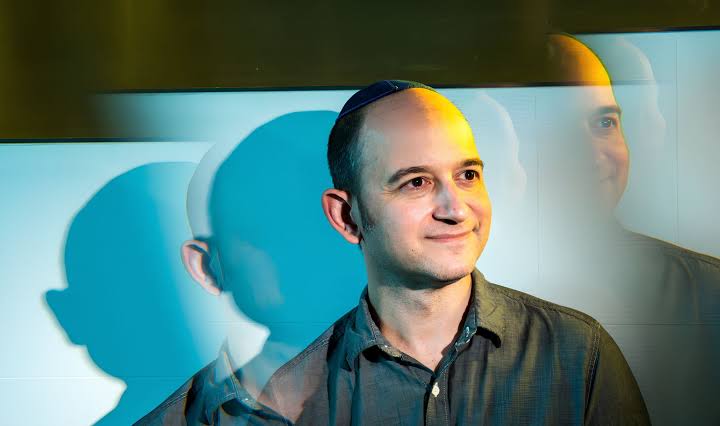
Noam Shazeer
The Man Behind the Machine
To understand why this matters, you have to understand who Noam Shazeer actually is. He's not a flashy startup founder or a media-trained executive. He's the kind of engineer other engineers talk about in hushed, reverent tones. Shazeer joined Google all the way back in 2000, when the company was still mostly known for search. One of his early contributions was improving Google's spelling-correction algorithm — unglamorous work that nonetheless hinted at his obsession with language and pattern.
Fast forward to 2017, and Shazeer was one of eight researchers at Google Brain who co-authored “Attention Is All You Need.” If you've never read it, don't worry — almost nobody outside computer science has, and that's part of what makes this story so wild. That paper introduced the “Transformer,” a new way of processing sequences of data — words, in the case of language — that didn't rely on the older, clunkier recurrent neural networks everyone had been using. The Transformer could look at an entire sentence at once instead of word by word, and it scaled in ways nothing before it had. It is, without exaggeration, the single piece of math that made the modern AI boom possible. GPT literally stands for “Generative Pre-trained Transformer.” Without Shazeer's paper, there's a strong argument that ChatGPT, as we know it, simply does not exist.
So naturally, Google had a generational talent on its hands. And just as naturally, in classic Big Tech fashion, the company fumbled it. Shazeer and his colleague Daniel De Freitas built a conversational chatbot internally called Meena, which by some accounts was startlingly advanced for its time. Google, worried about safety and liability — the same caution that would later let upstarts eat its lunch — declined to ship it to the public. Frustrated, Shazeer and De Freitas walked out the door in 2021 and founded their own company: Character.AI, a startup that let users chat with AI personas of everything from historical figures to anime characters. Character.AI beat OpenAI's ChatGPT to market by roughly a year, quietly building a massive, obsessive user base — primarily teenagers and young adults — who spent hours a day talking to bots that remembered their conversations and developed distinct personalities.
The $2.7 Billion Boomerang
By 2024, Google wanted its prodigal son back. Rather than simply acquiring Character.AI outright — regulatory scrutiny on Big Tech acquisitions had grown teeth — Google structured a complex licensing deal, reported at roughly $2.7 billion, that brought Character.AI's technology and a cohort of its engineers, including Shazeer, back under Google's roof. Shazeer himself was installed as a vice president of engineering at Google DeepMind and made a co-lead of the Gemini model family — Google's flagship answer to ChatGPT.
For a while, it looked like a triumphant homecoming. Shazeer helped steer Gemini through several major releases as Google scrambled to keep pace with OpenAI and Anthropic in what has become the most expensive, highest-stakes corporate arms race since the original space race. Insiders credited him with pushing technical decisions that improved Gemini's reasoning and efficiency.
Then, this past week, the other shoe dropped. Shazeer announced he was leaving — not for a startup this time, not for a sabbatical, but to join OpenAI directly as its new Lead for AI Architecture Research, a role focused on the fundamental design of future model architectures. In plain English: Google paid roughly $2.7 billion to get the inventor of the Transformer back in-house, kept him for not even two full years, and then watched him walk across the street to go work for the company that turned his invention into a trillion-dollar industry.
“Ten Years in the Making”
OpenAI CEO Sam Altman didn't try to hide his glee. Posting on X shortly after the news broke, Altman called the hire “only ten years in the making,” adding that Shazeer was “one of the people I have most wanted to work with since the very beginning of OpenAI.” It's a striking line — Altman essentially admitting he's been trying to poach this one engineer for the entire decade-long existence of his company, through ChatGPT's launch, through OpenAI's brush with implosion in 2023, through its eventual IPO buildup, and finally landing the fish.
The reaction inside the industry was just as pointed. CNBC's Jim Cramer, never one to undersell a corporate drama, called the move a “coup,” telling viewers, “This is a coup. And I'm not joking around.” Cramer's framing wasn't really about the money, though there's plenty of that too — compensation for elite AI researchers at this tier now routinely stretches into the tens of millions of dollars annually, and given the bidding war Shazeer's free agency would have triggered, multiple reports suggest his new package sits at the very top of that range, with equity timed to vest around OpenAI's anticipated IPO window. Cramer's point was about symbolism: in an industry where the war for talent is just as fierce as the war for chips or compute, losing the literal inventor of your core technology to your biggest rival is about as bad an own-goal as a company can score.
For Google, the timing could hardly be worse. The company is already absorbing criticism over the bumpy rollout of Gemini 3.5 Pro, which CEO Sundar Pichai had promised at the Google I/O developer conference back in May would reach general availability by June. As of this week, Gemini 3.5 Pro remains locked in limited preview for select enterprise customers on Vertex AI — nowhere near the public Gemini app, AI Studio, or general API access Pichai had promised. Developers who showed up expecting a launch reportedly responded with an audible groan when it didn't happen. Losing Shazeer, one of the architects behind Gemini's underlying design, in the same news cycle as a stalled flagship launch, paints an uncomfortable picture of a company that built one of the best research organizations on Earth and is now struggling to keep its own people in the building.
A Talent War With No Ceiling
Shazeer's defection doesn't exist in a vacuum. It's the latest data point in what's become an open, increasingly brazen war for AI talent among a small handful of companies — OpenAI, Google DeepMind, Anthropic, Meta, and a cluster of well-funded startups — all chasing the same tiny pool of researchers capable of pushing model architecture forward. Compensation packages that would have seemed absurd even three years ago are now almost routine at the top of this market: signing bonuses in the tens of millions, equity grants timed around IPOs, and in some reported cases entire research teams being poached as a unit rather than individual hires.
It also lands amid broader turbulence in the AI sector. ChatGPT's share of the global AI assistant market reportedly slipped below 50 percent for the first time by late May 2026, down to roughly 46.4 percent, as competition from Gemini, Claude, and a wave of fast-moving Chinese models chips away at OpenAI's early dominance. Meanwhile, the U.S. government's abrupt June 12 export-control directive forcing Anthropic to pull two of its newer models offline globally added fresh uncertainty to an industry already grappling with geopolitics, chip shortages, and skyrocketing energy demands from data centers. Against that backdrop, a high-profile, headline-grabbing talent win like Shazeer is exactly the kind of momentum play OpenAI needs heading into a competitive summer.
Why This Actually Matters to You
It's tempting to read this as inside baseball — a rich engineer changing employers, who cares. But the architecture decisions Shazeer will now be steering at OpenAI have a direct line to the AI products hundreds of millions of people use every day, often without realizing it. Every time you ask a chatbot a question, summarize an email with an AI assistant, or get an AI-generated answer at the top of a search result, you are interacting with some descendant of the architecture Shazeer helped invent in 2017. The specific tweaks and redesigns researchers like him make now — improving efficiency, reasoning, memory, and how models handle context — determine how fast, how accurate, and how expensive those tools become for ordinary users over the next several years.
There's also a more human angle here worth sitting with. Shazeer is, by multiple accounts, one of the people most directly responsible for both the rise of conversational AI companions through Character.AI and the architecture beneath today's general-purpose chatbots. His career arc — invent the technology, get frustrated when your employer won't ship it, leave and build it yourself, get bought back for billions, leave again — is a uniquely vivid illustration of just how unstable the ground is at the top of the AI industry right now. Even the people who invented the foundational math aren't immune to feeling like their work is being managed badly, or sensing better opportunity elsewhere. If the architects themselves are this restless, it's a signal that the technology — and the corporate structures racing to control it — are still very much in flux.
What Happens Next
OpenAI has not detailed exactly what Shazeer's research agenda will look like, though his title — Lead for AI Architecture Research — suggests he'll be involved in shaping whatever comes after the current generation of Transformer-based models, a technology he himself helped create nearly a decade ago and which some researchers believe is approaching fundamental limits in efficiency and reasoning. Google, for its part, has not publicly commented in detail beyond standard statements thanking Shazeer for his contributions, though insiders describe the mood inside DeepMind as something closer to a wake.
Whatever comes of it, the symbolism is hard to miss: the man who wrote the rulebook for modern AI just decided the company that wrote ChatGPT on top of his rules might be a better place to write the next one. Silicon Valley will be watching closely to see whether OpenAI's bet pays off — and whether Google can hold onto anyone else after this.



