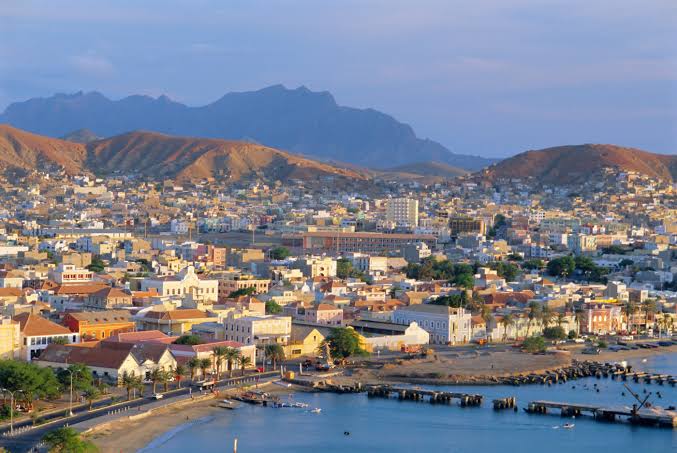
Digital Public Infrastructure
Most African digital transformation stories are access stories. A government builds towers or lays fibre, a regulator auctions spectrum, and the metric that matters is how many more people can get online. Cabo Verde's story is not that story, because Cabo Verde largely finished the access phase some time ago. The question the archipelago is now asking is stranger and more interesting: can a country of roughly 600,000 people sell its own institutional quality — political stability, European-aligned data rules, neutral jurisdiction — as a tradeable digital product?
An unusual baseline
The numbers explain why the access frame does not fit. DataReportal's Digital 2026 report counts 388,000 internet users in Cabo Verde at the end of 2025, an online penetration rate of 73.5 percent, alongside 601,000 active cellular mobile connections equivalent to 114 percent of the total population and 263,000 social media user identities — 49.8 percent of the population — in October 2025. The International Telecommunication Union records 2G, 3G and 4G networks covering 99.3 percent, 95.3 percent and 88.5 percent of the population respectively.
Those are figures that most of the mainland would regard as a destination rather than a starting point. They also come with a warning sign. Data released by the Multisectoral Economy Regulatory Agency (ARME) shows total internet subscriptions in Cabo Verde falling four percent year on year in the first quarter of 2026, to 511,702. In a market this small, a four percent contraction is not noise; it is a demand signal, and it points straight at the structural problem underneath the strategy.

The state built the identity layer first
Cabo Verde's digital public infrastructure has been assembled over two decades by NOSi, the state digital agency, whose work organises around three pillars: digital identity and authentication, interoperability between information systems, and emerging technologies including artificial intelligence, the Internet of Things and cloud computing. The resulting stack includes online authentication, digital signatures, single sign-on, and a national identity card capable of supporting electronic transactions.
The foundation matters more than the front end. A June 2026 World Bank report records that Cabo Verde reached 99 percent birth registration after linking civil registration and identity systems through a platform called Autentika. Reliable civil registration is what makes a digital identity usable for taxation, social protection, voting and business verification; without it, the rest of the architecture rests on nothing. The government's stated ambition is an integrated e-ID consolidating national identity, civil authentication, registries and voter databases.
The delivery targets are specific and imminent. The government aims to put 60 percent of vital public services online by 2026 and more than 80 percent by 2030. That 2026 deadline is now a live test of institutional capacity rather than an aspiration. The external benchmark is less flattering: Cabo Verde ranked 111th out of 193 countries in the 2024 United Nations E-Government Development Index, within the "High EGDI" band — respectable, but not yet the position of a jurisdiction selling governance quality abroad.
TechPark CV and the tax argument
The physical expression of the strategy is TechPark CV, formally inaugurated in 2025 after operations began in November 2023. The total investment is approximately €51.85 million (about US$56.5 million), of which the African Development Bank financed €45.5 million, covering both the construction phase and operationalisation. The park spans two campuses — the main site on Santiago and a smaller one at Mindelo on São Vicente — and includes a data centre, training and conference facilities, and an incubation centre. It already hosts 23 companies from seven countries employing over 300 young professionals, against a target of up to 1,500 jobs.
The commercial proposition is regulatory as much as physical. Firms headquartered inside the Special Economic Zone for Technologies (ZEET) pay corporate income tax at 2.5 percent and are exempt from customs duties on equipment imports and from VAT. Prime Minister Ulisses Correia e Silva has framed the park not as an infrastructure project but as a move to integrate Cabo Verde into the global digital economy — exporting technology services, deepening digital inclusion and training local talent for international competition. The offer being made to a West African bank or a European firm is secure, low-latency hosting in a politically stable jurisdiction whose data protection regime is aligned with European standards. That is a legal product delivered over physical infrastructure.
Cables, latency and the mid-Atlantic argument
Geography is the second half of the pitch. Cabo Verde sits between West Africa, Europe and South America, and is landed by EllaLink, WACS, Atlantis-2, SAT-3 and SHARE. EllaLink is expected to deliver 72 Tbps by late 2026, cutting latency to Europe to around 60 milliseconds — the threshold at which hosting on the islands becomes viable for latency-sensitive European and West African workloads rather than merely cheap.
Domestic capacity is being rebuilt at the same time. Cabo Verde Telecom tendered internationally for the "Connectivity 2.0" programme (CSII-4), covering the design, supply and installation of six new submarine cable segments totalling roughly 750 kilometres of inter-island link, with works beginning in August 2025 and full commissioning expected by June 2026. For an archipelago, inter-island subsea capacity is not a refinement; it is the difference between one connected island and ten.
Mobile is the least settled layer. The government has set a target of nationwide 5G deployment by 2026, with the Ministry of Digital Economy describing 5G as "a priority for 2026" and "the foundation for the next decade," and framing it explicitly as an instrument of economic and social transformation rather than a technical upgrade. In practice the rollout has slipped over equipment supplier selection and spectrum concession negotiations. ARME chairman Isaias Barreto has confirmed a pilot in partnership with Huawei, and CV Telecom plans to trial 5G first on the tourist islands of Sal and Boa Vista. The domestic business case is projected at 77 billion escudos of economic impact by 2036 across smart tourism, digital health and logistics — a long payback horizon for a small carrier base, which is precisely why the tourist islands come first.
The macro case for hurrying
The economics explain the urgency. Cabo Verde grew an estimated 6.3 percent in 2025, driven by record tourism arrivals on strong European demand and expanded flight capacity, together with a construction peak. Growth is projected to moderate to 4.8 percent in 2026 as euro-area momentum weakens and global instability bites. Public debt fell to 100.7 percent of GDP in 2025 and continues to decline as the primary balance moves into surplus, but debt service still absorbs 34.2 percent of government revenue. A country paying a third of its revenues to creditors while depending on European holidaymakers for growth has a structural reason to want a second export sector.
The stated target is for the digital economy to rise to at least 25 percent of GDP by 2030 from roughly 7 percent today. The financing is in place: the African Development Bank approved €17.71 million (US$19.2 million) for the second phase of an e-governance and public financial management reform programme, on top of its TechPark commitment; the World Bank runs a separate US$20 million Digital Cabo Verde project that has supported an e-embassy and digital consulate, a cloud blockchain platform and a digital one-stop shop for investors. The government is finalising its first National Strategy for Private Sector Development, built around tourism, the blue economy and digital services, and the World Bank's July 2026 economic update, "Connecting Islands, Unlocking Potential," places inter-island connectivity at the centre of the inclusive growth argument.
The constraint is scale, not capability
What Cabo Verde cannot buy with development finance is a domestic market. Roughly 600,000 people live on the islands; the diaspora is larger than the resident population, which is why digital consular services, e-justice tools and diaspora-facing platforms feature so prominently in the programme. A government digital grant scheme supports 100 young people and 50 startups each year at 30,000 escudos monthly — meaningful as a signal, small as an industrial policy. The digital nomad visa, allowing stays of up to 365 days, is another attempt to import demand and skills rather than grow them.
Moving the digital economy from 7 percent to 25 percent of GDP inside four years would be a steep climb for any economy. For one this size, it requires that the export channel — hosting, back-office services, digital public infrastructure sold as a reference implementation — actually opens. The markers to watch are concrete: whether the 60 percent e-services target is met this year, whether the CSII-4 inter-island segments commission on schedule, whether 5G moves beyond a Sal and Boa Vista pilot, and whether the ARME subscription decline reverses. Cabo Verde has built the layer that most states find hardest. The open question is whether anyone outside the archipelago will pay for it.
Published By | Tech Wiz