Written By | Torch Media Africa
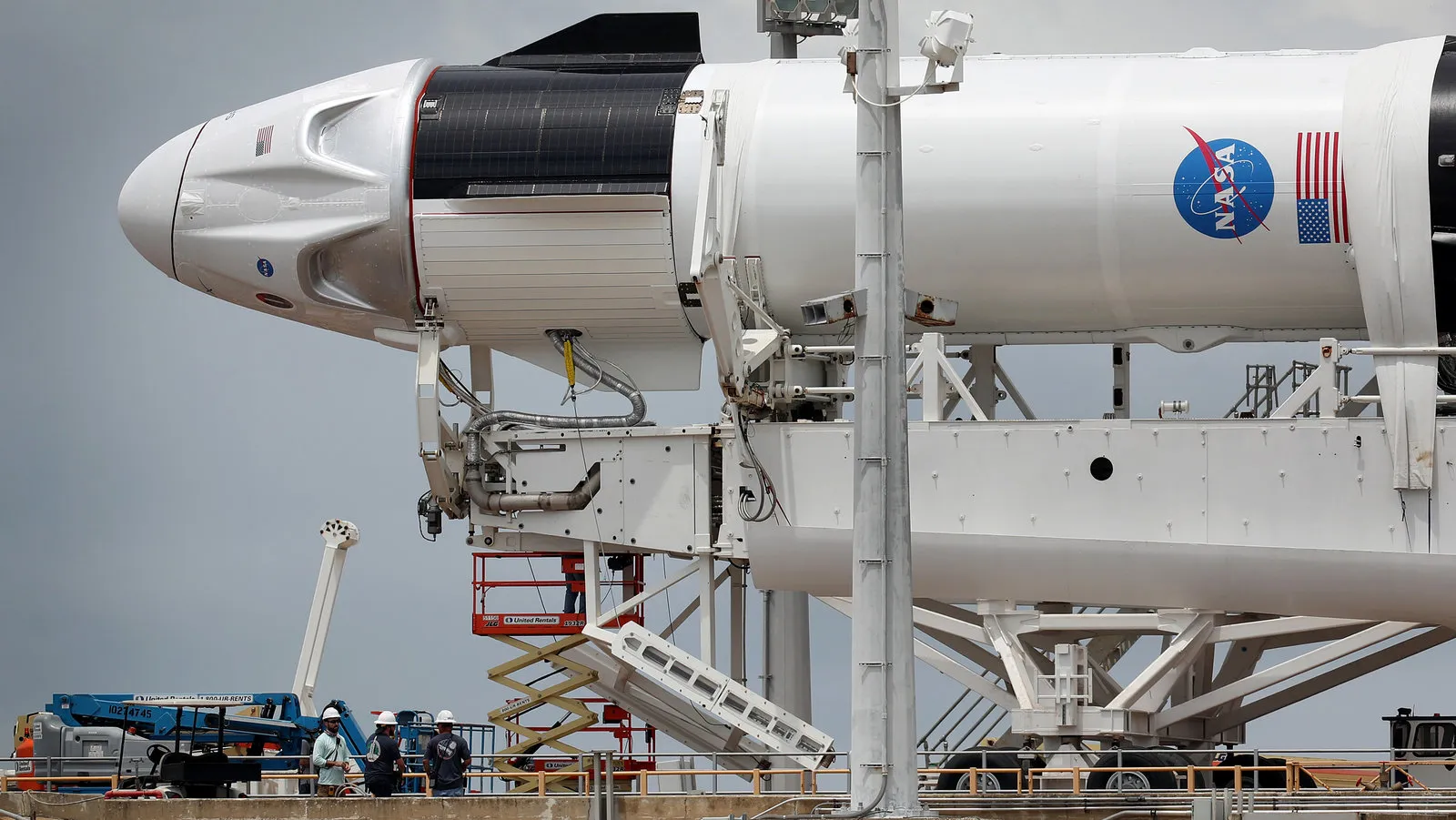
A Falcon 9 launch, 6,300 pounds of cargo and a future-proof glass experiment: how the final pair of foldable solar arrays could keep humanity's orbital outpost alive until 2030 and beyond
CAPE CANAVERAL, Florida, 16 October 2026
The International Space Station is about to get its last big power upgrade, and it arrived the way most modern space deliveries do: on top of a SpaceX rocket, before breakfast, with a booster that landed itself back on the ground a few minutes later.
At 6:33 a.m. EDT on Tuesday, 13 October 2026, a Falcon 9 lifted off from Space Launch Complex 40 at Cape Canaveral Space Force Station carrying NASA's 35th SpaceX commercial resupply mission, known as CRS-35. Tucked inside the Dragon capsule's cargo area and unpressurized trunk were more than 6,300 pounds of science equipment and supplies, plus the star of the show: the fourth and final pair of Roll-Out Solar Array wings, built by Redwire Space, destined to bolt onto the orbiting laboratory during spacewalks later this fall.
Dragon was scheduled to dock autonomously with the space-facing port of the station's Harmony module at 11 a.m. EDT on Thursday, 15 October, with NASA astronaut Anil Menon and Canadian Space Agency astronaut Joshua Kutryk monitoring the arrival. It is expected to stay until mid-November before returning to Earth with time-critical research, splashing down off the coast of California.
A Rocket That Keeps Coming Back
The launch itself was close to routine, which is the real headline. The first-stage booster, tail number B1096, was flying for the eighth time. Under eight minutes after liftoff it touched down at Landing Zone 40, right next to the pad it had left. The Cargo Dragon, designated C211, separated from the upper stage and began its two-day chase of the station.
It is easy to forget how remarkable that is. A little over a decade ago, a rocket landing itself was a stunt. In 2026 it is Tuesday. Reusable boosters have turned station resupply into a steady, predictable service, and that reliability matters, because the station is entering a phase of its life where every delivery counts.
Why Solar Panels Are a Big Deal
Every watt aboard the ISS comes from the sun. The station's original rigid solar arrays have been unfolded in orbit since the early days of the complex, and like anything left outside in the harshest environment humans have ever tried to live in, they have degraded. Micrometeoroids, radiation, thermal cycling every 90 minutes as the station swings in and out of sunlight: all of it takes a toll on the cells.
The fix is the ROSA, the Roll-Out Solar Array. Instead of a rigid, accordion-style panel, a ROSA wing is a flexible blanket of solar cells that is rolled up tight for launch, like a yoga mat, and then unspools in space once it is released. It is lighter and more compact than traditional arrays, and it can be packed into the trunk of a Dragon, something a conventional panel could never manage.
According to Redwire, each ROSA wing generates more than 20 kilowatts and is designed to do so for more than 10 years. Once all eight wings are in place, the combined output tops 160 kilowatts. Since 2021, six Redwire-built wings have already been deployed on the station, and the company says that work has helped extend the station's operational life to 2030. The two wings now in orbit are the last pair in the program.
Gaurang Patel, NASA's operations integration manager for the Low Earth Orbit Program, explained that the technology was first proven on an earlier Dragon flight, CRS-11, back in 2017. The wrinkle, he said, is that the station's existing arrays were never built with standard provisions for upgrades. That is why engineers have relied on modification kits to mount the new wings safely on top of the old hardware. In other words, the ISS is being retrofitted in flight, a bit like adding a new engine to a plane while it is crossing the Atlantic.
Spacewalks Are Coming
Delivering the arrays is only half the job. Installing them takes a series of spacewalks, scheduled for later this fall. Astronauts will float outside the station, move the bulky roll-out assemblies into position, secure them to the mounting hardware, and then watch as the blankets unfurl. Spacewalks are among the most demanding tasks in human spaceflight, with hours of physical effort in a pressurized suit, tight timelines and zero room for error.
NASA has not yet announced full details of who will step outside or on which dates. What is clear is that the crew now aboard the station has a busy season ahead, and that the new wings arriving this week are the final piece of a power overhaul that has been years in the making.
Science Rides Along
Power is the headline, but it would be a mistake to overlook the cargo inside the capsule. Dragon is carrying equipment for more than 40 scientific studies, spanning biology, plant science, materials research and more. NASA's own release describes a sample of what is on board, and it reads like a science-fiction wish list.
One payload is hardware for manufacturing artificial retinas in microgravity, work that researchers hope could one day help restore vision to patients on Earth. Another is 3D heart tissue models, intended to support large-scale drug testing on future space missions. A third is a set of brain organoids, tiny lab-grown clusters of neural cells, which could reveal potential treatment targets for neurodegenerative diseases such as Alzheimer's, Parkinson's and multiple sclerosis.
There is also an experiment on a new type of glass. Dr. Liz Warren, NASA's deputy chief scientist in the ISS Office, said this glass is made from elements heavier than those in ordinary silica glass and could offer very high refractive indices, greater resistance to breaking and unusual thermal behavior. She said the material could benefit optics and electronics on Earth, as well as future lunar rovers and habitats. In microgravity, molten material can cool without touching a container, which can avoid the flaws that normally creep in on the ground.
Why It Matters Beyond the Station
There is a second chapter to the ROSA story, and it points far beyond low Earth orbit. A version of the technology will also help power NASA's Space Reactor 1 Freedom, known as SR-1 Freedom, which is scheduled to launch in 2028. Redwire says it built its most powerful ROSA wings yet for that mission, and the company notes that ROSA technology has also supported NASA's Double Asteroid Redirection Test and commercial communications satellites. Redwire says it has delivered or is developing more than 65 solar array wings.
So the foldable panels that are about to finish their job on the ISS are, in a sense, a proving ground. What works on the station, a harsh and well-instrumented test bed, becomes the template for hardware heading farther out.
Expert Perspective
Redwire Space president Mike Gold used the launch to make a point about how the program came together. He said the ROSA effort "demonstrates the extraordinary benefits of public-private partnerships," and he thanked the program's customer, Boeing, for supporting the technology's development. It is a fair claim. The arrays were developed with a commercial company, delivered by a commercial rocket and capsule, and installed by government astronauts, a three-way handoff that would have been hard to imagine in the early shuttle era.
Warren's comments on the glass experiment reflect the other side of the station's mission: using a unique laboratory to chase benefits that come home. The station was built, in part, to be a place where researchers can run experiments that gravity ruins on the ground. The more power the lab has, the more equipment it can run, and the more science it can host.
What This Means for You
It is tempting to see a solar-array delivery as an engineering footnote, but there are practical reasons ordinary people should care.
First, the station is a working laboratory, and its research reaches back to Earth. Artificial retina manufacturing, organoid models of brain disease and heart tissue for drug testing all aim at medicine, not spectacle. If those experiments pay off, they could shorten the path to treatments for conditions that affect millions of families.
Second, the materials work, including that exotic glass, has potential applications in cameras, lenses, phone screens and electronics. Space-grown materials have a way of showing up in ordinary products years later.
Third, the station is the practice ground for the commercial space economy. The same reusable rockets and cargo capsules that supply the ISS are shaping launch prices, satellite services and the plans for future private stations. The reliability on display in this week's launch is what makes that economy investable.
Finally, there is the sheer staying power of the project. A structure first assembled in orbit decades ago is being modernized to keep running through at least 2030. Few machines on Earth are expected to work that long without a visit to the shop.
The Road Ahead
The immediate timeline is simple. Dragon docks and is unloaded. The crew prepares for spacewalks. The new wings are installed and unfurled. In mid-November, the capsule departs and heads for the Pacific, bringing research samples home.
The longer timeline is less simple. The station's future beyond 2030 depends on commercial successors, budgets and politics, and none of that was settled by a single launch. But the logic of this upgrade is hard to argue with: more power means a more capable lab for the remaining years of its life, and a proven technology for the missions that follow.
Conclusion
On a quiet Florida morning, a rocket that has already flown seven times launched again, a capsule full of experiments rose toward orbit, and two rolled-up solar wings began their journey to complete a modernization effort that started in 2021. It was not the most dramatic launch of the year. That is exactly the point.
The space station is old by spaceflight standards, but it is being kept young by exactly this kind of unglamorous, steady work. With the last pair of ROSA wings on their way, the ISS is set to run on more than 160 kilowatts of fresh sunlight, ready for another stretch of science. The spacewalks will be the next time the world gets to watch. Keep an eye on the sky this fall.



