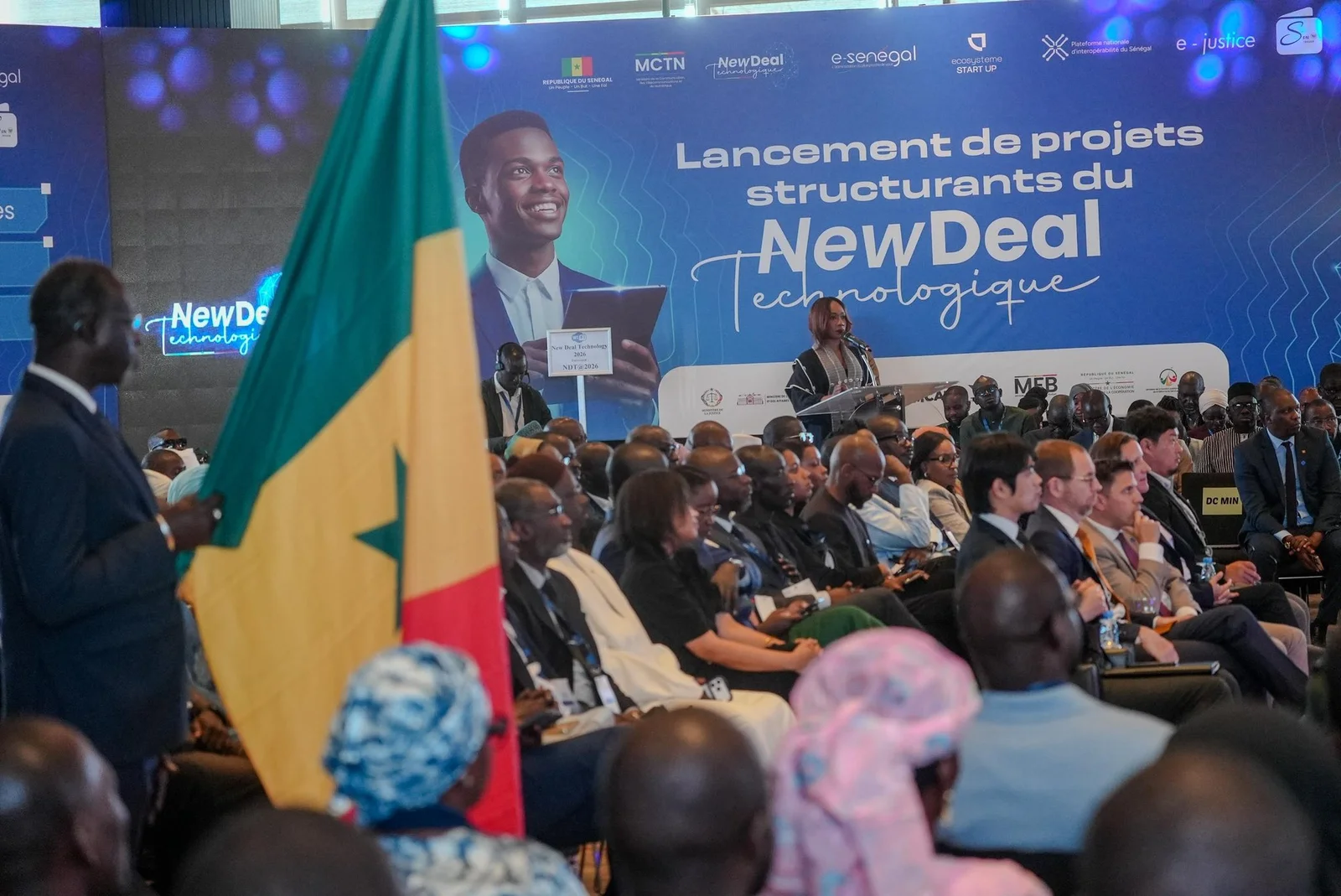
DAKAR
Senegal has spent the past decade building a reputation as one of Francophone West Africa's most credible technology hubs, and 2025-2026 has supplied the clearest evidence yet that the bet is paying off. The country's startup ecosystem raised roughly US$223 million in 2025, a nearly 450% year-on-year increase according to Partech Partners' annual Africa Tech VC Report — placing Senegal alongside Morocco and Ghana as one of only three ecosystems outside the “Big Four” (Nigeria, Egypt, Kenya and South Africa) to clear the US$50 million equity-funding threshold. At the same time, the government has rolled out a national cloud infrastructure built on Alibaba Cloud's Apsara Stack, launched a fresh “New Deal Technologique” digital sovereignty strategy, and watched homegrown fintech Wave consolidate its position as Francophone Africa's first unicorn. Together, these threads describe a digital economy moving from promising to substantive.
Wave and the Mobile Money Engine
Mobile money remains the backbone of Senegal's digital economy, and Wave Mobile Money is its dominant operator. Founded in Dakar, Wave has grown to serve more than 20 million monthly users across a network of roughly 150,000 agents, employing about 3,000 people. Crunchbase and Partech data put Wave's most recent headline raise at a $200 million Series A that pushed its valuation to $1.7 billion — a round notable for its investor list, which included Stripe, Ribbit Capital, Sequoia Heritage, Founders Fund, Partech, and OpenAI's Sam Altman in a personal capacity. More recently, in 2025-2026, Wave secured an additional $137 million in debt financing led by Rand Merchant Bank, with development-finance participation from British International Investment, Finnfund and Norfund, aimed at expanding working capital across both its home market and newer markets.
Wave's footprint now extends across roughly 11 African countries — Senegal, Côte d'Ivoire, Mali, Burkina Faso, Niger, The Gambia, Sierra Leone, Cameroon, Uganda and the Democratic Republic of Congo — but Senegal itself remains the proving ground for new product lines. In 2025-2026 the company has pushed into healthcare payments, partnering with the Senegalese government to digitize payments across public hospitals, and has teamed with Visa and Ecobank to launch a virtual payment card that lets mobile-money users transact online, addressing one of the longest-standing gaps between Africa's cash-heavy mobile wallets and global e-commerce.
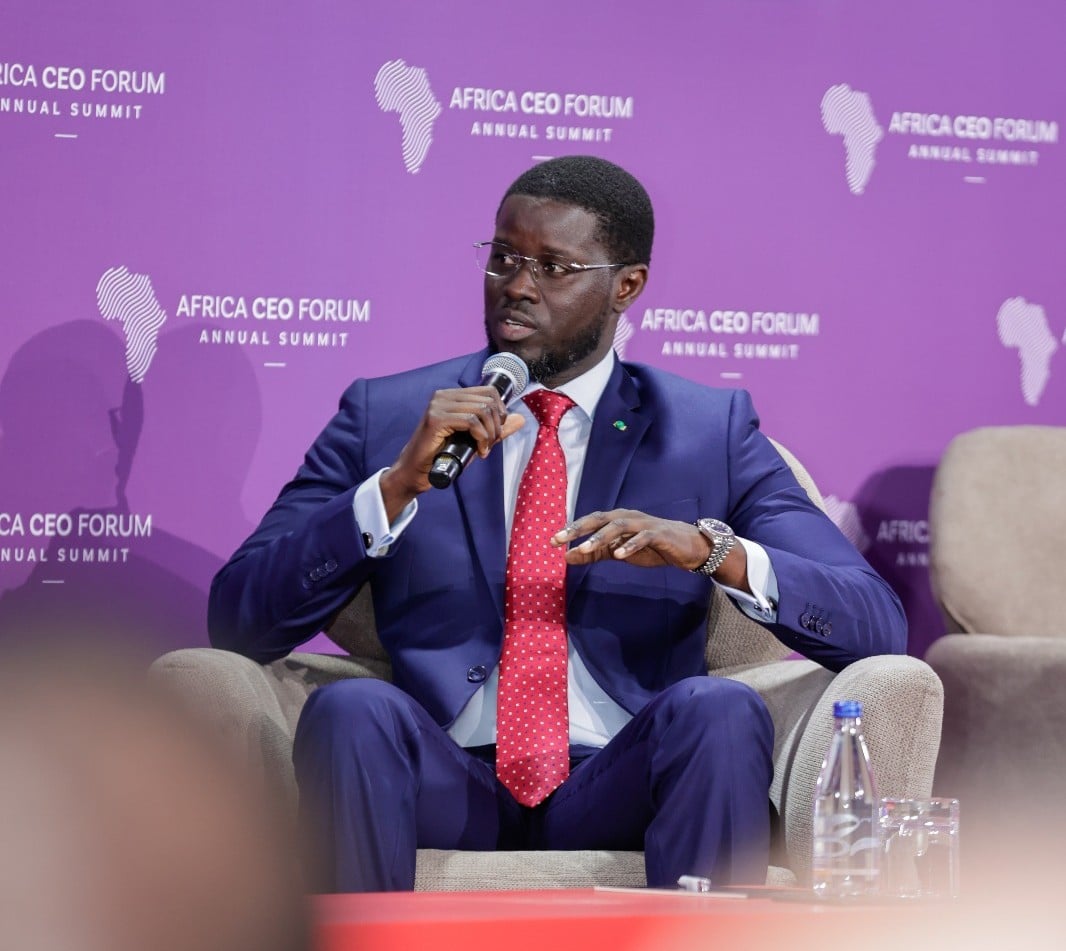
Senegal: President Faye champions digital sovereignty with $1.7bn plan
A Funding Surge Built on Fewer, Larger Deals
The scale of Senegal's 2025 funding jump is worth unpacking, because the underlying deal pattern tells its own story. Partech's data shows Senegal recorded 12 total funding deals in 2025, down 25% year-on-year — meaning the near-450% jump in total capital raised was driven by a small number of much larger rounds rather than a broadening base of funded startups. Equity funding specifically reached $84 million (up 137% year-on-year) across 10 deals (down 17% year-on-year), while debt financing contributed $139 million. That mirrors a continent-wide pattern Partech documented in its 2025 Africa Tech Venture Capital report: African tech funding overall rebounded to $4.1 billion (up 25% year-on-year), but growth was driven disproportionately by a record $1.64 billion in debt financing rather than a broad-based recovery in early-stage equity. For Senegal, this suggests Wave's outsized debt and growth-equity rounds are carrying much of the ecosystem's headline numbers, even as the pipeline of newly funded startups narrows.
Building Sovereign Digital Infrastructure
Parallel to the fintech story, Senegal's government has accelerated a state-led digital infrastructure push under what it calls the “New Deal Technologique,” organized around four pillars: digital sovereignty, digitization of public services, development of the digital economy, and positioning Senegal as a leading digital hub in Africa. The most visible recent milestone came in March 2026, when the Ministry of Communication and the Digital Economy announced the official handover of a national cloud infrastructure built specifically to power the digital systems behind the 2026 Dakar Summer Youth Olympics. The platform runs on Alibaba Cloud's Apsara Stack and is designed to keep sensitive government and event data stored locally, a direct response to long-standing concerns among African governments about hosting citizen and state data on foreign-controlled infrastructure.
That sovereignty push extends to the private data-center market. N+One is currently building three data centers in Senegal, concentrated around Dakar, in partnership with the Ministry of Digital Economy and Telecommunications, the General Delegation for Rapid Entrepreneurship of Women and Youth (DER/FJ), and the Digital Technologies Park of Senegal (PTN) — all components of the country's broader “Digital Senegal” plan. The state has also paired infrastructure investment with workforce development, with plans to train 200 cloud engineers, establish a dedicated Center of Technology Excellence, and support up to 1,000 young technologists through programs run jointly with Alibaba Cloud Academy. Officials say more than one million additional Senegalese are expected to gain free connectivity access in 2026 as part of the same push.

Connectivity at Near-Saturation
The infrastructure investment sits on top of an already dense connectivity base. By the end of 2025, Senegal had 23.93 million active mobile connections, up 4.4% from 22.92 million a year earlier, equivalent to a mobile penetration rate of roughly 128.7% — a figure above 100% because many subscribers hold multiple SIM cards, a common pattern across West Africa's competitive prepaid markets. Internet use has also expanded sharply: DataReportal's Digital 2026 Senegal report puts the country at 11.5 million internet users at the end of 2025, equivalent to an online penetration rate of about 60.6%, a notable jump from the high-30% range some forecasting models had projected just a year or two earlier. The telecommunications regulator, the Autorité de Régulation des Télécommunications et des Postes (ARTP), continues to oversee licensing and publish the market data underpinning these figures, and remains the key institution shaping how quickly remaining rural and lower-income segments get connected.
What Comes Next
Three dynamics will shape whether Senegal's digital momentum broadens or narrows further in the rest of 2026. First, whether Wave's dominance crowds out competing fintech innovation or instead seeds a wider supplier and integration ecosystem around its agent network and new card-payment rails. Second, whether the national cloud and data-center build-out — justified in large part by the Youth Olympics deadline — produces lasting commercial cloud capacity that Senegalese and regional startups can actually rent and build on once the event passes. Third, whether the “New Deal Technologique” skills pipeline (the 200 cloud engineers, 1,000 supported youth) is scaled enough to matter against a youth population entering the labor market far faster than formal tech-sector hiring can absorb. For now, Senegal's combination of a globally-backed fintech champion, sovereign cloud infrastructure and near-universal mobile connectivity puts it in rare company among Francophone African economies — but the funding concentration in a handful of large deals is a reminder that breadth, not just headline totals, will determine how durable the digital transformation proves to be.
Published By | Tech Wiz