Written By | Torch Media Africa
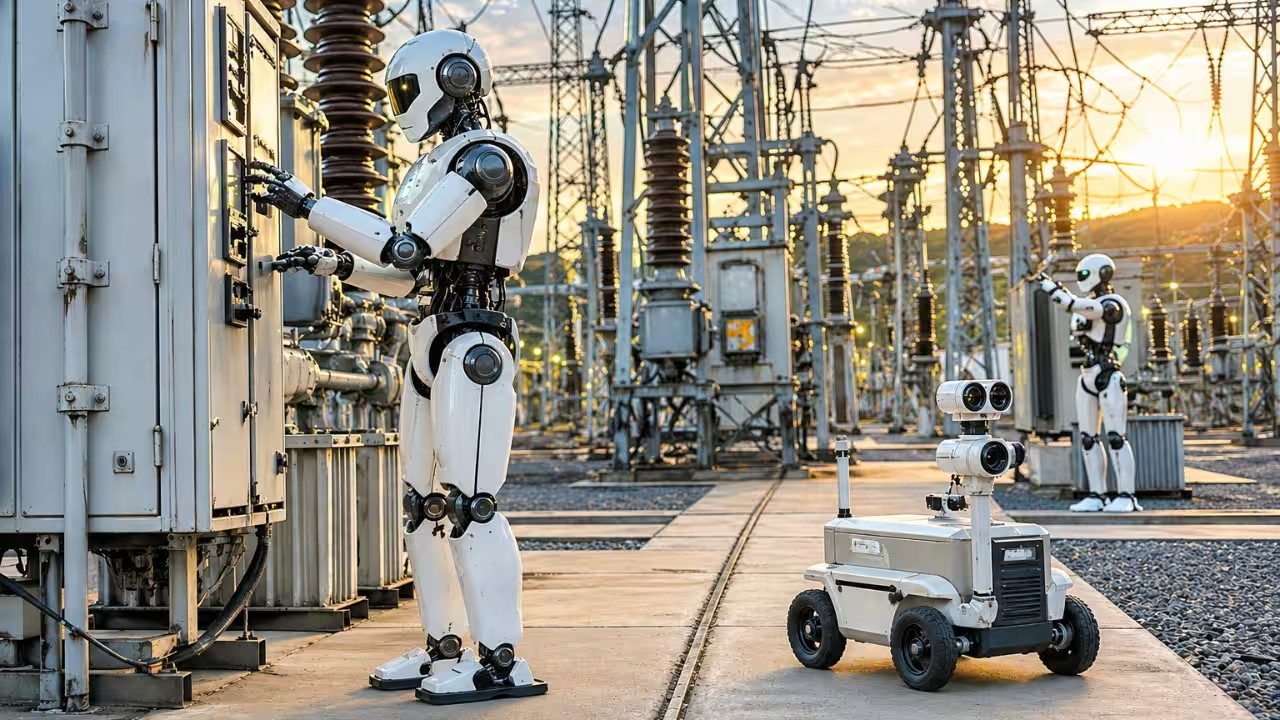
An AI let loose on a near-infinite pile of chemistry homework just found two brand-new superconductors on its first real test run — and physicists say this is only the opening act.
ESPOO, FINLAND
Somewhere inside a bank of computers at Aalto University in Finland, an algorithm spent weeks doing what would have taken human physicists years: it chewed through an almost unimaginable number of possible chemical combinations, hunting for materials that could carry electricity with zero resistance. Two candidates stood out. Researchers took those predictions to a lab at Rice University in Houston, mixed the raw elements by hand, cooled the results, and watched electrical resistance vanish completely.
The materials are called YRu₃B₂ and LuRu₃B₂ — a mouthful for what scientists are calling a genuinely exciting proof of concept. They are the first confirmed discoveries from the SuperC consortium, a project with an audacious goal: find a superconductor that works at room temperature by 2033.
"With machine learning, we may be able to push the number of materials we can process into the billions," said Päivi Törmä, the Aalto physics professor who leads the consortium.
WHAT A SUPERCONDUCTOR IS, AND WHY PHYSICISTS ARE OBSESSED
Ordinary electrical wires — the copper in your walls, the cables under city streets, the lines strung between power-grid towers — all resist the flow of electricity, bleeding energy away as heat. Globally, it adds up to staggering waste: a meaningful slice of all electricity generated is lost in transmission.
A superconductor eliminates that loss completely. Below a certain temperature, specific materials allow current to flow with zero resistance — no energy lost, no heat generated. Superconductors already do remarkable things: they're the guts of MRI machines, the technology behind maglev trains, and a contender for quantum computer qubits.
The catch is temperature. The superconductors we can rely on today only work when chilled to jaw-droppingly cold temperatures — often near absolute zero, requiring expensive liquid helium. Physicists have chased "room-temperature superconductivity" for more than a century. It remains one of the most tantalizing unsolved problems in physics, promising, if solved, to rewrite the economics of the electrical grid itself.
THE KAGOME TRICK
What makes these materials interesting isn't just that they superconduct — plenty of materials do that. It's how. Both owe their superconductivity to electrons arranging themselves into a "kagome lattice," a geometric pattern of interlocking triangles and hexagons. In that geometry, electrons can get trapped in "flat bands" — a quantum state that encourages the kind of collective, resistance-free behavior that produces superconductivity.
HOW THE AI FOUND THEM
Historically, discovering a new superconductor has meant educated guessing and painstaking lab work — one compound at a time, for years.
The Aalto team flipped that. First, machine learning screened an enormous field of possible elemental combinations for patterns associated with superconductivity. A specialized algorithm narrowed the field to the most promising candidates. Those finalists were run through quantum-mechanical calculations to check if the physics actually supported superconductivity. Only then did the candidates go to Rice University, where researchers actually built and tested them.
Both predictions were confirmed in the lab. Two for two.
That success rate is the headline. Going from a machine-learning shortlist to two verified superconductors validates the entire pipeline — and that pipeline can be pointed at practically limitless new territory.
The research, a collaboration spanning Aalto, Rice, Princeton, Ruhr University Bochum, and the Donostia International Physics Center, was published in Physical Review Research in June.
BILLIONS OF CANDIDATES, ONE BIG GOAL
The SuperC consortium was built around a simple bet: that the century-long hunt for better superconductors could be accelerated by combining quantum geometry with machine learning. The target — a room-temperature superconductor by 2033 — has always sounded audacious. Physicists have been burned before by premature claims that failed to replicate.
That's why the team's approach — rigorous calculation followed by independent experimental verification — matters. Nobody claims these materials work anywhere close to room temperature; they're proof that the discovery method works. According to Törmä, the real prize isn't these two compounds — it's the ability to search chemical space at a scale no human team could match.
WHAT THIS MEANS FOR YOU
A room-temperature superconductor would be one of the most consequential materials breakthroughs in modern history. Power grids could transmit electricity with essentially no loss. Maglev trains could become cheaper. MRI machines could shrink in size and cost. Quantum computers could become more practical.
None of that arrives tomorrow. These materials aren't going into your phone charger — they're a validation of method, not a finished product. But the significance is what they prove possible: a research pipeline that can search at a scale no human team could match, and that actually works when checked against real-world physics.
THE BOTTOM LINE
For more than a hundred years, finding new superconductors has been slow, expensive, and largely trial and error. This week, an international team showed machine learning can meaningfully compress that search — doing the tedious part at a scale human researchers never could, then handing off promising leads for real testing. Two new superconductors, verified in the lab, are the proof. Billions more candidates are waiting to be screened.



