Alibaba's new AI, trained on nearly half a million CT scans, can spot 146 different abdominal conditions in a single pass. Scientists are calling it the first "expert-level generalist" medical imaging AI — and they just gave it away for free.
SCIENCE & TECH
Somewhere in a hospital reading room, a radiologist squints at a CT scan, scanning for the tenth time that day for anything abnormal tucked among eighteen different organs. It's exhausting, high-stakes work, and even the best specialists in the world get tired, get rushed, and occasionally miss things. Now imagine handing that same scan to a piece of software that never blinks, never gets tired, and has effectively studied more scans than any human could review in several careers — and watching it outperform the majority of the humans in the room.
That's not a hypothetical anymore. On Friday, September 18, 2026, Alibaba's DAMO Academy research division published a study in the prestigious journal Science unveiling DAMO RADAR, an AI model its creators are calling "the world's first expert-level generalist medical imaging model." In head-to-head testing, it beat 23 of the 26 specialist radiologists it was pitted against. Then Alibaba did something almost as newsworthy as the result itself: it gave the model away, open-sourcing the code for anyone in the world to use.
WHAT THE AI ACTUALLY DOES
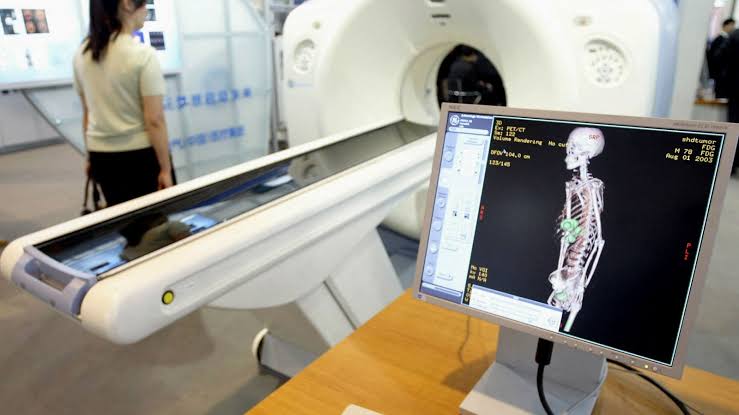
DAMO RADAR is what's known as a vision-language model — a type of AI that doesn't just look at an image, but connects what it sees to written medical language, the way a radiologist connects a shadow on a scan to the words they'll eventually type into a diagnostic report. Specifically, it was built to analyze contrast-enhanced abdominal CT scans, the workhorse imaging test used to check for everything from kidney stones to liver disease to cancer, and to flag any of 146 distinct conditions across 18 different abdominal organs — all from a single scan, in one pass.
To get there, Alibaba's researchers fed the model 420,000 real contrast-enhanced CT scans, each one paired with the radiology report a human doctor had already written about it. That produced roughly 15 million individual "image-text pairs" for the AI to learn from — essentially 15 million tiny lessons in what a particular visual pattern on a scan corresponds to in medical language.
The technical trick that made this possible is something the researchers call "organ-level fine-grained alignment." In plain English: instead of just matching an entire scan to an entire report, the system learns to match specific anatomical regions — say, a particular section of the liver — to the specific sentences in a report that discuss that exact region. That granularity is a big part of why the model can juggle 146 different conditions simultaneously instead of being trained to spot just one or two, which is how most earlier medical AI tools have worked.
Just as significant: the researchers didn't need armies of doctors to sit down and manually label every scan for training purposes, a process that has historically made medical AI catastrophically expensive and slow to build. Instead, DAMO RADAR learned directly from radiology reports that hospitals had already generated as part of normal patient care. That's a meaningful shortcut for building the next generation of these tools.
THE NUMBERS THAT HAVE DOCTORS TALKING
When Alibaba's team put the finished model through its paces, the results were tested across eight independent clinical centers, evaluating close to 40,000 real-world patient examinations — a large, rigorous sample size by the standards of medical AI research, where studies are sometimes built on a few hundred cases.
The model posted a mean AUC (area under the curve, a standard statistical measure of diagnostic accuracy where 1.0 is theoretically perfect) of 0.913 across the 146 findings it was tested on. Anything above 0.9 is generally considered "outstanding" performance in clinical diagnostic terms. In the more dramatic head-to-head matchup — AI versus 26 practicing radiologists reading the same scans — DAMO RADAR came out ahead of 23 of them.
But the more interesting numbers, at least for anyone who might someday need a CT scan themselves, come from what happened when the AI wasn't used to replace doctors, but to assist them. When radiologists used DAMO RADAR as a second set of eyes rather than competition, their disease-detection sensitivity — their ability to correctly spot something that was actually there — improved by roughly 10 percentage points. Meanwhile, the time it took them to read each scan dropped by more than 30 percent. Perhaps most strikingly, junior radiologists using the AI as an assistant performed on par with senior radiologists working without it — meaning a doctor early in their career, paired with this tool, could deliver a reading as sharp as a veteran's.
That combination — better accuracy, faster turnaround, and a leveling effect between junior and senior staff — is precisely the trifecta that health systems around the world have been chasing from medical AI for the better part of a decade, mostly without success. If the results hold up outside Alibaba's own trials, it would represent a genuine leap rather than an incremental improvement.
WHY "GENERALIST" IS THE WORD DOING ALL THE WORK
Most medical imaging AI that has made it to market or into serious research so far has been narrow by design — a model trained to detect lung nodules, say, or to flag likely breast cancer on a mammogram, and nothing else. That narrowness has made these tools genuinely useful in specific workflows but also fundamentally limited: a hospital wanting AI coverage across many conditions has had to stitch together a patchwork of separate, single-purpose tools, each with its own quirks, integration requirements, and failure modes.
DAMO RADAR's pitch is different. Researchers describe it as the first model to reach "expert level" performance while remaining a generalist — one system, one scan, 146 possible conditions flagged simultaneously, spanning organs as varied as the liver, kidneys, pancreas, spleen, and more. That's a meaningfully different proposition for a radiology department: instead of running a scan through several specialized filters, you run it through one system that's already looking for almost everything relevant in that anatomical region.
The DAMO Academy team has also said the underlying training methodology — pairing images with existing clinical text rather than requiring fresh manual labeling — could plausibly be adapted to other kinds of medical imaging beyond CT scans, opening the door to similar "generalist" models for MRI, X-ray, or other modalities down the road. If that pans out, DAMO RADAR may end up being remembered less as a single product and more as a proof of concept for how the next wave of medical AI gets built.
THE OPEN-SOURCE GAMBLE
Perhaps the most consequential decision Alibaba made wasn't technical at all — it was the choice to open the model up. The code has been released on GitHub and Hugging Face, the two most widely used platforms for sharing AI code and models, under the permissive Apache 2.0 license. The trained model weights themselves — essentially the AI's learned "knowledge" — are available under a Creative Commons license that permits research and non-commercial use but blocks commercial deployment without a separate agreement with Alibaba.
That's a deliberate middle path: academic researchers, public hospitals, and nonprofit health systems anywhere in the world can now download and experiment with a tool that would have cost tens of millions of dollars and years of proprietary research to build from scratch just a few years ago. Companies looking to build a commercial product on top of it, however, still need to cut a deal with Alibaba.
It's a strategy with precedent — Chinese tech giants have increasingly used open-source releases of powerful AI models as a way to build global goodwill, developer mindshare, and soft-power influence in the AI race, even while keeping commercial monetization on a tighter leash. Whatever the corporate calculus, the practical effect is that a hospital in a country with far fewer resources than Alibaba's home market could, in principle, start using or studying a genuinely cutting-edge diagnostic tool almost immediately.
THE CAVEATS NOBODY SHOULD SKIP
Before anyone starts imagining AI doctors replacing radiologists next year, there are real limits worth sitting with. DAMO RADAR has not received clearance from the U.S. Food and Drug Administration, and there is no authorized clinical deployment of the tool anywhere in the United States. It exists, for now, as a research and validation tool — an extremely promising one, but not something a hospital can simply plug into patient care tomorrow without navigating a lengthy regulatory process.
The model's scope is also narrower than the "generalist" label might suggest to a lay reader. It only handles contrast-enhanced abdominal CT scans. It cannot read non-contrast scans, X-rays, MRIs, mammograms, or imaging of the chest, brain, or limbs. "Generalist" here means broad across one specific type of scan and one region of the body — not a universal medical imaging AI that reads everything a hospital might throw at it.
There's a demographic wrinkle worth flagging too: the training data underpinning DAMO RADAR came from Chinese medical centers. Diseases don't present identically across every population — differences in genetics, diet, environmental exposures, and healthcare practices can all shift how a given condition looks on a scan or how common it is in the first place. Until the model is independently validated on more geographically and ethnically diverse patient populations, it's an open question how well its 0.913 AUC score would hold up in, say, an American or European hospital.
WHAT EXPERTS ARE SAYING
The DAMO Academy researchers themselves are characteristically bold in their framing, describing their creation in the Science paper as the first system of its kind to hit expert-level accuracy while covering this many conditions in one generalist model — language that positions this explicitly as a milestone rather than an incremental step. That kind of claim, published in one of the world's most rigorously peer-reviewed scientific journals, carries real weight in a field that has seen plenty of hype-driven medical AI announcements fail to hold up under scrutiny.
The broader medical AI research community has, in similar past cases, urged caution about generalizing single-institution or single-country results too quickly — a caveat that applies here as much as anywhere, especially given the demographic concentration of the training data. Still, the sheer scale of the validation — eight independent centers, roughly 40,000 real patient cases — sets DAMO RADAR apart from many prior medical AI papers that leaned on far smaller test sets.
WHAT THIS MEANS FOR YOU
If you or a family member ever needs an abdominal CT scan, tools like this one are the reason your results might eventually come back faster, and possibly more accurately, than they would have a few years ago. The most realistic near-term impact isn't an AI replacing your doctor — it's an AI working alongside your doctor, catching things a tired or rushed radiologist might otherwise miss, and helping newer doctors perform like seasoned veterans right out of the gate.
For patients in under-resourced parts of the world, where there may be a severe shortage of trained radiologists relative to the population, an open-source tool like this — even limited to abdominal CT scans — could eventually mean the difference between a cancer caught early and one caught too late. That's the genuinely exciting version of this story.
The more sobering version is that none of this happens overnight. Regulatory approval, integration into hospital IT systems, additional validation on diverse populations, and the simple fact that AI-assisted care needs a human doctor confidently interpreting the AI's output — all of that stands between "published in Science" and "used on you at your next hospital visit." But the trajectory is now unmistakable: AI systems are no longer just matching narrow specialists at narrow tasks. They're starting to out-diagnose broad panels of human experts across dozens of conditions at once, and the barrier to entry for building the next one just got a lot lower.
THE BOTTOM LINE
Twenty-three out of twenty-six is not a fluke, and it's not a headline dressed up by a press release — it's a peer-reviewed result from one of the most respected scientific journals on the planet, tested on tens of thousands of real patients across multiple hospitals. Whether or not DAMO RADAR itself ever reads a scan in an American hospital, the approach behind it — learn from the reports doctors already write, align text to anatomy with surgical precision, and validate at scale before claiming victory — now exists as a blueprint the rest of the medical AI field will be racing to copy.
The age of the AI radiologist isn't coming. In a research lab in China, with a paper now sitting in one of the world's top scientific journals, it has already arrived. What happens next is a question of regulation, trust, and how fast hospitals are willing to move — not whether the technology works.
Published By | Tech Wiz