Written By | Torch Media Africa
A scrappy Colorado startup just launched a never-before-tried rescue mission to grab a 22-year-old NASA telescope before it burns up over the Pacific — and nobody is completely sure it will work
KWAJALEIN ATOLL, Marshall Islands
It sounds like the plot of a summer blockbuster: a dying space telescope, older than most smartphones tracking its progress, is plunging toward Earth's atmosphere. Instead of a multibillion-dollar mega-rocket, NASA handed $30 million to a small Colorado company and told them to build a robot capable of catching a 22-year-old satellite never designed to be caught.
Today, that robot rides into orbit.
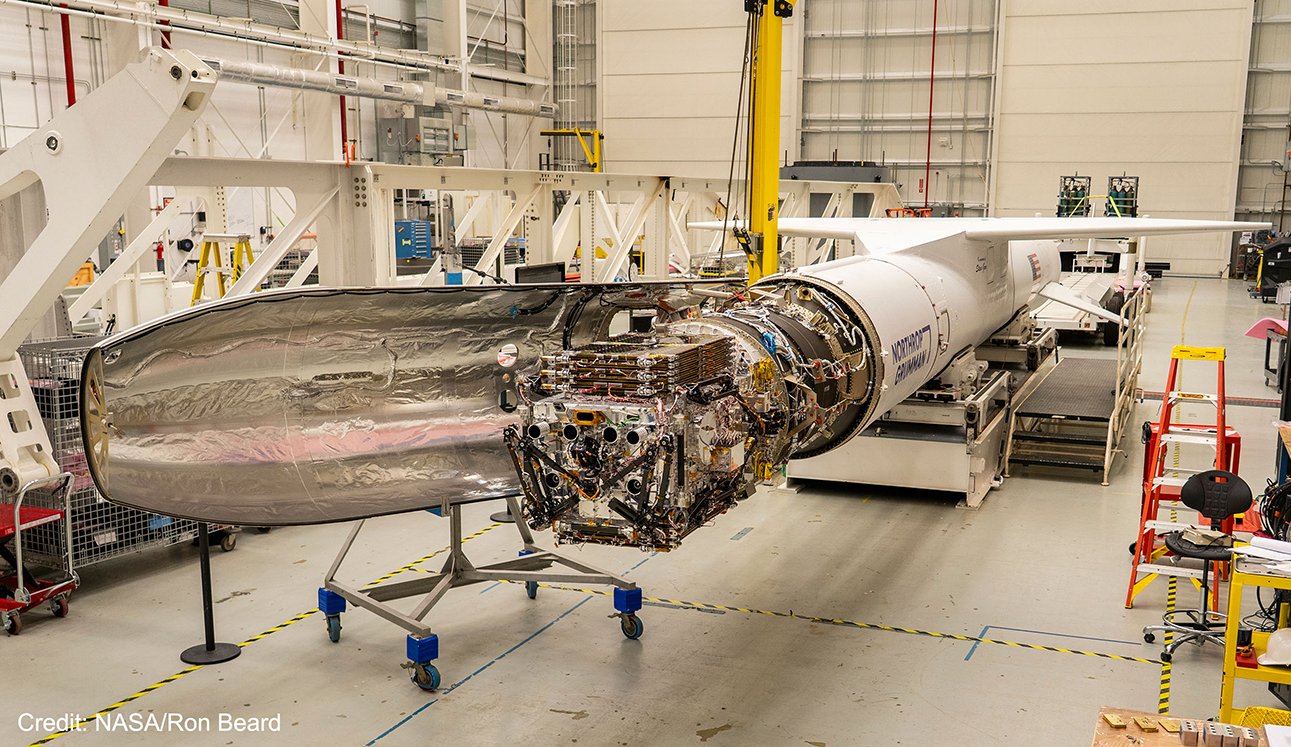
Early this morning, a Northrop Grumman Pegasus XL rocket dropped from the belly of an L-1011 aircraft above Kwajalein Atoll and flung a refrigerator-sized spacecraft called LINK toward low Earth orbit. Its target: the Neil Gehrels Swift Observatory, a gamma-ray-hunting space telescope launched in November 2004 that has spent two decades revolutionizing astronomy. Now Swift is dying, dragged downward by atmospheric drag, and LINK is the only thing standing between it and a fiery reentry.
If this works, it will be the first time a commercial spacecraft has docked with a government satellite never built for docking. If it fails, NASA loses one of its most productive observatories—and the nascent in-space servicing industry absorbs a public black eye.
The Telescope That Refused to Quit
Swift was supposed to last two years. Its job: catch gamma-ray bursts—the most violent explosions in the universe—within seconds of their flash, then swing its X-ray and ultraviolet telescopes around fast enough to catch the fading afterglow. It worked spectacularly. By 2019, fifteen years into a two-year mission, Swift had detected more than 1,400 gamma-ray bursts, including the most distant ever recorded. It became a rapid-response trigger for telescopes worldwide and, more recently, for gravitational-wave observatories.
In 2018, NASA renamed the mission after Neil Gehrels, the astrophysicist who had led it from conception until his death. A fitting tribute to a mission that had wildly outlived its design life.
But orbits are not forever. Swift settled into orbit a little over 600 kilometers up, and atmospheric drag eventually wins. Solar activity has been unusually high, puffing up Earth's upper atmosphere and increasing drag. Without intervention, Swift would descend below 300 kilometers by October 2026 and begin an uncontrolled death spiral.
A Ship Named LINK, a Company Named Katalyst
NASA turned not to its usual aerospace primes but to Katalyst Space Technologies, a small satellite-servicing company that had never attempted anything close to this scale. Through NASA's SBIR program, the agency awarded Katalyst a roughly $30 million Phase III contract in September 2025 with an almost absurd mandate: design, build, test, and launch a spacecraft capable of finding, approaching, grappling, and reboosting Swift—in well under a year.
A comparable mission typically takes 24 months. Katalyst did it in roughly nine.
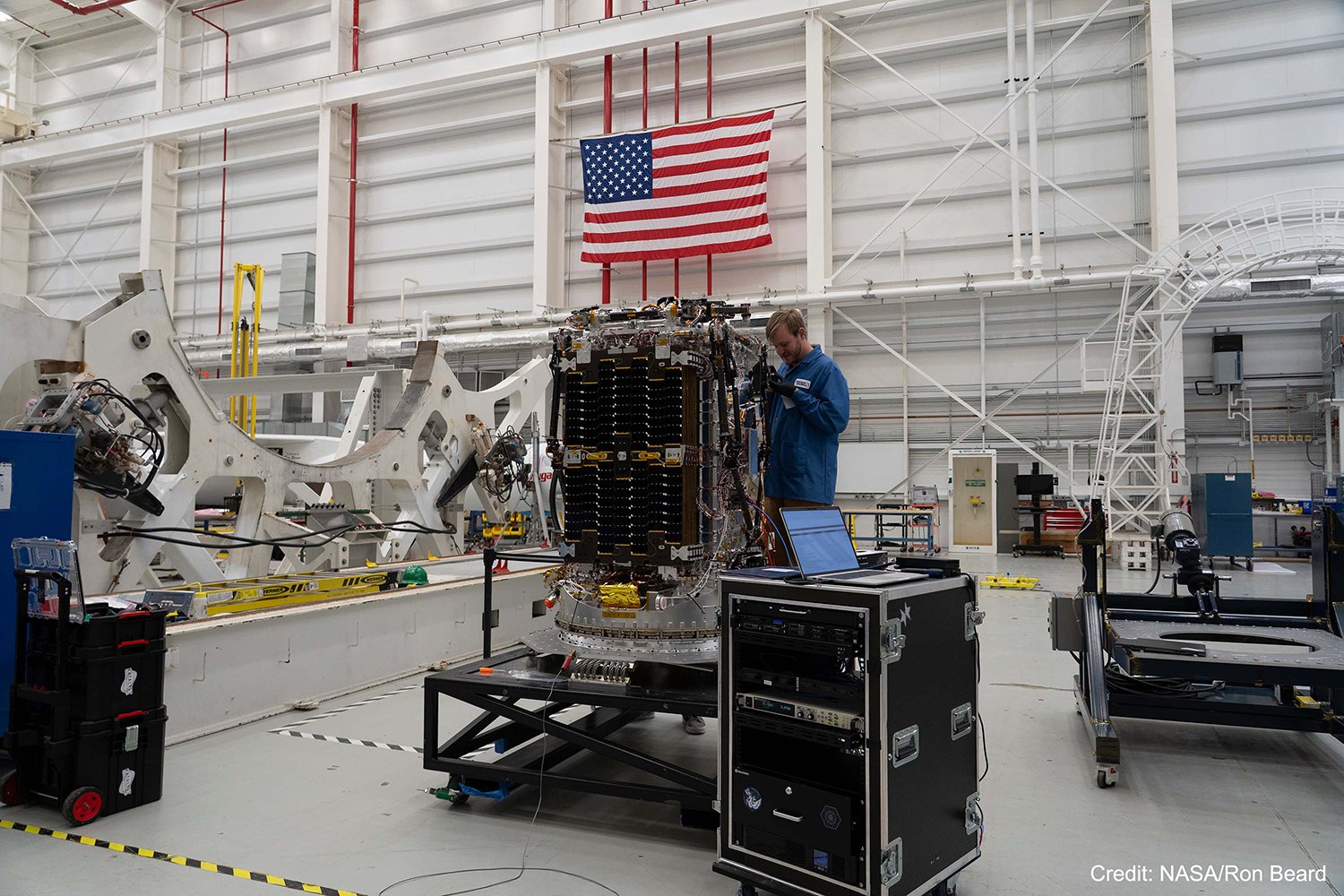
The result is LINK, about the size of a household refrigerator, bristling with three ion engines, three robotic arms, and a suite of sensors. Environmental testing wrapped up at NASA's Goddard on May 4—just eight months after the contract was signed. Integration with the Pegasus rocket finished June 9. This morning, it launched.
"We think we have several months where Swift will be at a sufficiently high altitude to give Katalyst a great chance to capture and boost us," said Brad Cenko, Swift's principal investigator. The window is real, but not generous.
The Part Nobody Has Done Before
Swift was never designed to be serviced. No docking ring. No navigation markers. No grappling fixture. Every previous on-orbit servicing demonstration involved either a cooperative satellite or hardware designed years in advance.
LINK's robotic arms will have to find purchase on a 22-year-old satellite whose surface materials have spent two decades baking and freezing in low Earth orbit. Engineers have flagged several failure points: solar arrays could fail to deploy; capture arms could miss; Swift's aged insulation could flake or tear on contact. There's also "trackable conjunction risk"—the fact that flying one spacecraft directly at another, on purpose, in a crowded orbital environment, creates its own hazard.
If LINK survives first contact, the choreography is methodical: three to four weeks of closing in and inspecting, then a four-to-six-week boost phase, pushing Swift back toward its original altitude to buy years more scientific life.
Why a Small Company Got the Job
Katalyst is not Lockheed Martin or Northrop Grumman. It's a venture-backed startup building a name in on-orbit servicing—satellite refueling, debris removal, and in-space assembly. Winning the first uncooperative docking with a government science asset is the kind of credibility-making mission that can define a young space company.
It also fits a broader pattern: NASA is increasingly buying capability from commercial providers at a fraction of traditional cost, accepting more risk for speed and savings. A $30 million contract is, by NASA standards, a rounding error—Swift itself cost hundreds of millions. If LINK succeeds, it's a vivid argument for the commercial-servicing model. If it fails, critics will have a very public example.
What This Means for You
Most people won't directly feel the difference between Swift staying in orbit or burning up. But successful uncooperative docking is the missing piece for a real in-space servicing economy: satellites refueled instead of replaced, debris captured instead of multiplying, aging infrastructure kept useful instead of discarded. With low Earth orbit growing more crowded every year, the techniques LINK is testing could determine how humanity manages an increasingly cluttered sky.
There's also a more immediate payoff: astronomers around the world rely on Swift's rapid-response alerts to point telescopes at fleeting cosmic explosions. Every extra year of Swift's life is extra years of front-row seats to the universe's most extreme events.
What Happens Next
LINK will spend most of July creeping closer to Swift, with engineers poring over imagery before committing to the capture attempt, expected in late July or early August. If the grapple succeeds, the real test—months of careful, incremental reboosting—will play out largely in obscurity. Either way, the mission has already made history simply by attempting something no one had tried before.
Conclusion
For now, Swift sails on, unaware that a refrigerator-sized robot named LINK is chasing it down with ion engines and three mechanical arms, hoping to do something that, as one space reporter put it, "no one thought was going to be possible." Whether this gambit succeeds or fails, it marks a turning point: NASA and the commercial space industry are beginning to see satellites not as disposable hardware with a fixed shelf life, but as assets worth fighting, however improbably, to save.



