Written By | Torch Media Africa
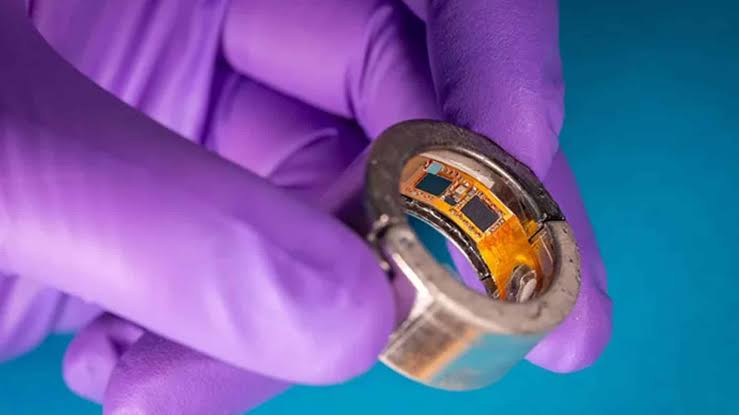
UC San Diego engineers built a wearable that pulls fluid painlessly from your fingertip and simultaneously tracks glucose, ketones, alcohol and more — all day, without a single prick
Science & Tech
For the roughly 38 million Americans living with diabetes, and the millions more managing prediabetes, metabolic conditions, or simply obsessive health-tracking habits, the daily ritual is brutally familiar: prick a finger, squeeze out a drop of blood, feed it to a meter, wait, repeat — sometimes four, six, even ten times a day. Continuous glucose monitors have eased that burden for many, but they still require a needle-tipped sensor jabbed under the skin and worn for days at a time.
Now, a team of engineers at the University of California, San Diego says they've built something that could make both approaches feel like relics: a smart ring, worn like ordinary jewelry, that reads your body's chemistry continuously through nothing more invasive than the sweat on your fingertip.
The device, published this week in the journal Nature Communications, is called CHARM — short for Continuous Health Analyzing Ring Module — and its creators, working in the nanoengineering lab of UC San Diego professor Joseph Wang, are calling it the first fully integrated smart ring capable of simultaneously and continuously tracking multiple biochemical markers from sweat, with zero needles and zero discomfort.
How Do You Get Sweat Without Making Someone Sweat?
The single biggest technical problem standing between "wearable that reads sweat" and "actual usable medical device" has always been maddeningly basic: how do you reliably get sweat out of skin that isn't currently sweating? Most people's fingers, sitting at rest in an air-conditioned room, aren't exactly gushing with perspiration on demand, and previous sweat-sensing wearables have often required exercise, heat, or chemical stimulation to produce a usable sample — a nonstarter for something meant to be worn quietly all day.
CHARM's answer is a piece of soft materials science called an osmotic hydrogel — a gel-like polymer that creates its own gentle pressure gradient, physically drawing tiny amounts of fluid up and out through the skin's surface using osmosis, the same basic physical principle that makes water move across a cell membrane. No exercise, no heat lamp, no irritating pretreatment. Just skin, gel, and time.
That fluid then flows to a compact suite of onboard sensors embedded in the ring itself, which the UCSD team says can track up to four separate biochemical measurements simultaneously: glucose, ketones, vitamin C, uric acid, lactate, and alcohol concentration, according to the various configurations tested. The whole assembly is powered by a flexible zinc-silver oxide rechargeable battery, thin and pliable enough to curve around a finger, that the researchers say delivers roughly 12 hours of continuous operation between charges.
"A ring capturing dynamic molecular information in real time would be extremely useful for making informed decisions regarding health, diet and lifestyle," said Wang, whose lab has spent years pioneering wearable and flexible chemical sensors. "For example, the ring's ability to track both glucose and ketone continuously and simultaneously would greatly benefit optimal insulin dosing for the management of diabetes."
Putting It to the Test — On Real Patients
Prototypes are one thing. Clinically meaningful accuracy is another, and it's where a lot of promising wearable health tech has historically stumbled. The UCSD team didn't just test CHARM in a lab beaker — they put it on real people, including both healthy volunteers and patients living with Type 1 diabetes, and compared its readings directly against the medical devices patients already rely on.
According to the published results, the ring's glucose readings closely tracked those produced by commercial continuous glucose monitors — the current clinical gold standard for real-time blood sugar tracking. Its ketone readings similarly lined up closely with those from commercial blood ketone meters, the fingerstick devices people with Type 1 diabetes often use to watch for dangerous ketone buildup, a warning sign of the life-threatening complication diabetic ketoacidosis.
That dual-tracking capability — glucose and ketones, simultaneously, continuously, from the same tiny ring — is what has diabetes researchers particularly interested. Managing insulin dosing safely often requires watching both numbers together: a person's blood sugar reading alone doesn't always tell the full story about whether their body is dangerously short on usable insulin. A wearable that watches both at once, painlessly and continuously, addresses a genuine, longstanding gap in home diabetes management tools.
Beyond Diabetes: Vitamin C, Alcohol, and the Quantified Body
While diabetes management is the headline application, the research team's broader ambition for CHARM stretches well past blood sugar. The ring's ability to simultaneously read multiple biomarkers opens the door to uses far outside clinical disease management.
Uric acid tracking, for instance, could help people managing gout — a painful form of arthritis driven by uric acid crystal buildup — watch their levels in real time rather than relying on periodic blood draws. Lactate monitoring has obvious appeal for athletes and coaches trying to fine-tune training intensity without expensive lab equipment. Vitamin C readings could feed into nutrition and wellness tracking, part of the broader "quantified self" wave that's already made continuous glucose monitors a fixture on the wrists — or now, fingers — of health-conscious people who don't even have diabetes.
And then there's the alcohol-sensing capability, which has understandably generated some of the buzziest headlines around the device. A ring capable of continuously reading blood alcohol-adjacent biomarkers through sweat, without a breathalyzer, raises intriguing possibilities for personal safety apps, designated-driver tools, or simply helping people track their own consumption more honestly than a mental tally at last call.
The Fine Print: This Is a Prototype, Not a Product
Before anyone starts hunting for a place to preorder one, it's worth being blunt: CHARM is a research prototype, not a finished commercial product, and the researchers themselves are the first to say so. The version tested in the published study was built and validated in a university lab setting, with the relatively small, controlled participant groups typical of an early-stage proof-of-concept study — not the tens of thousands of users and years of real-world wear-and-tear data that regulators like the FDA require before clearing a device for consumer diagnostic use.
Specific hurdles the UCSD team has flagged for future work include improving the long-term durability and consistency of the hydrogel component, which needs to keep reliably drawing fluid through repeated use over days, weeks, and months without degrading or irritating skin. The team also says it needs to validate accuracy across a much broader and more diverse population — different skin types, sweat compositions, ages, and health conditions — before the ring's readings could be trusted the way an FDA-cleared continuous glucose monitor's readings are today.
There's also the unglamorous but critical question of manufacturing at scale, and cost. Flexible batteries, embedded biochemical sensors, and precision hydrogel components are all more complex — and currently more expensive — to mass-produce reliably than the accelerometers and heart-rate LEDs found in today's mainstream smart rings like the Oura Ring or Samsung's Galaxy Ring, which mostly track motion and simple optical signals rather than actual body chemistry.
Expert Perspective: A "Holy Grail" Moment for Wearable Health Tech
Coverage of the research across the medical technology press has repeatedly reached for one particular phrase: that CHARM represents a step toward cracking the "holy grail" of non-invasive blood sugar measurement — a goal that has eluded engineers and drawn hundreds of millions of dollars in failed or stalled research efforts for well over two decades. Non-invasive glucose sensing in particular has a long, frustrating history of prototypes that looked promising in press releases and then quietly disappeared once broader clinical trials exposed accuracy problems.
What makes researchers cautiously more optimistic this time is the combination of factors CHARM brings together: a passive, needle-free collection method that doesn't require exercise or skin damage; validated, published clinical comparison data against gold-standard existing devices, rather than just lab bench results; and a design that tracks multiple biomarkers simultaneously rather than chasing glucose alone, which broadens its potential usefulness — and its potential market — well beyond people with diabetes.
The nanoengineering approach pioneered in Wang's lab builds on years of earlier work in flexible, wearable chemical sensors, including earlier sweat-sensing patches and tattoo-like sensors that required exercise-induced sweating to function. CHARM's passive osmotic collection method is being described by researchers in the field as the missing piece that could finally make continuous sweat-based biosensing viable for everyday, all-day wear rather than just post-workout snapshots.
What This Means for You
If you or someone you love manages diabetes, the practical promise here is significant, even if it's still years away from a pharmacy shelf: a future where continuous, clinically meaningful glucose and ketone tracking doesn't require wearing an adhesive patch with a needle under the skin, replaced every one to two weeks, but instead looks like putting on a ring in the morning the same way you'd put on any other piece of jewelry.
For the much larger population without diabetes, the ring points toward a broader shift already under way in consumer wearables — from tracking simple physical signals like steps and heart rate toward tracking the body's actual internal chemistry in real time. That's a meaningfully different category of information, and one that raises its own future questions about data privacy, medical-grade accuracy claims in consumer products, and how insurers or employers might eventually want access to that kind of continuous biochemical data.
For now, there's no timeline for commercial availability, and no company has been named as a manufacturing partner for bringing CHARM to market. Anyone managing diabetes today should continue relying on their current doctor-approved monitoring devices and should not treat this prototype as an available or approved alternative.
The Bigger Picture
CHARM is one entry in a much larger race, underway across university labs and startups worldwide, to finally deliver reliable, needle-free health monitoring in an unobtrusive, everyday form factor. Smartwatches and rings that already track heart rate, blood oxygen, and sleep have primed millions of consumers to expect this kind of passive, continuous body data. What's been missing is real biochemistry — the molecular-level information doctors actually rely on for conditions like diabetes — rather than just the physical signals a wrist-worn accelerometer or optical sensor can capture.
If CHARM or a device like it clears the considerable remaining hurdles of durability, accuracy, and regulatory approval, it could mark a genuine turning point: the moment wearable technology stopped just counting your steps and started reading your blood.



