BRISTOL, ENGLAND
Most butterflies live like fireworks: a brief, brilliant burst of color and then nothing. A typical butterfly emerges, flies for a couple of weeks, and dies—often before it ever grows old in any meaningful sense. But deep in the rainforests of Central and South America, one extraordinary genus has quietly rewritten the rules of insect aging. Scientists say it could become one of the most important new models for understanding why living things age at all—humans very much included.
The butterfly is Heliconius, sometimes called the longwing, and according to a landmark study published in Nature Communications on June 16, 2026, by a University of Bristol-led team, certain species live roughly three times longer than their closest relatives—and in the most extreme cases, an astonishing 25 times longer. Even more remarkable: many show almost no physical decline as they age, performing just as well in old age as they did when freshly emerged. Scientists are calling it a "geriatric" butterfly species, and they mean it as a compliment.
A 25-Fold Lifespan Gap, Hiding in Plain Sight
The numbers are stark enough to make any biologist sit up. In controlled observation, Heliconius hewitsoni reached a maximum lifespan of 348 days—nearly a full year for an insect most people assume lives weeks. Compare that to Dione juno, a closely related species studied under similar conditions, which survived only about 14 days. That's a 25-fold difference between two butterflies that, evolutionarily speaking, are practically cousins. Translated into human terms, it would be the difference between living to 80 and living to 2,000.
What makes the discovery even more striking is what doesn't happen to these long-lived butterflies as they age. In most animals, aging comes with steady physical decline—weaker muscles, slower reflexes. Researchers tested grip strength in older Heliconius hecale and found they performed just as well as younger counterparts, with no detectable age-related decline. Several other species showed the same pattern: extended lifespan paired with a stubborn refusal to physically deteriorate.
The Secret May Be Hiding in Pollen
The answer may be sitting on flowers all along: pollen. Unlike most butterflies, which survive purely on nectar—essentially sugar water—adult Heliconius have evolved the unusual habit of actively feeding on pollen throughout their lives. Pollen is packed with protein and amino acids, the basic building blocks for cellular maintenance and repair. Researchers believe this steady diet gives them a continuous supply of raw material for repairing cellular damage that would otherwise accumulate and drive aging.
But pollen-eating isn't the whole story. The study's authors identified a second, independent contributor: evolved biological changes within the butterflies themselves, separate from diet. In other words, Heliconius appears to have evolved a two-pronged strategy for cheating time—one nutritional, one written directly into its biology. Disentangling how much each contributes is now the focus of ongoing research.
Not Your Average Butterfly
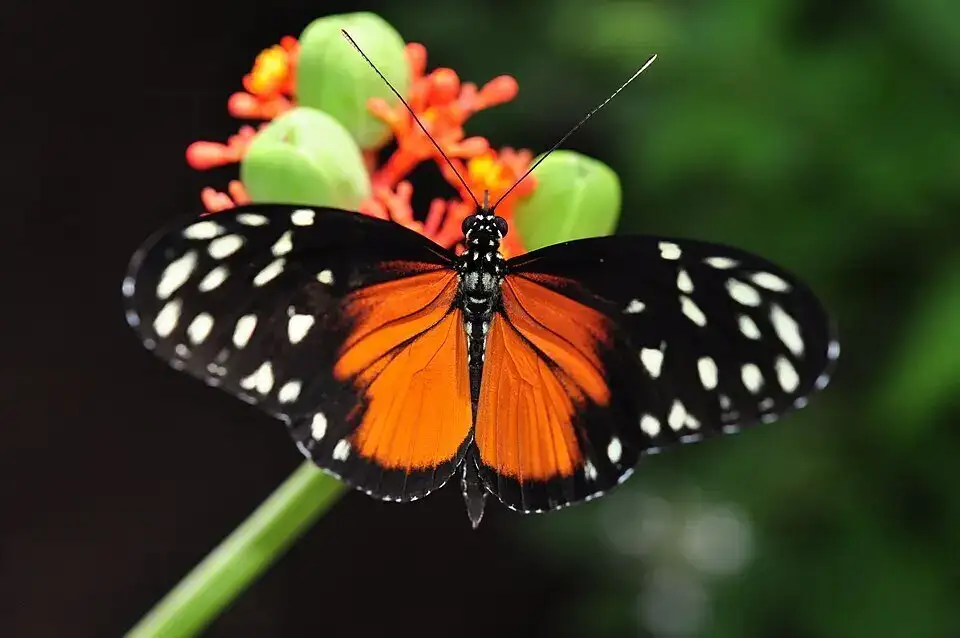
Heliconius is already famous among biologists for reasons unrelated to aging. The genus is one of the most celebrated examples of mimicry in nature—different species have independently evolved nearly identical black, orange, and yellow wing patterns to warn predators they're toxic, thanks to cyanide-based compounds from passionflower vines. Charles Darwin's contemporary Henry Walter Bates used Heliconius to help develop early evolutionary theory in the 1860s, and the genus has remained a favorite subject for evolutionary biologists ever since.
That existing genetic knowledge is a major reason the longevity discovery is landing with such impact. Because Heliconius genomes have been extensively mapped for decades in the context of wing-pattern evolution, researchers have an unusually rich genetic toolkit ready to apply to the aging question. Rather than starting from scratch, they can lean on an enormous existing library of genetic data to chase down the specific genes responsible for slowed aging far faster than would otherwise be possible.
Why a Butterfly Could Crack the Code on Human Aging
It might seem like a stretch to connect a tropical butterfly to human aging research, but evolutionary biologists say that's exactly the point. Dr. Jessica Foley, the study's lead author, explained: "The exciting implication of this lifespan extension is that it provides a powerful opportunity to identify the mechanisms that underpin longevity. By comparing long-lived Heliconius with their short-lived relatives, we have a natural evolutionary experiment that can help reveal how lifespan is extended."
That phrase—a natural evolutionary experiment—is the key. Most aging research relies on lab mice, worms, or fruit flies genetically engineered to live longer, which can make it hard to know whether an intervention reflects fundamental biology or lab artifacts. Heliconius offers a case where evolution itself has run the experiment, producing closely related species that diverge wildly in how long they live and how gracefully they age.
How This Stacks Up Against Nature's Other Long-Livers
Heliconius isn't the only creature to defy its family tree's aging script—naked mole rats live roughly ten times longer than similarly sized rodents; Greenland sharks can live for centuries—but it's a particularly dramatic example precisely because butterflies are supposed to be short-lived. What makes the Heliconius case so valuable is the unusually clean, controlled comparison available between long-lived and short-lived species that are otherwise genetically and ecologically similar, sharing habitat and evolutionary history right up until one lineage essentially decided to stop aging on the same schedule as its cousins.
What Comes Next
The Bristol team's next steps will likely involve digging deeper into the cellular and molecular pathways responsible for slowed aging—looking for specific antioxidant systems, repair enzymes, or metabolic adaptations that allow these butterflies to maintain muscle function well into extreme old age. If researchers can identify a conserved biological pathway—one that exists in some form in humans too—it could eventually inform research into human healthspan, the stretch of life free of significant age-related decline, rather than simply lifespan, the raw number of years lived.
What This Means for You
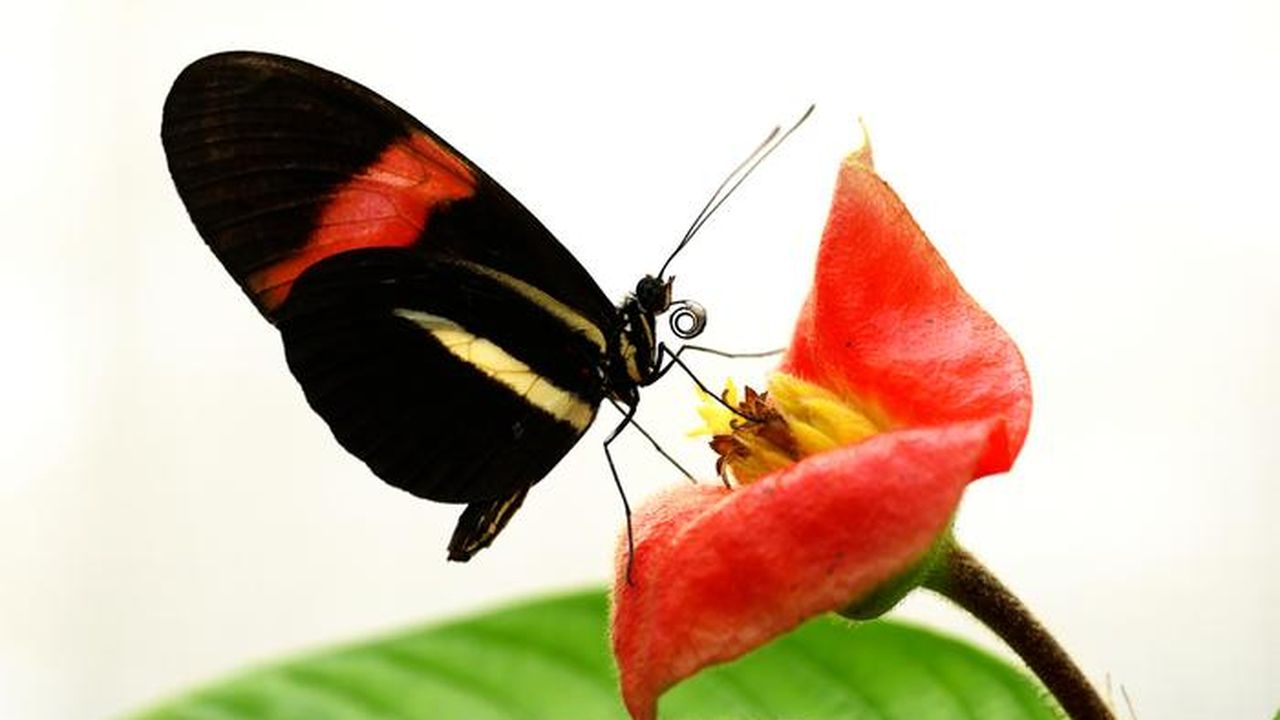
No, eating pollen won't make you live to 100 with the grip strength of a 20-year-old—human biology is far more complex. But the discovery adds to a growing body of science suggesting that aging is not simply an unstoppable countdown clock built into every living cell. It's a process that, in at least some species, can be substantially slowed or paused through a combination of diet and evolved biology. Understanding how nature pulled that off in a butterfly could eventually point researchers toward entirely new categories of anti-aging interventions in mammals, including us. For now, the practical takeaway is smaller but still meaningful: the next time you see a black-and-orange Heliconius drifting through a tropical garden, you may be looking at one of the longest-lived insects on the planet—and quite possibly one of the most scientifically important.
The Bottom Line
In a year dominated by AI, chip shortages, and billion-dollar corporate bets, it's worth pausing on a study that came from something much smaller and much older than any data center: a butterfly that figured out how to slow down time millions of years before humans ever wondered if we could do the same. Heliconius's secret—eat well, evolve smart, and refuse to fall apart—may turn out to be one of the more elegant blueprints biology has ever handed scientists for understanding why we age, and whether we have to age the way we currently do.
Published By | Tech Wiz