Written By | Torch Media Africa

A frictionless, supercooled helium fluid with no electric charge could solve the biggest headache in quantum computing — noise
SCIENCE & TECH
Quantum computers are supposed to change the world: crack impossible chemistry problems, design miracle drugs, optimise global logistics and supercharge artificial intelligence. They have been 'ten years away' for about thirty years. And the reason they keep slipping over the horizon is not a lack of ambition or money. It is that qubits, the delicate building blocks of these machines, are dreadfully, hopelessly fragile.
Breathe on one wrong, and it forgets what it was doing. A stray electrical charge, a whisper of electromagnetic noise, a vibration — any of them can scramble a quantum calculation in a heartbeat. The more qubits you add, the worse it gets.
Now a team led by the University of Surrey in England says it has a radical fix, and it comes from one of the weirdest substances in physics: superfluid helium. Their new design, called the Superfluid Helium Oscillator Quantum device, or SHOQ, is calculated to have error rates around 100 times lower than today's leading superconducting qubits. If it can be built, it could be a key to scaling quantum machines from lab curiosities to world-changing tools. The big 'if' comes with a flashing warning light. So far, it exists only on paper.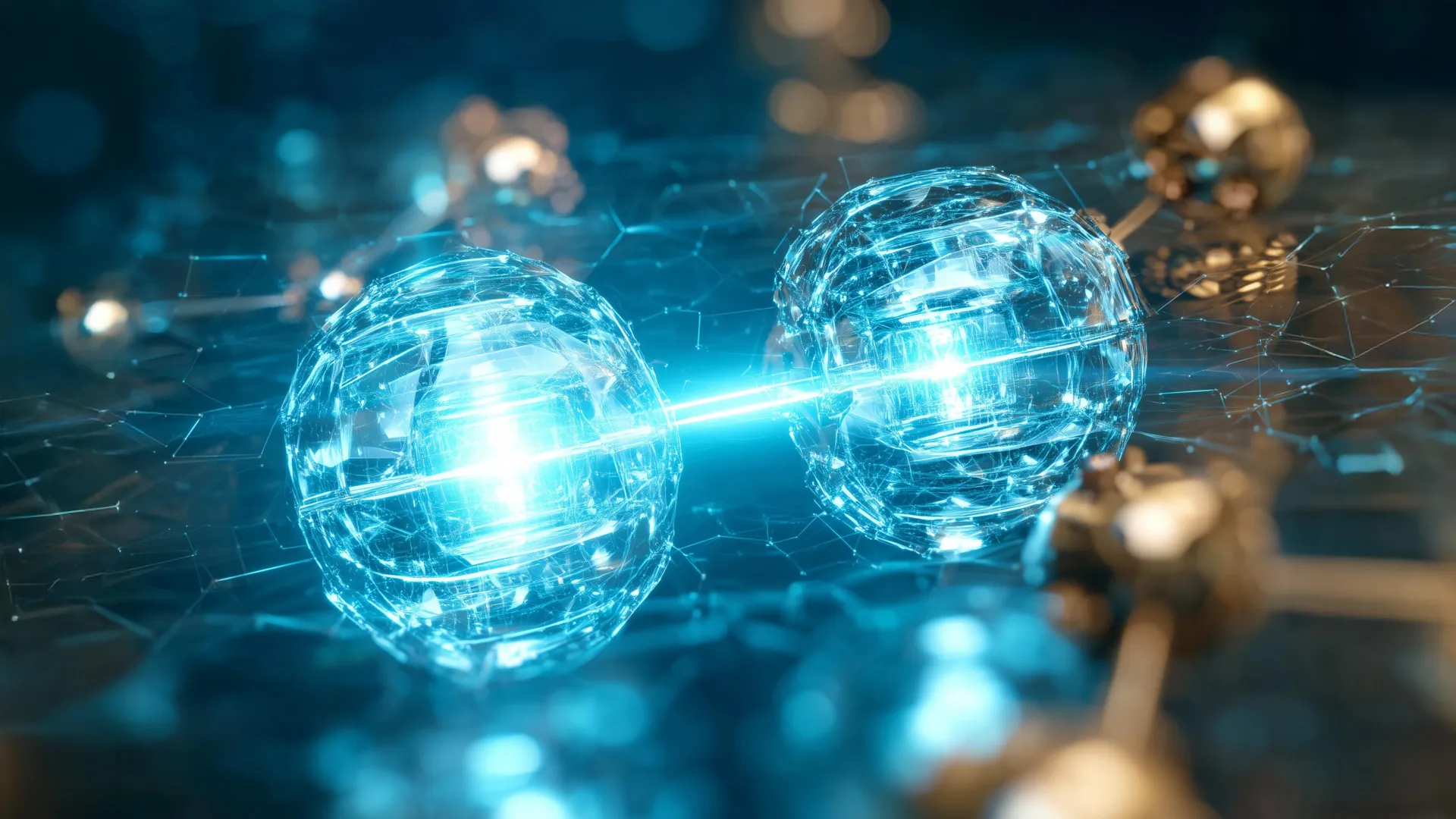
Why qubits are so fragile
A normal computer bit is either a 0 or a 1. A qubit can be both at once — a state called superposition — and can be mysteriously linked to other qubits through entanglement. Harness those tricks across many qubits and certain problems that would take a classical supercomputer longer than the age of the universe could, in theory, be solved in minutes.
The trouble is that this quantum magic is exquisitely easy to destroy. Physicists call the loss of quantum behaviour 'decoherence'. Today's most widely used qubits, superconducting circuits of the kind pursued by Google, IBM and others, carry electrical charge, which makes them sensitive to electromagnetic interference and stray electrical charges, a bit like static electricity wrecking a radio signal. Researchers get around this with enormous cooling rigs and an arsenal of error-correction tricks that use many imperfect qubits to simulate one reliable 'logical' qubit. It works, but at a staggering cost in hardware. Reducing the raw error rate at source would slash that overhead.
Enter the superfluid
Superfluids are among the strangest states of matter. Cool helium to within a sliver of absolute zero and it can flow with no friction at all, climbing up the walls of its container and swirling in a whirlpool that never slows. Helium comes in two stable forms. The Surrey design uses the rarer isotope, helium-3, which becomes a superfluid at even lower temperatures than its common cousin, helium-4.
The crucial point is that helium is electrically neutral. Where a superconducting qubit is built from charge-carrying electrons, a superfluid helium qubit has no charge for stray electromagnetic noise to grab hold of. In effect, the qubit comes with built-in armour against the most common cause of errors.
The idea of using superfluid helium in quantum devices is not brand new, and the researchers say as much. 'We are not the first to think about individual components... what we have done for the first time is bring them together in a microfluidic device,' said Dr Priya Sharma, the study's lead author and a research fellow in hybrid quantum systems at Surrey. The team describes it as the first reported qubit proposal built on superfluid principles.
What is SHOQ?
The SHOQ device is a tiny microfluidic structure, essentially a minute set of channels and chambers through which the superfluid moves. Information is stored in the oscillating motion of the fluid itself, and the device is designed to be read and controlled using the established tools of circuit quantum electrodynamics, the same family of techniques already used to manipulate superconducting qubits.
That compatibility is a big part of the pitch. The paper, published in the journal npj Quantum Information, includes Professor Jens Koch of Northwestern University in the United States, a name well known in the field as one of the developers of the transmon, the superconducting qubit design that underpins much of today's quantum hardware. Having the architect of a rival technology on board lends the work weight.
The headline figure, the 100-fold improvement, comes from the team's calculations, which model the sources of noise that plague today's qubits and show how much a charge-neutral design should suppress them.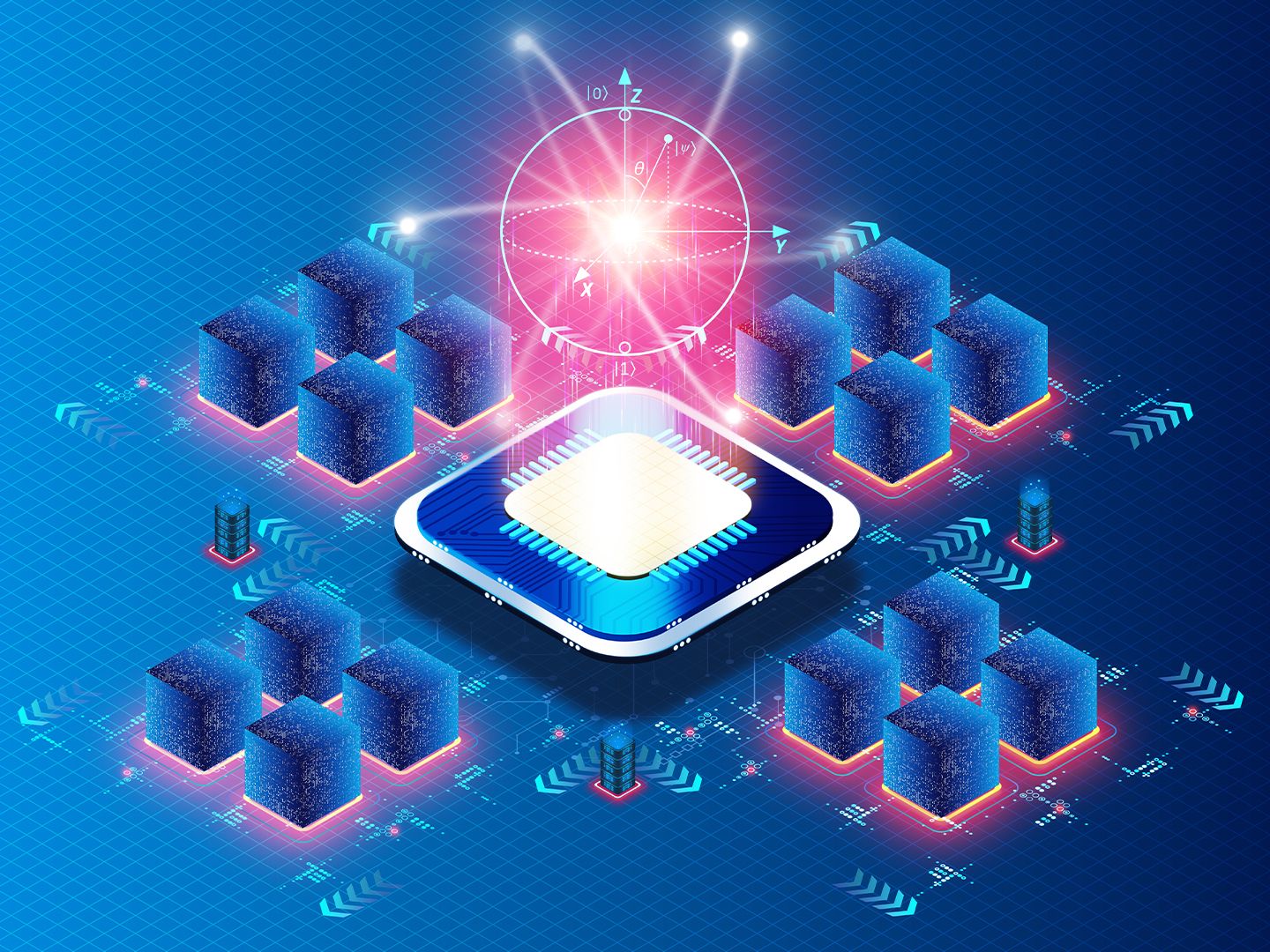
A team player, not a replacement
Interestingly, the researchers aren't claiming superfluid qubits will elbow superconducting ones aside. Associate Professor Eran Ginossar of Surrey's Advanced Technology Institute argues that the future may be a hybrid. 'We don't necessarily need one type of qubit to do everything,' he said, suggesting that if experiments confirm the predictions, the SHOQ device could function alongside superconducting qubits, with each doing what it does best.
In another comment, he noted that 'combining different quantum technologies could allow us to take advantage of the strengths of each.' One can imagine superconducting qubits handling fast logic operations while ultra-stable superfluid qubits act as long-lived memory — a bit like a computer with both quick working memory and a safe, stable hard drive.
The reality check
Here is where the tabloid headline must be balanced with scientific honesty. Nobody has built a SHOQ qubit. The work is a theoretical design supported by mathematics and prior knowledge of superfluid helium, not an experimental demonstration. As Dr Sharma put it: 'The maths tells us that it should work. We have taken what we already know about superfluid helium and quantum technologies and turned that into an educated design.'
The history of science is full of beautiful theories that met stubborn reality in the lab. Operating at the extreme temperatures needed for helium-3 superfluidity is demanding, though researchers note that previous superfluid helium experiments have already reached such conditions. Fabricating nanoscale channels, controlling the fluid precisely, and reading out its quantum state without destroying it are all serious engineering challenges. A prototype may reveal new noise sources nobody has predicted.
The team plans to move to building one next, supported by an IAA Commercialisation Fellowship, which is aimed at taking research towards real-world application. A working prototype is the next milestone to watch.
Why helium-3 is a headache of its own
There is another wrinkle. Helium-3 is scarce and expensive. It is produced mainly as a by-product of the decay of tritium in nuclear stockpiles, and it is in demand for everything from neutron detectors to the dilution refrigerators that cool today's quantum computers. Whether a technology reliant on it could scale to thousands or millions of qubits is a fair question. A microfluidic device needs only minuscule quantities, however, which could ease the concern.
The wider race matters, too. Governments and companies around the world have poured tens of billions of dollars into quantum computing. Superconducting circuits, trapped ions, neutral atoms and photons are all in the hunt. New ideas that attack the central problem of noise are welcome, whichever technology they come from.
The week's other quantum-flavoured finds
The superfluid qubit was one of several eye-catching physics stories to hit the headlines in recent days. Separately, physicists reported experimentally observing a pattern of energy levels predicted some 40 years ago, using atoms trapped by lasers — another reminder that the quantum toolkit is maturing quickly. Researchers are increasingly able to build quantum systems atom by atom and test the oldest predictions of theory.
How the team will test the idea
The road from equation to experiment is long but well marked. First comes fabrication: carving nanoscale channels that can confine the superfluid and couple it to electrical circuits, using techniques borrowed from the semiconductor and superconducting-qubit industries. Next comes cooling, taking the whole assembly down to temperatures a fraction of a degree above absolute zero inside a dilution refrigerator, the gleaming gold-plated chandeliers familiar from photographs of quantum labs.
Then comes the moment of truth: measuring how long the qubit holds its quantum state compared with the prediction. If the lifetimes come anywhere near the calculated figures, the field will take notice. If they fall short, the data will still be valuable, since it will reveal which noise sources the theory missed. Either way, the experiment turns an elegant idea into evidence, which is the only currency that counts in physics.
Independent groups will also be able to scrutinise the design now that it is in the public record. That peer attention, from rivals as much as friends, is often what separates ideas that fade from those that become technologies.
What this means for you
Don't expect a superfluid quantum laptop next year. Nobody should. Even in the best case, a prototype is some way off, and a commercial machine further still.
But the long-term stakes are real. Reliable quantum computers could accelerate the discovery of new batteries and fertilisers, model complex molecules for medicines, and crack some forms of encryption that protect your bank details and messages today. That last point is why governments and banks are already preparing 'post-quantum' security. Every advance in qubit reliability pulls that date a little closer.
For investors and the technology industry, the study is a reminder that the winning quantum technology has not yet been chosen. For students and curious readers, it shows how basic physics curiosity about a strange liquid can, decades later, turn into a design for the computers of the future.
Verdict
The Surrey superfluid qubit is, for now, a promise written in equations. But it is a clever, well-credentialed promise, aimed squarely at the single biggest obstacle in quantum computing. If the experiments back up the maths, a frictionless liquid with no charge might just be the calm in the storm that quantum machines have been waiting for. The scientists are heading back to the lab. The whole quantum world will be watching what flows out.



