Written By | Torch Media Africa
After 13 test flights, multiple fiery explosions and years of delays, Starship — the towering rocket at the heart of Elon Musk's Mars ambitions — is finally set to leave Earth's orbit behind for real
STARBASE, TEXAS
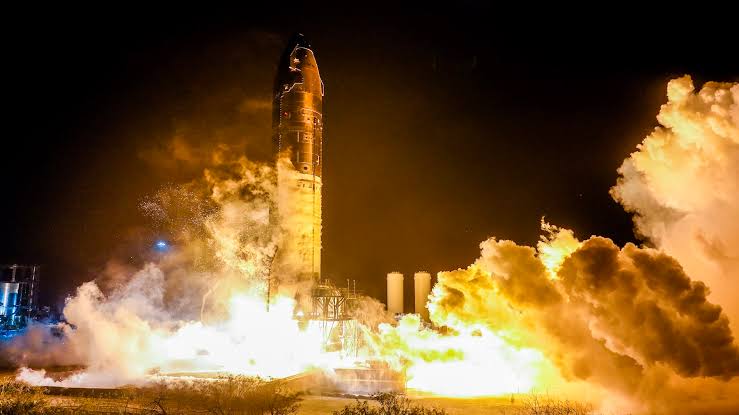
In the pre-dawn darkness of South Texas on Tuesday night, engineers at SpaceX's Starbase facility rolled a gleaming, 171-foot-tall steel spacecraft nearly three miles across the desert, hoisted it 400 feet into the air using giant mechanical "chopsticks," and lowered it gently onto the tip of the largest, most powerful rocket booster ever built. By the time the sun rose Wednesday morning, Starship Flight 14 stood fully stacked on Pad 2 — a 408-foot-tall tower of steel and ambition, ready, for the very first time, to actually reach orbit.
It has been a long, explosive road to this moment. Since Starship's debut flight in April 2023, SpaceX has launched the vehicle 13 times. Some of those flights ended in dazzling successes. Many others ended in fireballs — vehicles that broke apart mid-flight, boosters that failed to catch, and, most infamously, a Starship that exploded so violently on a test stand in June 2025 that the blast was felt for miles around Starbase. Now, on the vehicle's 14th outing, and flying a substantially redesigned "Version 3" spacecraft for the first time, SpaceX is finally ready to attempt something it has never done before: send Starship all the way around the planet.
WHAT'S DIFFERENT THIS TIME
Flight 14 will pair a new Super Heavy booster, designated B21, with a new upper-stage vehicle, Ship 41 — the first flight examples of the significantly overhauled Starship V3 design that Elon Musk has spent much of 2026 promoting as "the most powerful rocket ever built." Musk has said the V3 redesign includes structural reinforcements, upgraded avionics, and the newest generation of SpaceX's in-house Raptor 3 engines, which the company has touted as offering major gains in thrust, reliability and reusability over the Raptor 2 engines that powered earlier Starship flights.
Assuming SpaceX clears the remaining regulatory hurdles, Flight 14 is currently targeting liftoff no earlier than Monday, September 28, at 7:15 a.m. local time (8:15 a.m. Eastern), inside a 75-minute launch window. That's actually a six-day slip from the originally planned September 22 date — SpaceX has not publicly explained the delay, though the company must still receive final license approval from the Federal Aviation Administration before it can fly. The FAA has already issued a temporary flight restriction around Starbase running from September 23 through October 7, extending up to 10,000 feet above ground level — standard practice ahead of a major test flight, and a signal that a launch attempt, possibly preceded by a "wet dress rehearsal" fueling test, is imminent.
If it lifts off as planned, the mission will run nearly 10 hours from liftoff to the mission's dramatic conclusion. According to SpaceX's mission profile, Ship 41 will climb into an orbital-class trajectory around 171 miles (275 kilometers) above Earth, complete six full orbits of the planet, and along the way deploy a payload of 26 next-generation "Version 3" Starlink satellites — the newest and most capable satellites yet in Musk's ever-expanding broadband megaconstellation.
Roughly seven minutes after liftoff, the Super Heavy booster is expected to separate and come down for a splashdown in the Gulf of Mexico. Notably, SpaceX is not attempting a tower catch of either the booster or the upper stage on this flight — the eye-popping maneuver where the Starbase launch tower's mechanical arms snatch a returning rocket out of the sky, as SpaceX has successfully demonstrated on selected earlier flights. Instead, after completing its orbits, Ship 41 will attempt a controlled splashdown in the Pacific Ocean west of Chile, a more conservative approach that prioritizes gathering data on the vehicle's re-entry and orbital performance over the theatrics of another catch attempt.
"By going to orbit, the next phase of developing Starship to be fully and rapidly reusable can begin," SpaceX said in a statement, underscoring what's really at stake here: this flight isn't really about one successful lap around the Earth. It's the gateway to everything SpaceX has promised Starship will eventually do — flying dozens of times a year, refueling in orbit, and one day carrying astronauts and cargo to the Moon and Mars.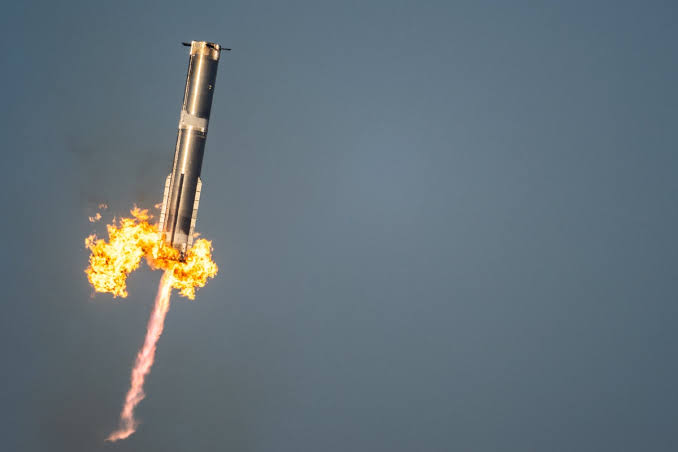
A ROCKY ROAD OF EXPLOSIONS AND SETBACKS
To appreciate why an orbital Starship flight is such a big deal, it helps to remember just how bumpy the road here has been. Starship's test campaign has become almost as famous for its failures as its successes. Multiple early flights ended when the vehicle broke apart minutes after launch. A Starship prototype exploded catastrophically on a test stand at Starbase in June 2025, sending a fireball into the night sky in an incident that even by SpaceX's build-fast-fail-fast standards, marked a serious setback. Other flights in 2025 saw the vehicle fail in various ways — fuel leaks, loss of vehicle control, and premature termination of the flight — with one high-profile failure that Musk himself attributed to a fuel leak aboard the vehicle.
By the time Starship reached its 10th test flight last year, industry observers were already tallying up a mixed scorecard of successes and failures, debating whether SpaceX's famously aggressive "test until it breaks" development philosophy was paying off fast enough, or whether the company was burning through hardware, cash and regulatory patience without enough to show for it.
That criticism has only sharpened as delays piled up. Musk originally suggested Starship V3 could fly as early as this spring, floating dates in interviews throughout the year that consistently slipped by weeks and then months. When SpaceX finally did fly the redesigned vehicle earlier this year, in a suborbital shakedown flight in May, it represented a critical proof point for the new hardware — but Wednesday's stacking, and next week's planned launch attempt, represents something categorically bigger: the first time this specific, most advanced version of Starship will try to actually complete an orbit of the Earth rather than splash down partway around the globe on a suborbital arc, which is how every previous Starship test flight has been flown.
WHY THIS MATTERS SO MUCH TO NASA — AND THE WORLD
Starship isn't just a passion project for Musk. It is, at this point, deeply entwined with NASA's own plans to return astronauts to the lunar surface. NASA has selected a modified version of Starship as the human landing system for its Artemis program, the agency's effort to put American astronauts back on the Moon for the first time since the Apollo era. That means Starship's success — or continued struggles — directly affects the timeline for NASA's next Moon landing, a fact that has made every SpaceX test flight this year a subject of intense scrutiny not just among space enthusiasts, but inside NASA's own leadership.
Beyond NASA, Starship represents the backbone of SpaceX's commercial ambitions. The vehicle is designed to be the workhorse that finally makes the company's Starlink satellite constellation cheap and fast to expand — each successful Starship flight capable of hauling dozens of the newest, most capable Starlink satellites into orbit in a single go, a scale far beyond what SpaceX's workhorse Falcon 9 rocket can achieve. With 26 next-generation Starlink V3 satellites riding along on Flight 14, this mission doubles as both a critical engineering test and a very real infrastructure deployment for a satellite internet network that now serves millions of customers across dozens of countries.
And then there's the long game: Mars. Musk has spent over a decade describing Starship as the vehicle that will eventually carry humans to the Red Planet, and every incremental milestone — including, crucially, actually reaching orbit — is a necessary building block toward that far more audacious goal. Before Starship can credibly be discussed as a Mars transport, it first has to prove it can reliably, safely, and repeatedly reach Earth orbit. Flight 14 is the test that finally puts that basic capability on the line.
EXPERT PERSPECTIVE
Space industry analysts have described Starship's test campaign as a real-time demonstration of SpaceX's signature "iterative development" philosophy — building, flying, and often destroying hardware at a pace traditional aerospace contractors would find reckless, in order to gather flight data faster than a more conservative, simulation-heavy approach would allow. That approach has delivered SpaceX genuine breakthroughs before: the company used the same philosophy to perfect booster landings for its Falcon 9 rocket, a feat that was widely mocked as science fiction before SpaceX made it routine.
But independent space analysts have also cautioned that Starship is a vastly more complex vehicle than Falcon 9 ever was, and that the stakes of failure escalate the closer the program gets to carrying NASA astronauts or attempting the kind of complex on-orbit refueling operations that a real lunar or Mars mission would require. Each explosion, delay and redesign adds pressure not just on SpaceX's engineering teams, but on NASA's own Artemis timeline, which has already slipped multiple times in recent years partly due to Starship's development pace.
WHAT THIS MEANS FOR YOU
For most people, a rocket test flight in South Texas might seem impossibly distant from daily life — but the ripple effects reach further than you'd think. If Flight 14 succeeds, it accelerates the buildout of the Starlink V3 satellite network, potentially meaning faster, cheaper satellite internet for rural and underserved areas worldwide, including regions with little or no existing broadband infrastructure. It also inches NASA's Artemis Moon program closer to reality, with implications for the broader space economy — from the contractors and scientists whose careers are tied to the program, to the renewed geopolitical space race playing out between the U.S., China and other spacefaring nations.
And if it fails? Expect more delays, more scrutiny of SpaceX's ambitious timelines, and likely another slip in NASA's already-delayed plans to put astronauts back on the lunar surface. Either way, this launch — whenever it actually happens — will be one of the most closely watched rocket flights of the year.
THE BOTTOM LINE
Flight 14 represents the culmination of more than three years of testing, redesigns, dramatic explosions and relentless iteration. A fully stacked, all-new Version 3 Starship now stands on the pad at Starbase, waiting on regulators and a final green light from SpaceX's own engineers, for a shot at doing something no Starship has ever done: complete a real orbit of planet Earth. Whether it happens on September 28 as currently planned, or slips again as so many Starship milestones have before it, one thing is clear — the world's most powerful rocket is closer than ever to proving it can do the job it was built for. Mars, for now, will have to wait. Orbit comes first.



