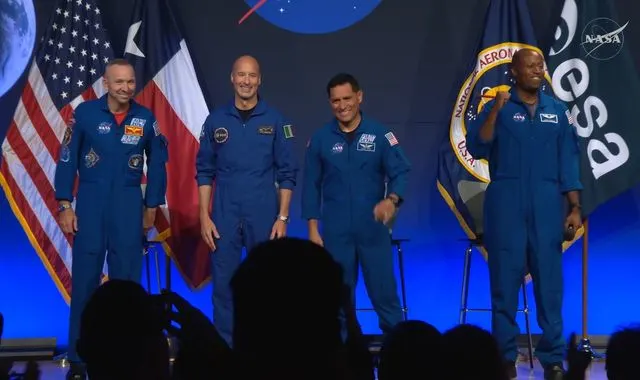
Commander Randy Bresnik, ESA pilot Luca Parmitano, and mission specialists Frank Rubio and Andre Douglas are set to conduct the daring Earth-orbit dress rehearsal that will determine whether humanity walks on the Moon again by 2028.
HOUSTON
The last time human footprints disturbed the lunar dust, Richard Nixon was in the White House and the Beatles had just broken up. Now, more than half a century later, NASA is taking the boldest step yet toward repeating that feat. On Tuesday, the agency finally put faces to the mission that will pave the way for humanity's return to the Moon.
NASA Administrator Jared Isaacman introduced the four astronauts assigned to Artemis III : Commander Randy Bresnik, Pilot Luca Parmitano of the European Space Agency, and Mission Specialists Frank Rubio and Andre Douglas.
Make no mistake: Artemis III will not land on the Moon. But it may be the most complicated and consequential Earth-orbit mission in history. The stakes could not be higher — get this one wrong, and the first crewed Moon landing since 1972 may slip years into the future.

A Mission Reborn: From Moonshot To Orbital Test Bed
In February 2026, facing schedule pressures and technical challenges with its commercial Human Landing System providers (SpaceX's Starship HLS and Blue Origin's Blue Moon), NASA made a dramatic pivot. Artemis III would no longer attempt a lunar landing. Instead, it would become a critical orbital shakedown cruise.
The revised mission places Artemis III in a 463-kilometer (288-mile) low Earth orbit. There, the crew will conduct a two-week orbital rendezvous and docking test involving three spacecraft: their own Orion capsule, Blue Moon, and Starship HLS. Each will launch separately. The crew will dock with each in sequence, evaluating life-support, propulsion, communications, and potentially testing the Axiom Space AxEMU lunar spacesuits.
It is, as NASA describes, a "highly complex" undertaking. Three spacecraft. Two commercial partners. Zero margin for error.
Meet The Crew: Four Astronauts Carrying The Dreams Of A Generation
Astronaut Role Key Background
Randy Bresnik Commander Retired Marine colonel, two previous spaceflights, assistant to chief of Astronaut Office for exploration
Luca Parmitano Pilot (ESA) Survived 2013 spacewalk helmet water leak, first Italian to command ISS (Expedition 61)
Frank Rubio Mission Specialist Holds American record for longest continuous spaceflight (371 days), Army veteran, family physician
Andre Douglas Mission Specialist First spaceflight, represents NASA's confidence in its newest astronaut generation
Bresnik has logged more than 7,000 hours across 95 aircraft types and has spent years overseeing Artemis-era systems. Parmitano brings a pilot's precision and a leader's grace under pressure — he famously survived a near-drowning during a 2013 spacewalk. Rubio turned an unexpected six-month stay into a 371-day endurance record, contributing to dozens of science experiments. Douglas rounds out the quartet as the mission's wide-eyed rookie.
The Long Road Back To The Moon
The Artemis program was born in 2017 under a directive to return Americans to the lunar surface — this time to stay. The road has been anything but smooth.
- Artemis I (Nov 2022) : Uncrewed Orion capsule looped around the Moon and back.
- Artemis II (April 1, 2026) : First crewed test flight of SLS and Orion, sending four astronauts on a free-return trajectory around the Moon.
- Artemis III (late 2027) : Will prove that two commercial landers can safely interface with Orion in Earth orbit.
- Artemis IV (early 2028) : The planned lunar landing.
On June 4, 2026 — just five days before the crew announcement — the final Artemis III SLS booster segments were en route to Kennedy Space Center. Hardware is arriving. The crew is named.
Why Artemis III Matters More Than The Moon
This mission is a test of a new model for human spaceflight: NASA provides the rocket and capsule, but relies on the commercial sector for lunar landers.
If Artemis III exposes critical flaws in either lander, NASA will have time — though not much — to address them before Artemis IV. If the docking tests go smoothly, confidence in the 2028 timeline will soar.
The geopolitical dimension cannot be ignored. China has stated it intends to land astronauts on the Moon before 2030. A successful Artemis III would send an unmistakable signal: America and its partners are not ceding the high frontier.
Expert Perspective: 'Highly Complex' Is An Understatement
The revised mission profile — dual rendezvous-and-docking maneuvers with two commercial vehicles — is arguably more operationally complex than the original moon-landing concept. Having Bresnik, who has spent years overseeing Artemis hardware, in the commander's seat provides institutional knowledge no simulator can replicate. Parmitano has demonstrated he can think clearly in life-threatening situations. Rubio's medical background and long-duration experience are invaluable. Douglas represents the future Artemis is being built to enable.
What This Means For You
If Artemis III succeeds, the lunar landing that follows — Artemis IV in early 2028 — will be the most watched event in human history since Apollo. Billions will finally have their own moment to witness humans walking on another world in real time, streamed to every screen.
Beyond the spectacle, Artemis aims to establish a permanent human presence on and around the Moon — a lunar Gateway, surface habitats, and eventually a proving ground for Mars.
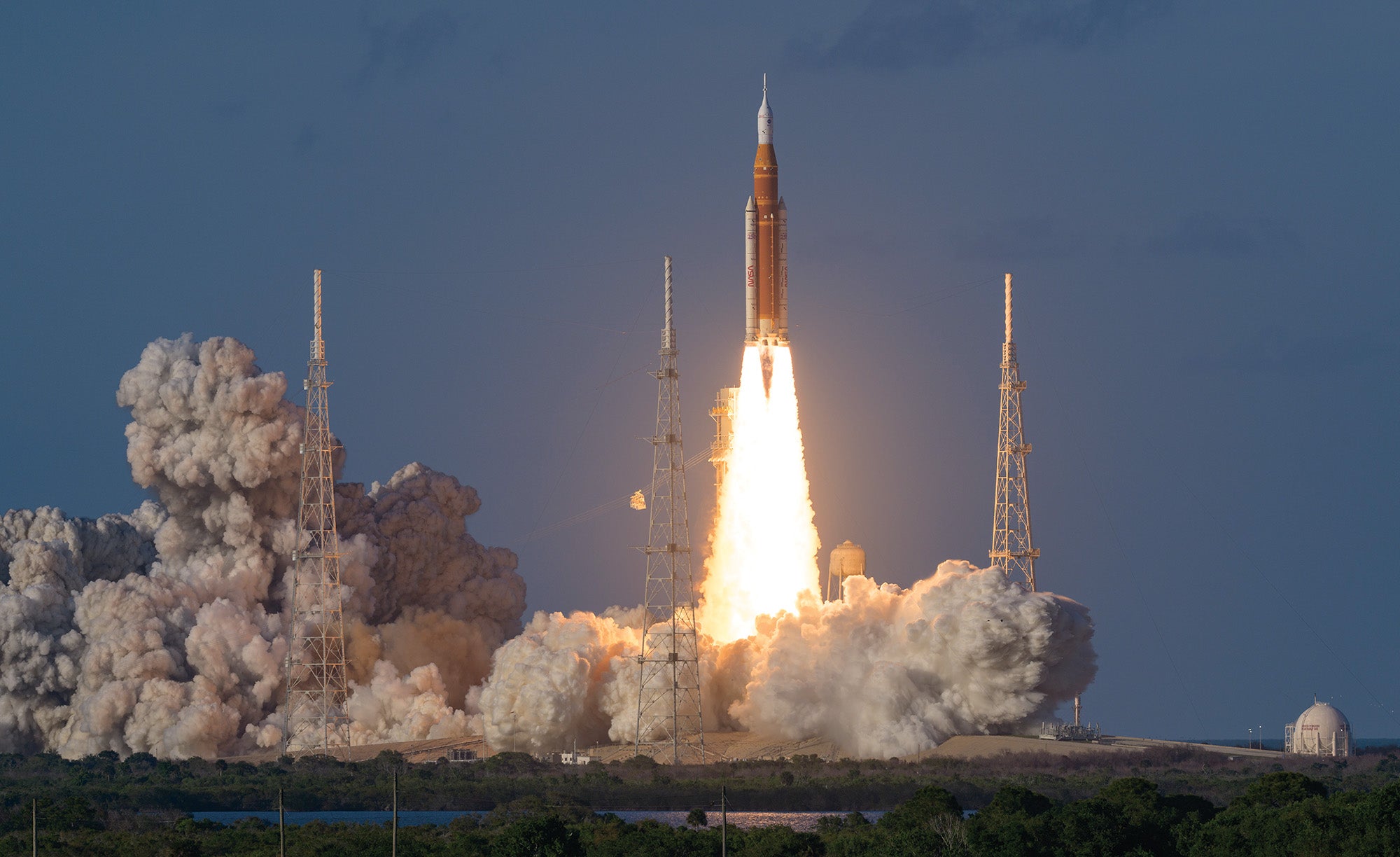
For now, Bresnik, Parmitano, Rubio, and Douglas have the eyes of the world upon them. They will spend the next year-plus in grueling preparation. When their SLS rocket clears the tower at Kennedy Space Center in late 2027, they will carry not just the hopes of a space agency, but the aspirations of everyone who has ever looked up at the Moon and wondered.
The Bottom Line: The Last Rehearsal Before History
The June 9 announcement was not just about four astronauts getting new job assignments. It was a declaration of intent. After decades of cancelled programs and shifting political winds, NASA has a crew, hardware arriving at the launch site, and a mission profile for the most important dry run in human spaceflight history.
Apollo proved humans could reach the Moon. Artemis is setting out to prove humans can stay there — and beyond. Artemis III is the test that will tell the world whether the infrastructure for that future actually works.
No pressure. No pressure at all.
Published By | Tech Wiz