TECH & SCIENCE
A Canadian rookie who was once bumped from Boeing's troubled Starliner, a cosmonaut with a submarine-engineer's mind and a veteran commander are racing to the ISS in what could be the fastest Dragon trip ever flown
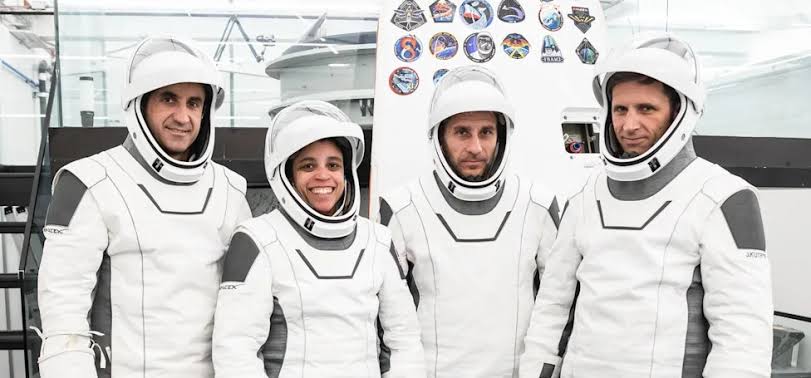
The countdown clocks at Cape Canaveral hit zero on Thursday morning, and with them came the end of a three-week wait that tested the patience of four astronauts, thousands of engineers and a good chunk of the space-watching world. NASA's SpaceX Crew-13 mission was cleared to lift off at 11:10 a.m. EDT (1510 UTC) from Space Launch Complex 40, carrying a NASA commander, a NASA pilot, a Canadian Space Agency astronaut and a Russian cosmonaut toward the International Space Station for a stay of roughly six months.
This is not just another taxi ride to orbit. If everything goes to plan, the Crew Dragon capsule named Grace will chase down the station in a free-flight of roughly eight hours and fifty minutes, a sprint that mission planners say is on course to beat the fastest Dragon transit ever flown. Before the crew can even think about that, though, they have to get off the ground, and as of this writing, forecasters were handing launch controllers only a coin-flip's worth of comfort: about a 55 percent chance of acceptable weather, according to the latest briefings.
The Delay That Almost Derailed It
Crew-13 was originally pencilled in for 12 September. Then came the discovery that every launch director dreads: an oxidizer leak in Dragon's propulsion system, found during prelaunch processing. In a spacecraft that will carry people, a leak in the system that feeds the thrusters is not a problem you shrug off. The launch slid, and then slid again, as NASA and SpaceX engineers tore into the issue.
Over the following weeks, the teams worked the problem methodically. On 22 September, NASA announced that the agency and SpaceX were moving into final prelaunch preparations for a 1 October liftoff. By 30 September, the agency confirmed that NASA, SpaceX and their international partners had completed the Launch Readiness Review, the formal gate at which every open question has to be closed, and declared Crew-13 "go" for launch. A mission leadership news conference followed that evening, with representatives from NASA headquarters, NASA's Johnson Space Center, the Canadian Space Agency and SpaceX.
A note of caution for readers following along: several outlets reported slightly different details about exact launch dates and backup opportunities as the schedule shifted during the week. NASA's own mission pages are the authority, and they list the 1 October 11:10 a.m. EDT instantaneous window as the target. An instantaneous window means exactly what it sounds like. Miss it, and the rocket does not get to launch a few minutes later; it waits for the next day's opportunity.

Meet the Crew
Commander Jessica Watkins is the steady hand. The NASA astronaut and trained planetary geologist is a veteran of Crew-4, the 2022 mission on which she logged roughly 170 days in space. That experience matters here: Watkins knows what six months of orbital life feels like, from the first disorienting days of weightlessness to the grind of month five. Asked about her leadership philosophy, she has described wanting to be a "servant leader," crediting the coaches, mentors and teachers who shaped her.
Pilot Luke Delaney brings a very different résumé. A former Marine test pilot and aerospace engineer, Delaney has logged more than 3,700 flight hours. He is a rookie when it comes to spaceflight, but the hours spent wrestling experimental aircraft are exactly the kind of experience that makes mission planners comfortable putting someone in the right-hand seat of a spacecraft. Local Florida media have noted his former ties to the DeBary area, a hometown angle that has made him a favorite on the Space Coast.
Then there is Joshua Kutryk, the Canadian Space Agency astronaut whose road to this launch pad has been anything but direct. A former fighter and test pilot, Kutryk was originally assigned to fly aboard Boeing's Starliner capsule before the changing fortunes of that program reshuffled the deck. Reporting from the Canadian press describes him as in "high spirits" ahead of the flight. He is making his first trip to space and is the first Canadian astronaut to fly under NASA's Commercial Crew Program. The last Canadian to live aboard the station was David Saint-Jacques, who spent more than six months there in 2018 and 2019. Kutryk is also Canada's second astronaut to head to space this year, a remarkable bookend for a country with a proud history in orbit.
The fourth seat belongs to Roscosmos cosmonaut Sergey Teteryatnikov, a test cosmonaut with a background in submarine engineering. His presence is a reminder that, whatever is happening down on Earth, the seat-swap arrangement between NASA and Russia's space agency continues to hold, with cosmonauts flying on Dragon and American astronauts riding Soyuz. Like Delaney and Kutryk, he is a first-time flyer.
The Hardware: A Capsule With a Past
The spacecraft is Crew Dragon Grace, and she is no stranger to the high frontier. Grace previously carried the private Axiom Space Ax-4 mission to the station in 2025, which makes Crew-13 her second trip. SpaceX has built its crew program on reusability, and the capsule's refurbishment is part of why NASA's Commercial Crew program has become routine enough that a launch can feel almost boring, until a leak reminds everyone why every checklist item exists.
Riding underneath is Falcon 9 booster B1101, which is scheduled to fly its third mission. Different reports describe its earlier work slightly differently, with accounts mentioning a Starlink launch and the Crew-12 mission among its credits. After stage separation, the booster is expected to perform a return-to-launch-site landing, a precision touchdown back at the Florida coast. If it sticks the landing, it will count as SpaceX's 664th Falcon booster recovery, a number that would have sounded like science fiction not long ago.
The Eight-Hour Sprint
Early space station missions took a day or two to reach the orbiting outpost. Over the years, SpaceX and NASA have shaved that down, and Crew-13 is aiming to shave it further. Planners are targeting a free-flight of about eight hours and fifty minutes before docking, positioning the mission to break the previous Dragon record. Docking is expected at the forward-facing port of the station's Harmony module in the evening, and the process will be autonomous, with the crew monitoring and ready to intervene if needed.
Why does speed matter? Shorter flights mean less time cooped up in a capsule roughly the size of a small camper van. Fewer hours in the tight confines reduces fatigue, motion sickness and the logistical strain of eating, sleeping and, yes, using the bathroom in a spacecraft that was designed for efficiency rather than comfort. It also lets the crew get to work sooner once they arrive.
What They'll Actually Do Up There
The crew will join Expedition 75, working alongside the station's existing residents before NASA's SpaceX Crew-12 team packs up and returns to Earth aboard a separate Dragon after a short handover period. That overlap is where the real knowledge transfer happens: which experiments are running, which pumps are acting up, which cabinet hides the good snacks.
The science agenda is ambitious. NASA's commercial crew program manager Dana Weigel has said the crew will help researchers work toward treatments for heart disease and Parkinson's disease by studying human stem-cell-derived tissues in microgravity, an environment where cells behave differently than they do on Earth. The mission will also explore crop production techniques relevant to longer journeys, the kind that will one day take people to the Moon and Mars. Other research focuses on how microgravity affects blood clotting and circulation, a question with direct implications for astronauts' health and for patients on the ground.
Expert Perspective
Veteran observers of the commercial crew era say the story of Crew-13 is as much about resilience as about records. The oxidizer leak could have become a months-long headache. Instead, the teams isolated the issue, completed the review and brought the mission back on schedule within weeks. That is the quiet success story behind the headline.
Weigel's framing of the science is worth noting too. Space station research is often dismissed as an expensive curiosity, but the stem-cell and circulation work being carried out in orbit is aimed squarely at diseases that affect millions of people. Microgravity lets researchers grow three-dimensional tissues that sag and collapse under Earth's gravity, offering a view of disease processes that is hard to replicate in a lab on the ground.
What This Means for You
You may never strap into a Dragon, but this mission touches your life in more ways than the launch footage suggests. The medical research could inform treatments for heart disease and Parkinson's. The crop experiments feed into the same thinking that shapes how we grow food in harsh or resource-limited environments on Earth. And the sheer routine nature of crewed launches signals a shift: low Earth orbit is becoming a place that governments, scientists and private companies visit regularly, not once in a blue moon.
If you are in Florida or nearby, launches from the Space Coast are visible for miles, and the evening docking is one of the more fascinating things you can watch online. The International Space Station is also visible with the naked eye as a fast-moving bright light, and NASA's spotting tools can tell you when it will pass over your town.
The Bottom Line
By the time most people read this, Grace should be well on her way, or the launch team will be hunting for the next opportunity. Either way, Crew-13 tells a story that is bigger than any one countdown: international cooperation continuing in orbit, a rookie from Canada getting his long-delayed shot, and a spacecraft with a history getting a second act. Six months of weightless work lie ahead. For Watkins, Delaney, Kutryk and Teteryatnikov, the hard part, as every astronaut will tell you, is only just beginning.
Published By | Tech Wiz