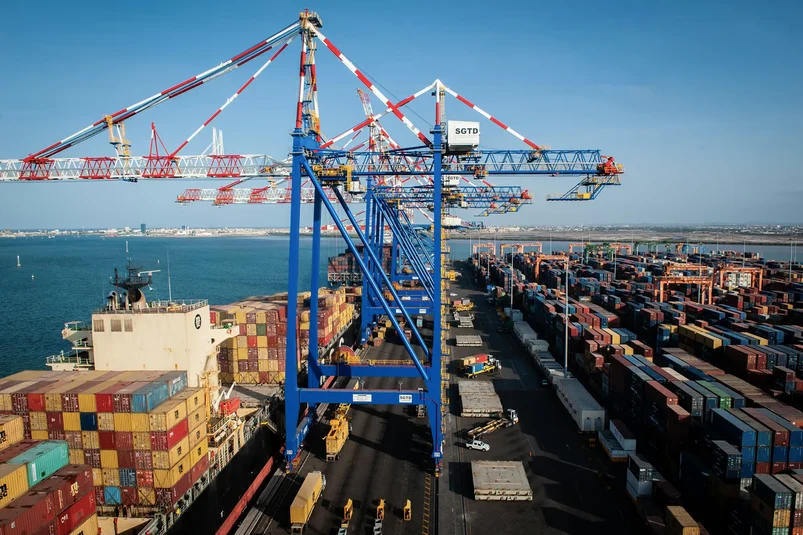
Djibouti-City
Djibouti has no oil, no significant mineral wealth, and barely a million people. What it has is geography: a sliver of land at the mouth of the Red Sea, where the Bab-el-Mandeb strait squeezes nearly all shipping traffic between Asia, the Middle East, and Europe past its coastline. Over the past decade, Djibouti's government has converted that maritime chokepoint into a digital one — building one of the densest concentrations of submarine fiber-optic cable landings on the African continent. In 2026, that bet is entering a new phase, as the country moves from simply hosting cables to monetizing the data flowing through them via new data centers, interconnection platforms, and a regional terrestrial fiber corridor.
Twelve Cables, Two Landing Stations
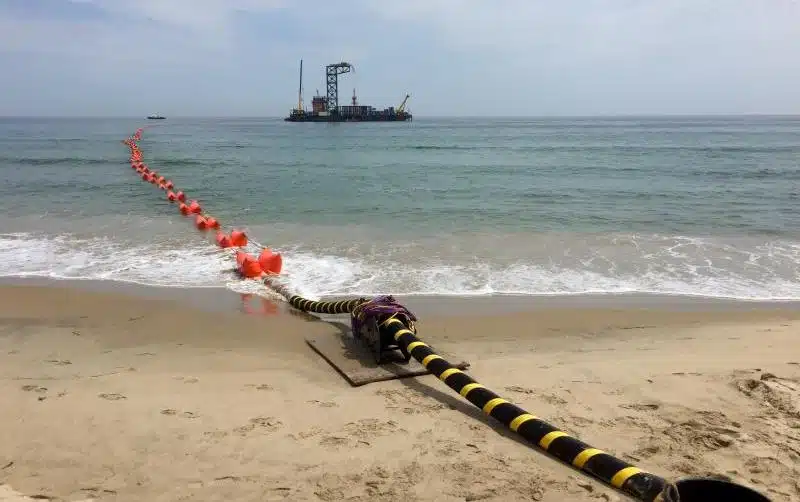
Djibouti's core advantage is straightforward: it sits at the only practical landing point connecting submarine cable systems running from Europe through the Red Sea to South and East Asia, while also serving as a relay point onward into East Africa. According to Submarine Networks data, the country now hosts cable landings across two principal stations. Haramous Cable Landing Station, the older of the two, carries SEACOM, SMW3, SMW5, DARE1, and EIG (Europe India Gateway). Ras Dika Cable Landing Station — built newer and declared fully operational by Djibouti Telecom in August 2023 — carries PEACE, 2Africa, Africa-1, SMW6, and IEX.
Cumulatively, Djibouti Telecom and its partners have invested more than $200 million in twelve submarine cable systems, a figure that reflects both direct landing-station investment and the country's negotiated equity stakes in some of the consortiums themselves. That density is unusual for a country of Djibouti's size: most African nations with significant cable landings — South Africa, Kenya, Nigeria, Egypt — have far larger economies and populations to justify the investment. Djibouti's case rests almost entirely on transit value: capacity that lands, interconnects, and moves onward, rather than capacity consumed primarily by domestic users.
From Cable Hub to Data Platform
The 2026 inflection point is the shift from being merely a transit corridor to becoming what regional analysts at Wingu Africa describe as an "integrated platform where connectivity, interconnection, and data services converge." The clearest evidence is the PAIX Data Center project, a joint venture between the Djibouti Sovereign Fund and PAIX Data Centres. Its first phase is expected to open in 2026, providing roughly 50,000 square feet of net usable data-hall space and up to 5 megawatts of critical IT power, backed by a $50 million investment. Crucially, PAIX is being built as a carrier-neutral facility — meaning any telecom operator or cloud provider can colocate equipment and interconnect directly with the cable landing stations next door, rather than routing traffic through a single dominant carrier.
That carrier-neutral model matters because it addresses a long-standing criticism of Djibouti's digital strategy: that Djibouti Telecom, the state-owned monopoly operator, controlled both the cables and the only meaningful interconnection points, limiting competition and keeping regional bandwidth prices high. A genuinely open data center changes the economics for cloud and content providers looking to serve East Africa and the Horn without routing through Europe or the Gulf.
The Horizon Fiber Initiative: Exporting Connectivity Inland
Djibouti's value as a digital gateway depends on what happens after the cables come ashore — specifically, how efficiently that capacity reaches landlocked neighbors. Ethiopia, with over 130 million people and no coastline, is the obvious prize. In early 2026, Djibouti Telecom formalized the Horizon Fiber Initiative together with Ethio Telecom and Sudan's Sudatel, establishing a high-capacity terrestrial fiber corridor linking Djibouti's cable landing stations directly to Ethiopia and Sudan. The initiative is designed to let international bandwidth landing in Djibouti flow inland at scale, rather than bottlenecking at the border — deepening regional integration and enabling more efficient cross-border data flows across the Horn of Africa, according to Telecom Review Africa's coverage of the announcement.
This is a meaningful evolution in regional digital infrastructure strategy. Historically, East African connectivity projects have focused on landing cables (the maritime leg) while treating inland distribution as a secondary, slower-moving problem left to national operators. By formally coupling Djibouti's landing stations to a dedicated terrestrial corridor reaching two major neighboring markets simultaneously, the Horizon initiative treats the sea-to-land handoff as a single integrated system.

Vision 2035 and the Domestic Digital Gap
Djibouti's external ambitions sit awkwardly alongside its domestic digital reality. Internet penetration reached 67.5% in early 2024, up from 56% in 2021 — solid progress, but mobile penetration lags at roughly 44%, and access to genuinely high-speed fixed broadband remains underdeveloped outside the capital. The government's response is Vision 2035, a digital transformation roadmap led by the Ministry of the Digital Economy and Innovation (MENI) that aims to make digital technology the foundation of the country's economic, administrative, and social development over the coming decade. Among its flagship components is a planned digital free zone — branded "Smart Djibouti" — intended to extend the same special-economic-zone logic that built the Djibouti Free Trade Zone (DIFTZ) into the digital economy, offering tax and regulatory incentives to data center operators, cloud companies, and digital-services firms willing to locate in the country rather than simply transit through it.
On the connectivity side, Djibouti Telecom has rolled out 4G+ services nationally and is now piloting 5G trials in urban centers, alongside plans to expand data center capacity and explore early AI applications — signals that the operator is trying to keep domestic infrastructure from lagging too far behind the country's international ambitions.
The Limits of the Strategy
Djibouti's digital gateway model carries structural risks that are easy to overlook amid the cable-landing headlines. First, transit-based strategies are inherently vulnerable to substitution: if Saudi Arabia's Red Sea infrastructure, Yemen's ports, or alternative Gulf routings absorb a larger share of new cable systems in coming years, Djibouti's first-mover advantage could erode. Second, the small domestic market means the country cannot rely on local demand to anchor data center investment the way Lagos, Nairobi, or Johannesburg can; PAIX and similar projects succeed only if regional and international tenants choose Djibouti as a deliberate interconnection point rather than a forced one. Third, governance and competition concerns persist: Djibouti Telecom's historic dominance over both cables and terrestrial distribution means the success of carrier-neutral facilities like PAIX depends on the state genuinely allowing competitive access, rather than recreating monopoly control under a new corporate structure.
Why It Matters Beyond Djibouti
For the wider Horn of Africa and East Africa region, Djibouti's build-out has direct consequences. Ethiopia's telecom liberalization and Safaricom Ethiopia's continuing network expansion depend partly on international bandwidth routed through Djibouti's cables. Lower transit costs and additional landing capacity, in principle, mean cheaper wholesale bandwidth for operators across Ethiopia, Somalia, and even parts of South Sudan — assuming the savings from added capacity are passed through rather than captured entirely by Djibouti Telecom's margins. The Horizon Fiber Initiative is the clearest test of whether that pass-through actually happens: a corridor that succeeds in moving capacity inland efficiently would mark a rare case of a single small state meaningfully lowering the cost of digital access for several of its larger neighbors at once.
Djibouti is not trying to become a tech manufacturing or software hub in the way Kenya or Nigeria are; its bet is narrower and, in some ways, more durable — that geography which made it valuable to maritime trade for over a century can be repurposed, cable by cable, into digital infrastructure value that doesn't depend on commodity prices or a large consumer market to pay off.
Published By | Tech Wiz