Technology & Science Desk
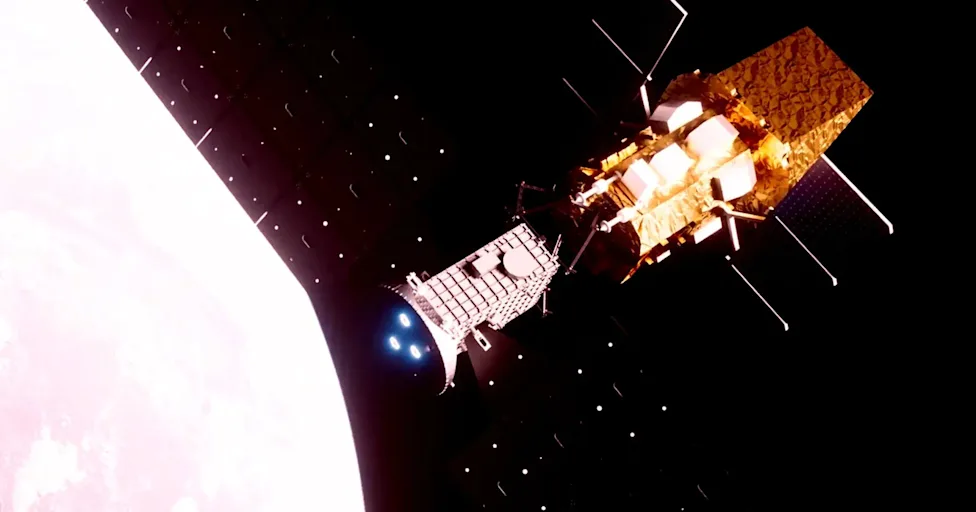
There is a version of this story where it ends in triumph. A twenty-one-year-old space telescope, sinking toward a fiery death, is saved at the last minute by a scrappy commercial spacecraft that flies up, grabs it, and hoists it back to safety. Hollywood would have taken that pitch.
That is not what happened.
What happened instead is stranger and, in its own bleak way, more moving. The rescue ship broke. The telescope is still falling. And on Wednesday, August 26, NASA engineers at Goddard Space Flight Center made a decision that reads less like mission management than like a last request: they turned the instruments back on.
NASA's Neil Gehrels Swift Observatory is doing science again. It is also dying. Both of those things are true at once, and the team knows exactly how the sentence ends.
Twenty-one years of the impossible
To understand why anyone tried to save Swift at all, you have to understand what it does — and how absurdly long it has been doing it.
Swift launched in November 2004 on a two-year mission. Two years. Its job was to hunt gamma-ray bursts: the most powerful explosions in the known universe, brief eruptions of radiation released when massive stars collapse or neutron stars collide, blazing bright enough to be seen across billions of light years and then vanishing, sometimes in seconds.
The problem with gamma-ray bursts is that by the time you have noticed one and swung a telescope around, it is usually over. Swift's answer was speed — hence the name. Detect the burst, autonomously slew the spacecraft toward it within roughly a minute, start observing across multiple wavelengths, and simultaneously fire off an alert so that observatories on the ground and in orbit around the world can point at the same patch of sky before the afterglow fades.
It has three instruments: the Burst Alert Telescope, which watches a huge swathe of sky for the initial flash; the X-ray Telescope; and the Ultraviolet/Optical Telescope. Together they made Swift into something its designers never quite promised — not a specialist burst-hunter but NASA's all-purpose rapid-response multitool for anything sudden and violent in the cosmos.
It outlived its two-year design life by nearly two decades. In January 2018, NASA renamed the mission after Neil Gehrels, its original principal investigator, following his death. Over twenty-one years it has chased gamma-ray bursts, supernovae, comets, flaring stars, tidal disruption events — including the first detection of a pair of monster black holes tearing apart a gas cloud at a galaxy's centre — and has been the tripwire that sent thousands of other telescopes scrambling.
And it has one fatal design characteristic: no engine capable of raising its own orbit.
The Sun is killing it
Low Earth orbit is not empty. Even at hundreds of kilometres up, wisps of atmosphere remain, and they drag. Every satellite in that regime is slowly, continuously losing altitude. Most have thrusters to compensate. Swift does not.
For most of its life that was fine — the decay was gentle enough to be survivable for decades. Then the Sun woke up.
Solar activity has been elevated, and when the Sun is more active it pumps extra energy into Earth's upper atmosphere. The atmosphere heats, expands, and pushes outward into space. Satellites that were flying through near-vacuum find themselves flying through slightly-less-near-vacuum. Drag increases. Orbits collapse faster.
Swift started falling ahead of schedule.
NASA's response was a kind of triage. In February, engineers shut down the Ultraviolet/Optical Telescope and the X-ray Telescope entirely — not because they were broken, but because turning them off freed up power and reduced drag. In April, they went further, taking the Burst Alert Telescope offline too, which let them angle Swift's solar panels into a lower-drag configuration. A working observatory was deliberately blinded to buy it time.
Time for what? For a rescue that had never been attempted before.
A hail Mary called LINK
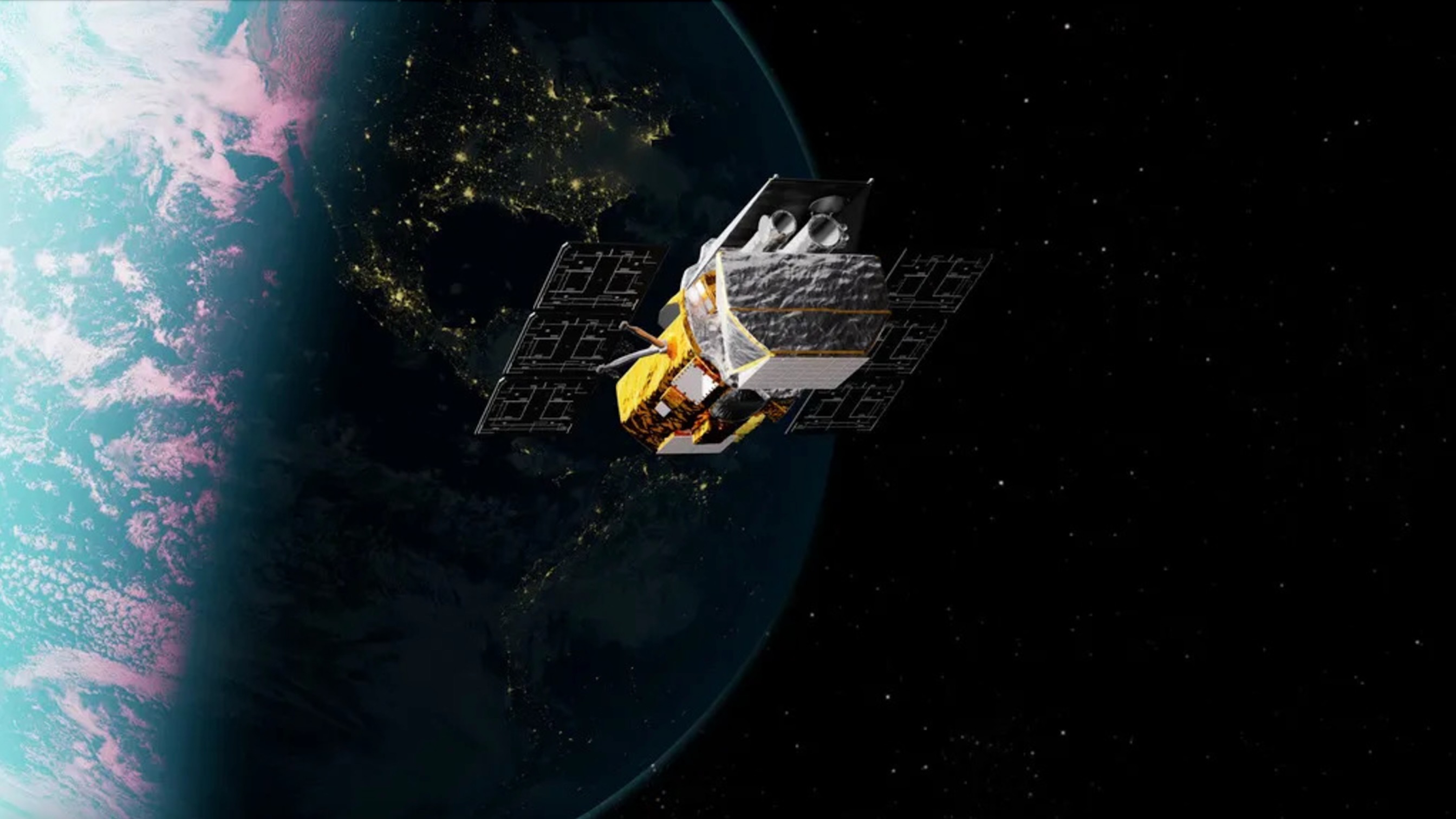
In September 2025, NASA contracted Katalyst Space Technologies to do something no one had done: design, build, test and launch a spacecraft capable of rendezvousing with Swift, physically capturing it, and boosting it into a higher, safer orbit.
The deadline was one year. In an industry where a year is barely enough time to finish a design review, that timeline alone was extraordinary.
Katalyst built a spacecraft called LINK. It launched in early July aboard a Northrop Grumman Pegasus XL — the air-launched rocket dropped from beneath a carrier aircraft — and for a short while, everything looked plausible.
Then LINK started to spin.
Late in July, during commissioning, the spacecraft developed attitude-control problems. Two of its three reaction wheels — the spinning flywheels that let a spacecraft point itself without expending fuel — were declared inoperable. Its cold-gas thruster system also lost some functionality. LINK was tumbling at roughly nine degrees per second, which for a vehicle that needs to perform a delicate close-quarters capture of a fragile, uncooperative satellite is not a setback but a disqualification.
Engineers fought it. They regained control using the spacecraft's electric thrusters, uploaded a software update rewritten around LINK's diminished capabilities, and burned the rotation down from about nine degrees per second to roughly four.
It was not enough. On August 19, NASA and Katalyst announced that LINK would not attempt to capture and boost Swift.
What NASA did next
Here is the part that deserves attention, because it is a genuine judgement call rather than a procedure.
With the rescue dead, Swift's low-drag configuration no longer had a purpose. The instruments had been switched off to preserve altitude for a boost that was no longer coming. Preserving altitude for its own sake would mean a blind telescope drifting quietly down to its destruction, having gathered nothing.
So on August 26, the team turned the Ultraviolet/Optical Telescope and the X-ray Telescope back on. The Burst Alert Telescope has not yet resumed science operations, but NASA expects to restore it within weeks.
The cost is precisely what you would expect. NASA had previously estimated that the low-drag mode would keep Swift above 300 kilometres — about 185 miles — until October. With science observations resumed, the team now expects the spacecraft to hit that threshold within one to two months.
That altitude matters. Below roughly 300 kilometres, operating the telescope becomes substantially harder, and the decay accelerates sharply as drag compounds. The observatory is expected to break apart during re-entry later this year.
In other words: NASA traded weeks of orbital life for weeks of open eyes. Given that the ending was fixed either way, it is difficult to argue they chose wrong.
Expert perspective: the rescue that failed still taught us something
The LINK mission is not quite over, and this is where the story stops being purely an obituary.
Katalyst still intends to bring LINK into Swift's neighbourhood and perform rendezvous and proximity operations — the delicate business of one spacecraft approaching, holding station near, and manoeuvring around another. It cannot grapple. It can still practise.
That is not a consolation prize. In-space satellite servicing — refuelling, repairing, reboosting, relocating hardware already in orbit — is one of the most consequential unsolved problems in the industry. Billions of dollars of functioning spacecraft are lost every year to nothing more exotic than running out of fuel or drifting too low. Every rendezvous performed in anger, even by a wounded vehicle that cannot complete its primary job, feeds data into a capability that could eventually rewrite the economics of orbit.
There is a harder lesson too, and it is about timelines. A one-year sprint from contract to capture was always a heroic ask. The failure mode — reaction wheels, the single most notorious weak point in spacecraft attitude control, with a long history of failures across missions including Kepler and Hubble — was not an exotic surprise. It was arguably the most predictable thing that could have gone wrong.
None of which means the attempt was a mistake. The alternative was letting Swift burn without trying. But the next time an agency tries an emergency orbital rescue, the schedule and the redundancy budget will be argued over with LINK's telemetry on the table.
What this means for you
If you have ever read a headline about a gamma-ray burst, a kilonova, a star being shredded by a black hole, or a mysterious flash at the edge of the observable universe — there is a meaningful chance Swift was the reason anyone was looking in time.
Losing it creates a gap. Swift is not the most powerful telescope in orbit; it is the fastest, and in transient astronomy, fast beats powerful. When it stops, the global network of observatories loses one of its most reliable tripwires, and some fraction of the universe's brief, violent events will simply happen unobserved until a replacement capability exists.
There is also a more down-to-earth point buried in this story, and it applies far beyond astronomy. Swift is dying because of atmospheric drag driven by solar activity — the same force that is currently shortening the lives of satellites across low Earth orbit, including the constellations that carry internet traffic, GPS corrections, and Earth observation data. Space weather is not a fringe concern for physicists. It is an operating cost, and it is going up.
And if you want to watch: Swift will not go quietly. Re-entering spacecraft of this size typically break apart in a bright, fast, multi-fragment streak visible for a minute or two along the ground track. Nobody yet knows where or exactly when. Someone, somewhere, is going to look up later this year and see the end of it without knowing what they are looking at.
Falling, and still watching
Swift was built to spend two years watching the universe explode. It has spent twenty-one, and it is spending its last weeks doing the only thing it was ever designed to do, with two eyes open and a third about to be, while the atmosphere reaches up and pulls it down.
There is no rescue coming. The spacecraft sent to save it is out there in the same region of space, spinning less than it was, practising a manoeuvre it can no longer complete on a patient it can no longer help.
The engineers at Goddard could have left the instruments dark and stretched the orbit out a few more weeks. They chose the opposite. They chose to spend the remaining time on the mission rather than on the clock.
Somewhere overhead, a doomed telescope is watching for the next explosion in the universe. It will keep watching until it cannot. Then it will become one.
Published By | Tech Wiz