SCIENCE
For most of the last two decades, the Denisovans have been the most frustrating characters in human evolution: everywhere in our DNA, and almost nowhere in the ground.
They were identified in 2010 from a scrap of finger bone in a Siberian cave — the first time in history a previously unknown human species was named on the strength of its genome alone, before anyone had a skull, a jaw, or the faintest idea what it looked like. Since then, geneticists have found Denisovan DNA riding along in the genomes of living people across Tibet, the Philippines, New Guinea and Australia. Hundreds of millions of people alive today carry pieces of them.
And yet the entire physical record of the species could, until very recently, be laid out on a dinner plate.
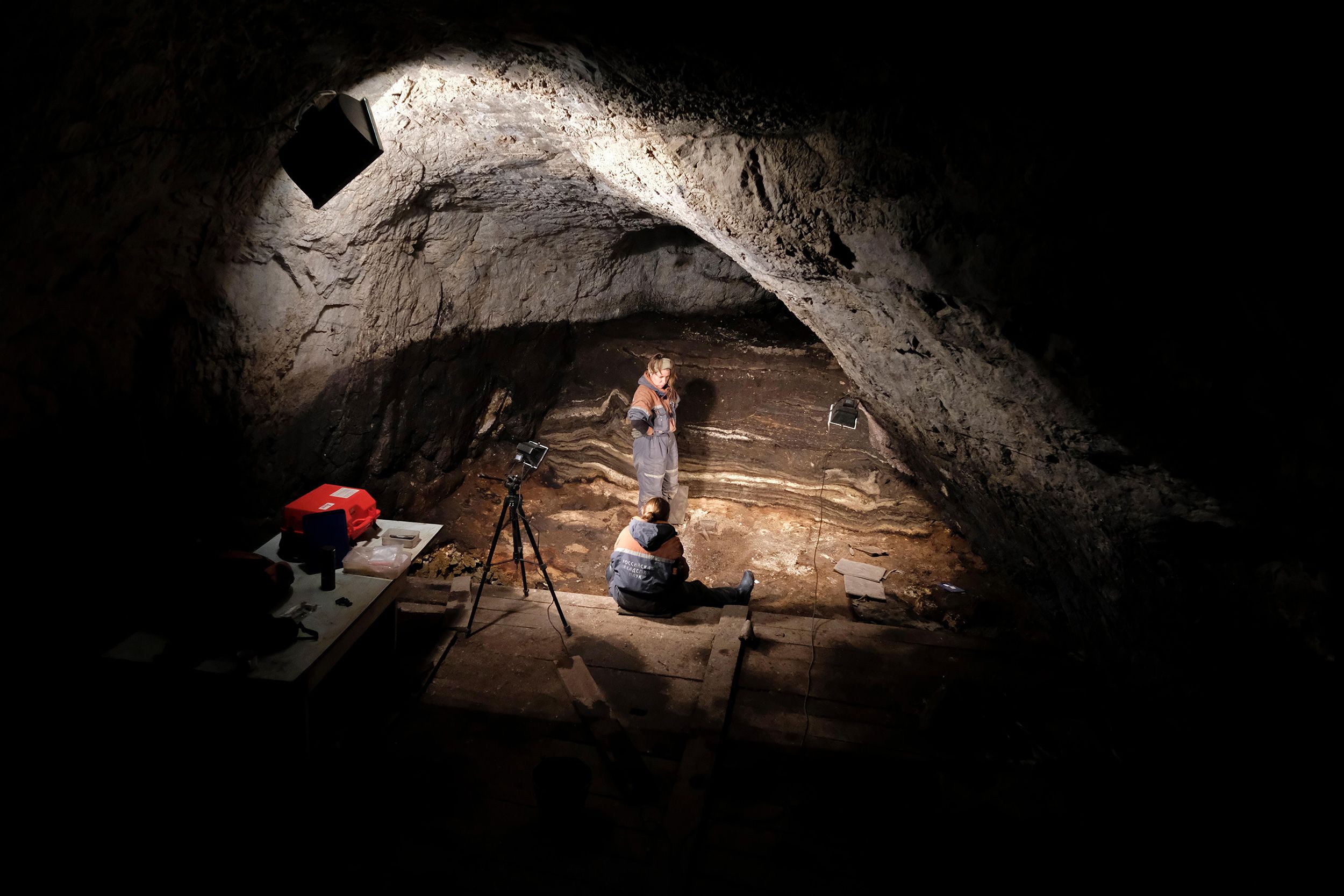
That changed on Wednesday. Two papers published in the journal Nature on September 9 describe Bianfu Cave — a site in the mountains of Yunnan province, southwestern China, named for the bats that once roosted there — and they do something no Denisovan site has managed before. They give the ghosts a household.
A QUARRY, A RESTORATION PROJECT, AND A CAVE NOBODY KNEW WAS THERE
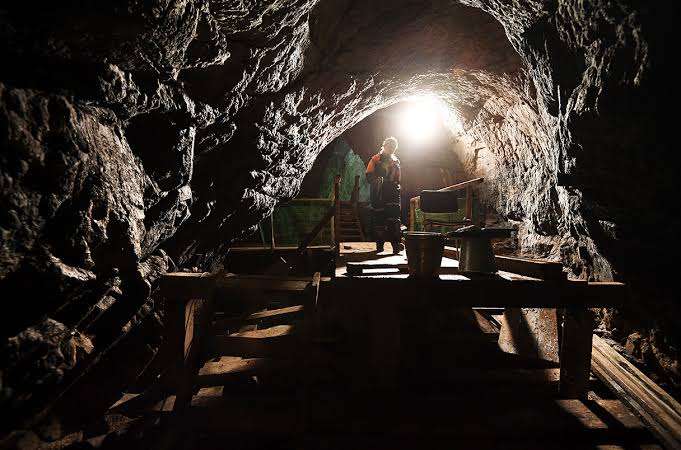
The find began by accident. In 2019, an ecological restoration project at an abandoned quarry in Yunnan cut into a buried cave stuffed with fossils. Nobody was looking for hominins. The excavations that followed turned up something extraordinary.
The team dug three trenches to a depth of 6.6 metres — 22 feet. Only one of them produced human remains, but what it produced was, by Denisovan standards, a windfall: four teeth, two fragments of skull, and a piece of an arm bone. Seven fossils. Enough to more than double the meaningful physical record of the species and push the global total of known Denisovan fossils past twenty.
"We first identified some isolated teeth and then from the huge amount of animal fossils, we identified the bones — but the fragments were very hard to find at the beginning," said Hao Li, a research professor at the Chinese Academy of Sciences' Institute of Tibetan Plateau Research in Beijing and a co-author on both papers.
Then he named the thing that actually matters. "We are very lucky because this is the first site in south China to have the direct association between Denisovan fossils and rich cultural remains. This is very rare."
That phrase — direct association — is the whole ballgame. Bones on their own tell you a species existed. Bones lying in undisturbed sediment alongside the tools they made and the animals they butchered tell you how that species lived.
WHY EVERY PREVIOUS DENISOVAN FIND WAS A DEAD END
To appreciate what Bianfu delivers, consider the alternative.
The Denisovan fossil record to date reads like a list of archaeological accidents. A skull pulled out of a well in the northeastern city of Harbin, where it had been hidden for decades. A jawbone dredged off the seafloor by a fishing boat near Taiwan. A molar from a cave in Laos. Fragments from the Tibetan Plateau. Objects with no stratigraphy, no context, and no reliable dates.
Even Denisova Cave in Siberia — the site that gave the species its name — is compromised as a behavioural record, because Neanderthals, Denisovans and Homo sapiens all sheltered there at different times. Tools were found. Nobody can say with confidence who made them.
"It's a little frustrating," said Bence Viola, a paleoanthropologist at the University of Toronto who has worked on the Siberian Denisovan remains and was not part of the new studies.
Bianfu Cave appears to break that pattern. Across roughly 120,000 years of occupation, the excavators found no evidence that any other kind of human was ever there.
WHEN DNA FAILS, THE PROTEINS TALK
There was one enormous obstacle. Yunnan is warm and humid, and warm humid places destroy ancient DNA.
"DNA is more vulnerable to degradation than proteins, and it is hard for it to be preserved in these fossils as they were more than 100,000 years old," explained study co-author Qiaomei Fu, a molecular palaeogeneticist at the Institute of Vertebrate Paleontology and Paleoanthropology at the Chinese Academy of Sciences in Beijing — and a member of the original team that identified the Denisovans back in 2010. "The relatively warmer climate in Yunnan also hampered DNA preservation."
So the team went after proteins instead. Researchers combed through some 60,000 bone fragments from the cave, picked out roughly two dozen that looked like they might be hominin, and screened them for biomolecular signatures. Proteins survive where DNA cannot; the amino acid sequences they encode still differ between species.
Three bones and two teeth came back Denisovan, carrying a Denisovan-specific collagen variant. The remaining two teeth were too fragile to sample destructively, so those were assigned on anatomy — high-resolution micro-CT scans compared against known Denisovan teeth from Laos and Tibet.
Clément Zanolli, a palaeontologist at the University of Bordeaux and a study co-author, said the identification felt obvious the moment he saw the images. "I immediately assumed that they were probably Denisovan."
The fossils date to between 167,000 and 134,000 years ago.
DINNER AT BIANFU: WATER BUFFALO, GAUR AND BONE MARROW
Here is where the story stops being about taxonomy and starts being about people.
The cave yielded more than 1,300 stone and bone tools and over 1,600 identifiable animal bones. Very few of those bones showed carnivore gnawing — which matters, because it means hyenas and leopards were not the ones dragging carcasses in. Many of them showed cut marks, scrape marks and deliberate breakage.
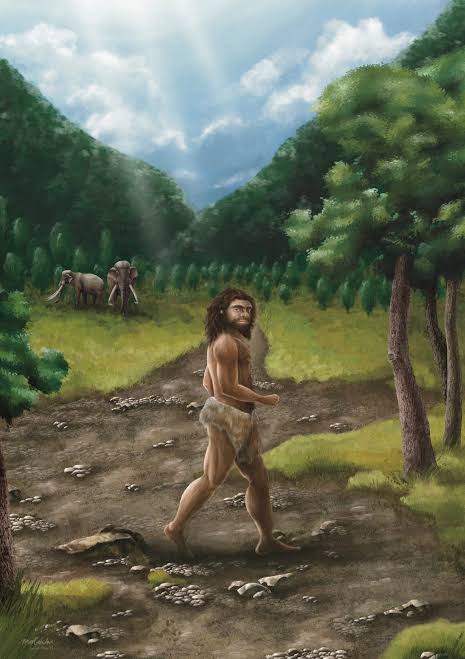
The menu, reconstructed from those bones, was substantial. Water buffalo. Gaur — the enormous wild bovid of South and Southeast Asia, an animal that can stand nearly two metres at the shoulder and weigh over a tonne. Red deer. Sika deer. This was not scavenging. These were large, dangerous forest animals, taken repeatedly, in a landscape of conifer forest reconstructed from fossilised pollen in the same deposits.
And the Denisovans of Bianfu did not stop at meat. They cracked bones for marrow — the calorie-dense, fatty core that hunter-gatherers everywhere have prized, and which requires both intent and the right tool to extract. They used their stone tools to cut flesh, scrape hides and break bone.
Denisovan remains at other sites have turned up alongside marmots — small burrowing rodents, a very different kind of dinner. Put the two records side by side and a picture emerges of a genuinely adaptable species.
"They adapted to their environment," Viola said. "They hunted different things in different ways." The Bianfu material, he added, provides "a much more complete picture" of Denisovan life.
"EXPEDIENT" IS NOT THE SAME AS "SIMPLE"
The toolkit itself is, at first glance, unimpressive. There are no elegant symmetrical handaxes, no finely retouched blades. Li describes the assemblage as an "expedient technology."
But he pushed back firmly on the obvious interpretation.
"I would not say 'simple' because it's a kind of flexible adaptation," Li said. "When they used the stone tools, they did not invest a lot of time."
That is a serious argument, and it lands in the middle of a long-running debate in archaeology about whether tool sophistication is a decent proxy for cognitive sophistication. In a subtropical forest thick with usable stone and abundant game, spending hours crafting a beautiful tool you will use once and abandon is not clever — it is wasteful. Make it fast, use it, drop it, make another. The strategy is the intelligence.
The stone tools span ten sediment layers in the trench, dating from roughly 190,000 to 70,000 years ago, and the technology stays remarkably consistent across that entire span. "We can say the stone tool technology is stable with continuity, and the hunting strategy is continuous," Li said.
120,000 YEARS AT THE SAME ADDRESS
Sit with that number for a moment.
One hundred and twenty thousand years of continuous cultural occupation in a single cave. For scale: all of recorded human history — writing, agriculture, cities, empires, the internet — fits into roughly the last twelve thousand. The Bianfu sequence is ten times longer than the entire span of human civilisation, and across it the toolmaking barely changes.
The site also redraws the Denisovan map. It marks only the third place where Denisovans are definitively known to have lived, and by far the most southerly of the confirmed occupation sites — Yunnan borders Myanmar and Laos. Taken with the Siberian mountains and the high-altitude Tibetan Plateau, it demonstrates a species that handled a startling range of environments: freezing northern forest, thin air above 3,000 metres, and humid subtropical woodland.
That has always been the puzzle. Living people in Southeast Asia and Oceania carry the most Denisovan DNA of anyone on Earth, which means Denisovans and modern humans were interbreeding in that part of the world. But nearly every Denisovan fossil found so far came from North Asia. Bianfu starts filling the hole.
Li thinks the geography explains itself. "We are in the margins of the Tibetan Plateau, above 2,000 metres but not too high altitude," he said. "This is a hot spot for biodiversity and would have provided rich resources for ancient hominins in this region." Yunnan — the name means "south of the clouds" — likely functioned as a crossroads linking northern and southern Asia. Several other Stone Age sites have surfaced there in recent years, including rarely preserved wooden tools dated to around 300,000 years ago.
THE EXPERT PERSPECTIVE
Outside researchers were measured but clearly impressed.
"Denisovans are becoming a bit less mysterious," said Shara Bailey, a paleoanthropologist at New York University. The cave, she said, "tells us a little about how Denisovans actually lived on the landscape."
Ryan McRae, a paleoanthropologist at the Smithsonian National Museum of Natural History in Washington, DC, focused on the arm bone — the first Denisovan arm bone ever found. Its radius is short, somewhat Neanderthal-like, he noted, "and the insertion of the biceps muscle is oriented such that it may have been more efficient at flexing the elbow."
But McRae, who was not involved in the work, was clear about where the real value lies. "More interesting is the site itself. It tells us about Denisovan occupation in one location over a sizable span of time while also filling in some geographical gaps in our understanding of Denisovans."
That is the honest summary. The bones are nice. The context is the discovery.
WHAT STILL ISN'T KNOWN
The researchers are careful about the limits of what they have, and readers should be too.
The claim that Denisovans made the Bianfu tools is an inference, not a direct observation. It is a strong inference — no other hominin left traces at the site across 120,000 years — but the team has not proven it. Their next move is to test the cave floor sediment for hominin DNA, a technique that has recovered ancient human genomes from dirt where no bones survive at all. If it works, it would confirm who was in the cave and when.
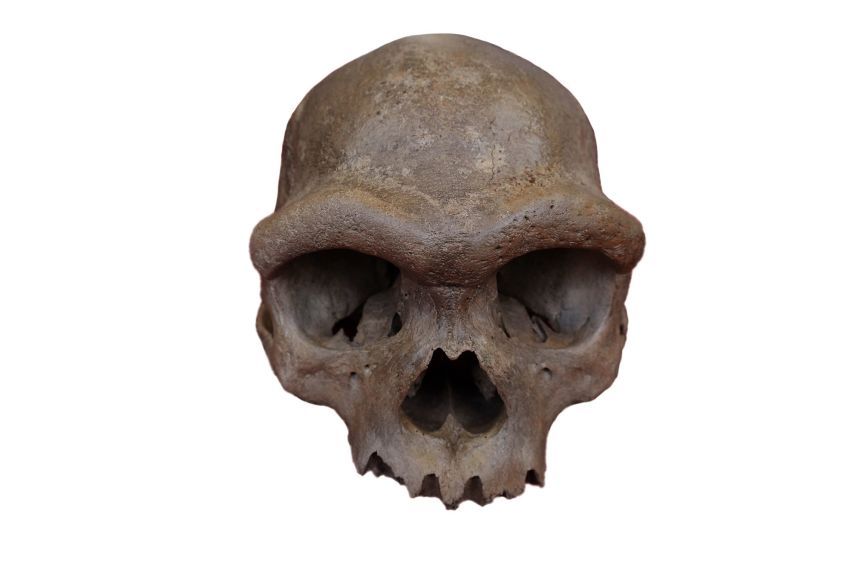
The anatomy also remains thin. Even after Bianfu, the Denisovan skeleton is known from a finger bone, a rib fragment and now a forearm. Until last year the species had no face at all; that changed in 2025 when Fu and colleagues extracted genetic material from the "Dragon Man" skull recovered from that Harbin well and linked it to the Denisovans, giving them a proposed scientific name, Homo longi.
And the biggest question is untouched. Nobody knows why the Denisovans disappeared.
WHAT THIS MEANS FOR YOU
If your ancestry traces to Southeast Asia, Melanesia, Australia or the Tibetan Plateau, this is not abstract prehistory — it is family. The Denisovans in that cave belonged to a population whose descendants interbred with ours, and the genetic inheritance is not decorative. The best-documented example is a variant of the EPAS1 gene, inherited from Denisovans, that helps Tibetan people function at altitudes where most human beings develop altitude sickness. Denisovan-derived variants have also been linked to immune function.
More broadly, this is a useful corrective to a story most of us absorbed at school. Human evolution was not a relay race with one runner. For most of the last half-million years, this planet held several kinds of intelligent, tool-using, fire-controlling humans at once, meeting each other, competing, and having children together. We are the only branch left, and that is a recent and slightly unnerving development.
There is also a practical lesson buried in how this find happened. Bianfu Cave was discovered because someone was restoring an abandoned quarry — not because anyone went looking for Denisovans. The most important evidence about our origins is frequently sitting in exposed rock faces, roadcuts and construction sites, waiting for someone to notice. Some of it is being bulldozed right now.
THE BOTTOM LINE
Sixteen years ago, the Denisovans were a sequence of letters extracted from a fingertip in a Siberian cave — a species defined entirely by its absence.
Today they have an address, a diet, a toolkit and a 120,000-year residency in a bat cave in southwestern China. They hunted gaur and water buffalo in conifer forest. They cracked bones for marrow. They made tools quickly, used them, and moved on. They stayed in that valley for a span of time that dwarfs everything humanity has done since the last ice age.
They were not a footnote in our story. They were a parallel one — and for a very long time in that Yunnan forest, they were doing just fine.
Published By | Tech Wiz