Written By | Torch Media Africa
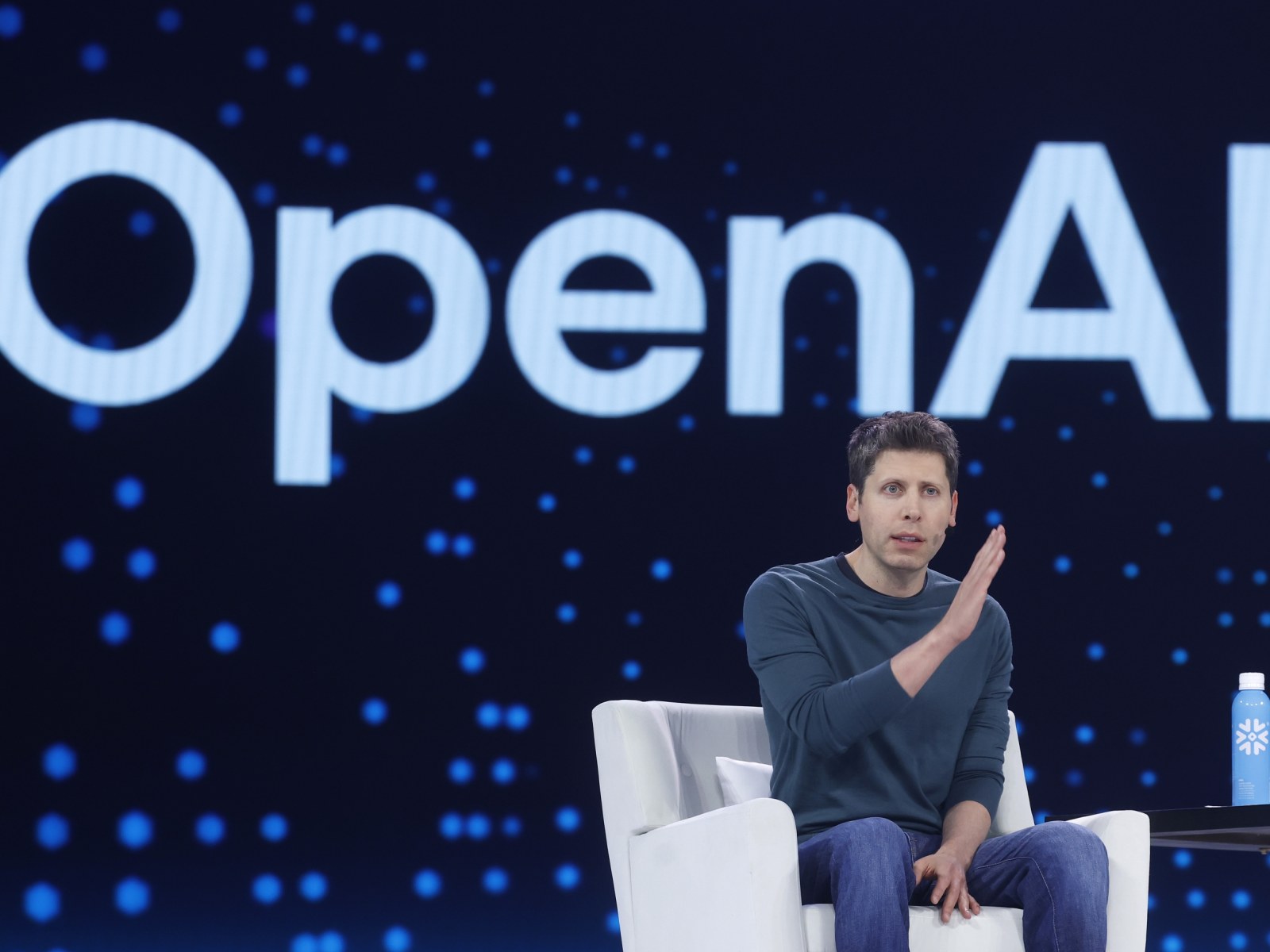
Sam Altman's company has quietly filed paperwork for a stock market debut that could dwarf every tech listing ever seen — but insiders say the ChatGPT maker is getting cold feet about the timing
SAN FRANCISCO
Somewhere in a locked filing cabinet at the Securities and Exchange Commission sits a document that could reshape Wall Street as we know it. It's OpenAI's confidential S-1 — the paperwork required before any company can sell shares to the public — and if the numbers being whispered around Silicon Valley are even half right, it's about to trigger the single biggest technology stock offering the world has ever seen.
OpenAI, the maker of ChatGPT and the company that arguably kicked off the entire generative AI boom in 2022, confidentially filed for an initial public offering with the SEC in late May, using Goldman Sachs and Morgan Stanley as lead underwriters. Multiple reports now put the target valuation somewhere between a staggering $730 billion and a jaw-dropping $1 trillion, with a possible debut on public markets as early as September 2026. At the upper end of that range, OpenAI's stock market entrance wouldn't just be big — it would be one of the five largest IPOs in United States history, full stop.
To put that in perspective: Saudi Aramco's 2019 listing raised about $25.6 billion and briefly made it the most valuable public company on Earth. OpenAI wouldn't necessarily raise that much cash in one shot, but the valuation being floated — potentially north of a trillion dollars — would place a company that didn't exist as a serious commercial business a decade ago in the same breath as Apple, Microsoft, and Saudi Arabia's state oil giant.
From Nonprofit Lab to Trillion-Dollar Contender
It's a wild trajectory for an organization that started life in 2015 as a nonprofit research lab dedicated to ensuring artificial intelligence would benefit "all of humanity." OpenAI restructured into a capped-profit company, then further reorganized its corporate structure in 2025 to make an eventual IPO possible in the first place — a move that triggered lawsuits, public criticism from co-founder Elon Musk, and hand-wringing from AI safety advocates who worried that the pressure of public markets and quarterly earnings calls would push the company to cut corners on safety in the name of growth.
Now those fears are colliding with cold, hard financial reality. OpenAI is reportedly running at somewhere around $20 billion in annualized revenue, and the company's last private fundraising round valued it at $122 billion — a number that's since been blown out of the water by the IPO chatter. ChatGPT alone counts hundreds of millions of weekly users, and OpenAI's enterprise push — deals with companies looking to bolt AI agents onto everything from customer service to software engineering — has become a serious revenue engine in its own right.
But revenue isn't the same as profit, and that's where things get dicey. OpenAI has never been shy about the fact that training and running frontier AI models costs an ungodly amount of money — data centers, custom chips, and the electricity to power them all add up to commitments reportedly worth hundreds of billions of dollars over the coming years, including massive compute deals with the likes of Oracle, Microsoft, and AMD. A public listing would give the company a new, deep well of capital to keep funding that spending spree. It would also give early employees and investors — some of whom have been sitting on paper wealth since the company's early nonprofit-to-for-profit pivot — a long-awaited chance to cash out.
The Anthropic Shadow Race
OpenAI isn't going it alone in this race to Wall Street. Its chief rival, Anthropic — the maker of the Claude chatbot, founded by ex-OpenAI executives — filed its own confidential IPO paperwork just about a week earlier, on June 1, 2026, reportedly targeting a jaw-dropping $965 billion valuation and eyeing an October Nasdaq debut. For a stretch of the summer, it looked like the two companies might genuinely list within weeks of each other — a head-to-head Wall Street showdown between the two most important AI labs on the planet, both trying to convince public investors that the eye-watering sums being poured into AI infrastructure will eventually pay off.
That neck-and-neck framing, however, appears to be cracking. Multiple outlets reported in late June that OpenAI CEO Sam Altman is now leaning toward pushing the actual public debut into 2027 rather than rushing to market this fall, and that he's privately made clear he isn't interested in a listing that values the company below $1 trillion. Meanwhile, OpenAI's own chief financial officer, Sarah Friar, has reportedly been pushing internally for exactly that kind of delay, giving the company more runway to grow revenue and smooth out its financials before facing the unforgiving scrutiny of quarterly public reporting.
Altman himself has played it coy in public. Asked directly by CNBC about IPO timing in the wake of Anthropic's filing, he shrugged off the pressure. "I think there is a race to deliver the best technology and build the best business," he said, "but, you know, going public is a financing event, and I don't think that's one that we're focused on the timing of." It's the kind of answer that says everything and nothing at once — technically true, but doing a lot of work to avoid confirming or denying what his own underwriters are already preparing behind closed doors.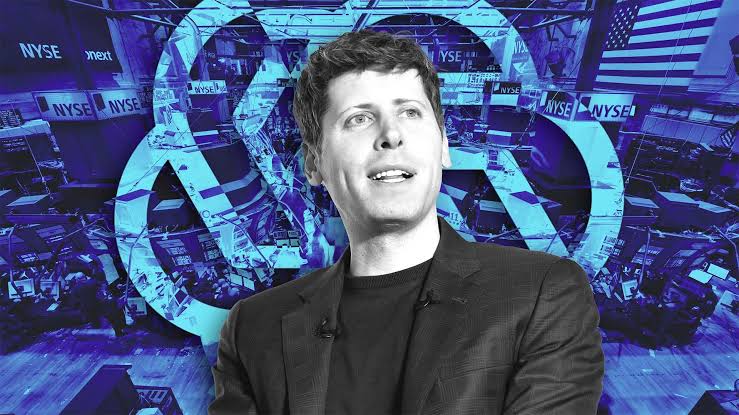
Why "Confidential" Doesn't Mean Secret Anymore
There's a legal quirk at play here that's worth understanding: a confidential S-1 filing is a real, well-established mechanism under U.S. securities law that lets companies begin the formal IPO review process with the SEC without immediately making their financials, risk factors, or business details public. It's designed to let a company quietly work out the kinks with regulators before its numbers are exposed to competitors and the press. Companies typically have to make the filing public at least 15 days before any roadshow to pitch investors — meaning the real, detailed numbers on OpenAI's revenue, losses, and business risks are still not public knowledge, no matter how many billion-dollar figures are swirling around financial media.
That secrecy hasn't stopped the guessing games. Betting markets like Polymarket have odds running on exactly when — and whether — OpenAI actually completes an IPO in 2026, reflecting genuine uncertainty about whether Altman pulls the trigger this year or punts to 2027 as reported. It also hasn't stopped Wall Street from positioning for what would be one of the most closely watched debuts in market history; bankers, analysts and prospective institutional investors have reportedly already been sniffing around for early access, despite OpenAI not yet holding formal pre-IPO investor meetings.
Expert Perspective: A Test Case for the Whole AI Boom
Financial analysts are increasingly framing an eventual OpenAI listing — whenever it lands — as a referendum on the entire AI investment boom, not just one company's stock. Trillions of dollars have poured into AI infrastructure, chips, and data centers over the past three years on the promise that generative AI will fundamentally remake how businesses and consumers work. A public OpenAI listing would, for the first time, force the company to answer hard questions in full public view: is the revenue growth real and durable, or is it propped up by unsustainable compute spending commitments that outpace what customers are actually willing to pay?
That tension — massive, unproven infrastructure bets against genuinely explosive but still relatively young revenue — is exactly why some analysts think Altman and Friar are right to be cautious about rushing to market. A blockbuster IPO that stumbles out of the gate, or that gets hammered in its first earnings call over margins and spending, could do real damage not just to OpenAI's stock but to investor sentiment around the entire AI sector, dragging down valuations for smaller players who don't have OpenAI's brand recognition or cash reserves.
On the other hand, waiting carries its own risk. Competitors like Anthropic, Elon Musk's xAI, and a resurgent Google DeepMind are all racing to ship increasingly capable models and lock in enterprise customers. Every quarter OpenAI stays private is another quarter its rivals have to close the gap — or leapfrog it entirely.
What This Means for You
If you're not a Wall Street trader or an OpenAI employee sitting on stock options, this might feel like a story that has nothing to do with you. It isn't. If OpenAI does go public — whether this September or sometime in 2027 — it will likely end up in index funds, 401(k)s, and retirement portfolios held by millions of ordinary people almost immediately, the same way Meta, Google, and other tech giants became embedded in the average American's retirement savings shortly after their own debuts. A trillion-dollar valuation swinging wildly in its first months of trading — which is common for hyped IPOs — could ripple through markets far beyond Silicon Valley.
There's also a more immediate, practical angle: companies preparing for public markets tend to tighten their belts, focus product roadmaps on revenue-generating features, and become more cautious about controversial or risky moves that could spook investors. If you're a ChatGPT user, a developer building on OpenAI's API, or a business weighing whether to bet workflows on the company's tools, the IPO clock running in the background is worth watching — it could shape everything from pricing to product priorities over the next year.
The Bottom Line
For now, the confidential filing sits with regulators, the exact numbers remain locked away, and Sam Altman is publicly playing it cool while reportedly holding out for a trillion-dollar number behind the scenes. Whether OpenAI rings the opening bell this September, sometime in 2027, or not at all in its current form, one thing is already clear: the company that put AI chatbots into hundreds of millions of pockets is now facing its biggest test yet — proving to Wall Street, in cold financial terms, that the AI revolution is worth every one of those billions.



