Share
There is a truth that generations have carried like torchlight through history:
A person becomes the company they keep.
It is the simplest, most underestimated law of human development. Yet it silently determines the trajectory of dreams, careers, and nations.
The ancient Greek philosopher Epictetus warned:
“Keep company only with people who uplift you, whose presence calls forth your best.”
Centuries later, his wisdom still stands untouched. Human character bends—sometimes slowly, sometimes suddenly—toward the shape of its associations.
Just as the body becomes what it feeds on, the mind becomes what it repeatedly encounters. Surround yourself with thinkers, and you will think. Surround yourself with doers, and you will act. Surround yourself with cynics, and your hope will shrink.
Associations Build or Destroy Greatness
Harvard psychologist David McClelland found that 95% of a person’s success or failure is influenced by their “reference group.” This is not motivational rhetoric—this is science.
It is why a thief finds comfort among thieves, why a dreamer seeks other dreamers, and why ambitious people instinctively cluster together. In the legal world, every young lawyer becomes a reflection of the chambers, mentors, and peers who shape them. Ethics are caught, not taught. Courtroom eloquence grows from listening to eloquent seniors. Confidence comes from watching giants walk ahead of you.
As Justice Oliver Wendell Holmes said:
“The life of the law has not been logic; it has been experience.”
And experience is nothing more than exposure—exposure to people, environments, arguments, ideas, and values.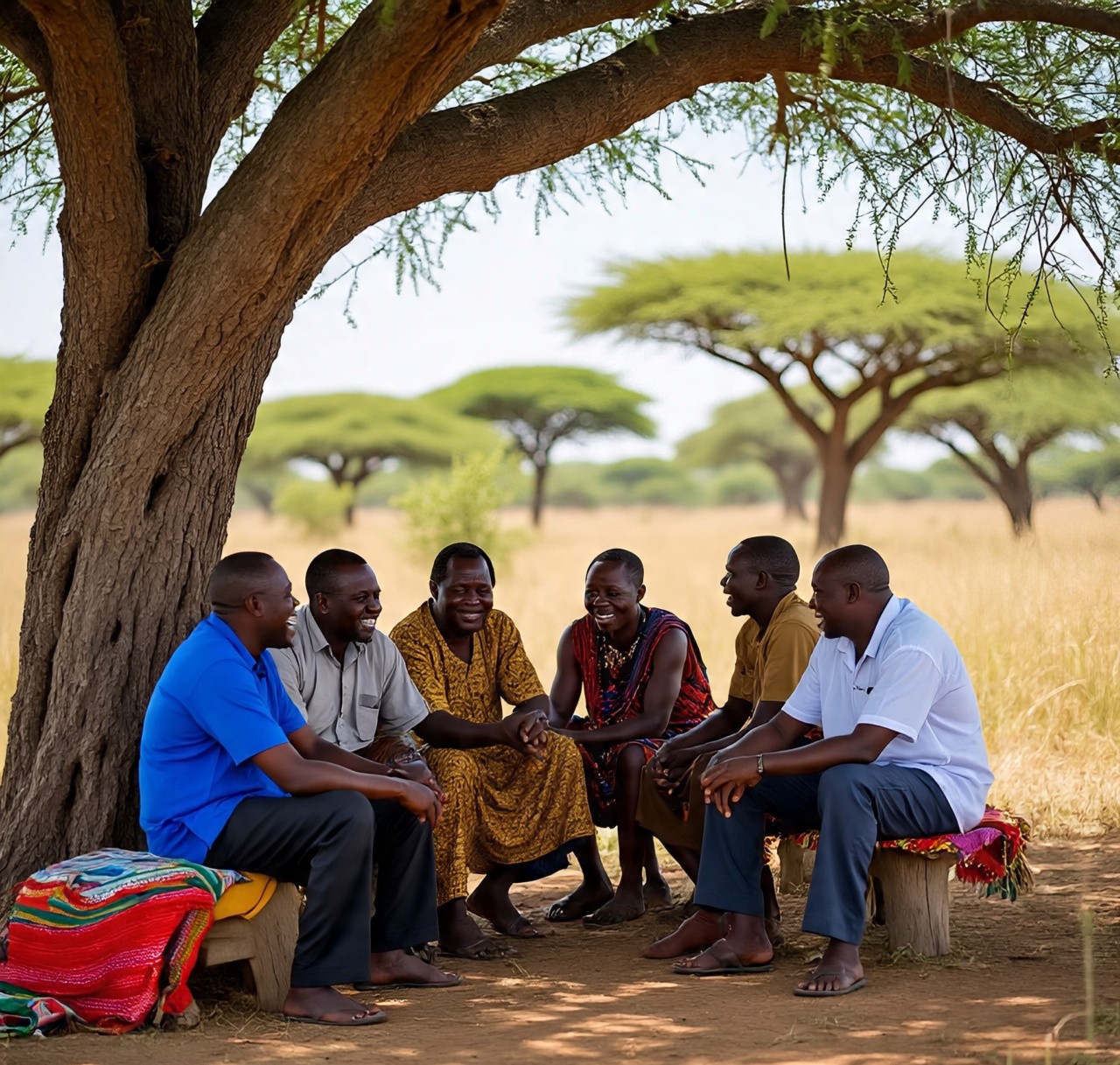
History’s Great Movements Began With Circles—Not Individuals
No revolution—political, intellectual, or spiritual—was ever the work of a solitary genius.
1. The American Revolution
Jefferson sharpened his philosophy through exchanges with Adams. Benjamin Franklin’s wit, wisdom, and scientific thinking influenced countless statesmen. Their intellectual union produced the Declaration of Independence.
John Adams once admitted:
“Liberty, once lost, is lost forever—but it is often born in the fellowship of the brave.”
2. The African Liberation Movements
Kwame Nkrumah did not become a Pan-African titan in isolation. He was shaped in the ideological heat of London’s African Students Union.
He sat under the influence of thinkers like George Padmore and W.E.B. Du Bois—men whose words became weapons against colonial injustice.
Julius Nyerere, Jomo Kenyatta, Milton Obote, and Kenneth Kaunda were all shaped by intellectual laboratories—Makerere University, Dar es Salaam University, and the London School of Economics.
Their associations produced ideas that outlived their generation.
3. The Civil Rights Movement
Martin Luther King Jr. stood taller because he stood among giants.
Rosa Parks’ quiet defiance, Bayard Rustin’s strategic genius, and John Lewis’s fearless activism formed a moral ecosystem that gave King strength.
King himself said: “I came to see that we are caught in an inescapable network of mutuality.” No movement was ever a solo performance. Every movement was a choir.
Education: The Silent Architect of Social Capital
Where you study often determines who you meet, how you think, and which doors open for you.
Law: Law students at Ivy League universities, Oxford, Makerere, and prestigious law schools gain more than education—they gain networks that shape their future.
A student who trains under principled advocates absorbs integrity.
A student surrounded by legal thinkers grows analytical discipline.
A student exposed to vibrant moot courts and journals emerges with a sharpened mind.
Medicine: Ethical teaching hospitals mold ethical doctors; chaotic ones produce negligent ones.
Engineering: Innovation thrives where curiosity is shared.
As Elon Musk once noted: “You get extraordinary results when ordinary people join extraordinary circles.”
Business: Investors seldom look at ideas alone—they look at the networks behind the entrepreneur.
Your network can become your net worth.
Sociologist Pierre Bourdieu explained this as cultural capital—the invisible wealth gained from environments, exposure, and association.
He wrote: “Our habits are formed by the environments that form us.”
To change your habits, change your environment.
To change your future, change your company.
Transformation Through Association: Real-Life Proof
Malcolm X transformed his mind in prison by joining intellectual circles and devouring books.
The Apostles turned from fishermen into global influencers simply through walking with Jesus.
Steve Jobs refined his genius by associating with California’s Homebrew Computer Club—a circle of bold thinkers.
Nelson Mandela became a titan partly due to his association with Oliver Tambo and the ANC Youth League—men who sharpened his political fire and strategic discipline. Greatness is rarely inherited. It is absorbed.
The Company You Keep Determines the Future You Meet
If you dine with complainers, you will starve on excuses.
If you walk with thinkers, you will prosper in ideas.
If you sit with dreamers, you will rise on imagination.
If you stay with the lost, you will lose yourself.
As the African proverb goes:
“When the roots are deep, there is no reason to fear the wind.”
But the roots grow deep only in the right soil.
Your soil is your environment.
Your roots are your associations.
Your fruit is your future.
Conclusion: Choose Your Circle, Choose Your Destiny
Success is not accidental. Character is not created in solitude. Destiny is not a stroke of luck.
It is the sum of the people we allow to shape our thoughts, influence our actions, and walk beside us.
You become your peer group. Therefore, choose wisely.
ABOUT THE WRITER
Evans Sande Ndahura is a rising Ugandan writer and social thinker whose work focuses on personal development, leadership, law, justice, and societal transformation. Known for his reflective and bold intellectual style, he aims to inspire ambition in young people and challenge society’s direction. Drawing from legal studies, philosophy, and lived experience, he blends storytelling with scholarship to promote discipline, courage, and intellectual growth. He firmly believes that the quality of one’s associations shapes the quality of one’s destiny—a principle that guides and defines his writing.
Torch Media Africa



