Share
COMMENTARY
In Uganda, elections are no longer decided at the ballot box alone. Increasingly, they are shaped in police holding cells, military barracks, and courtrooms where justice is deferred indefinitely. As the country moves once again into an election cycle, the arrest and detention of government critics, civil society leaders, and opposition organizers has become not an aberration, but a governing strategy.
The arrest of Dr. Sarah Bireete on December 30, 2025, fits squarely into this pattern. Dr. Bireete is not a partisan operative. She is one of Uganda’s most respected lawyers and governance specialists, the Executive Director of the Centre for Constitutional Governance, and a leading figure in regional and global election-observation networks. Her work has focused on constitutional literacy, civic education, election integrity, and the rule of law—activities that should strengthen a democracy, not threaten it.
Yet her arrest, conducted by a joint operation of police and military personnel at her residence in Kampala, mirrors a familiar script. The state announces that “inquiries are ongoing.” Charges, if they appear at all, are vague. Bail is denied or endlessly delayed. Court dates evaporate. The objective is not conviction. It is removal. 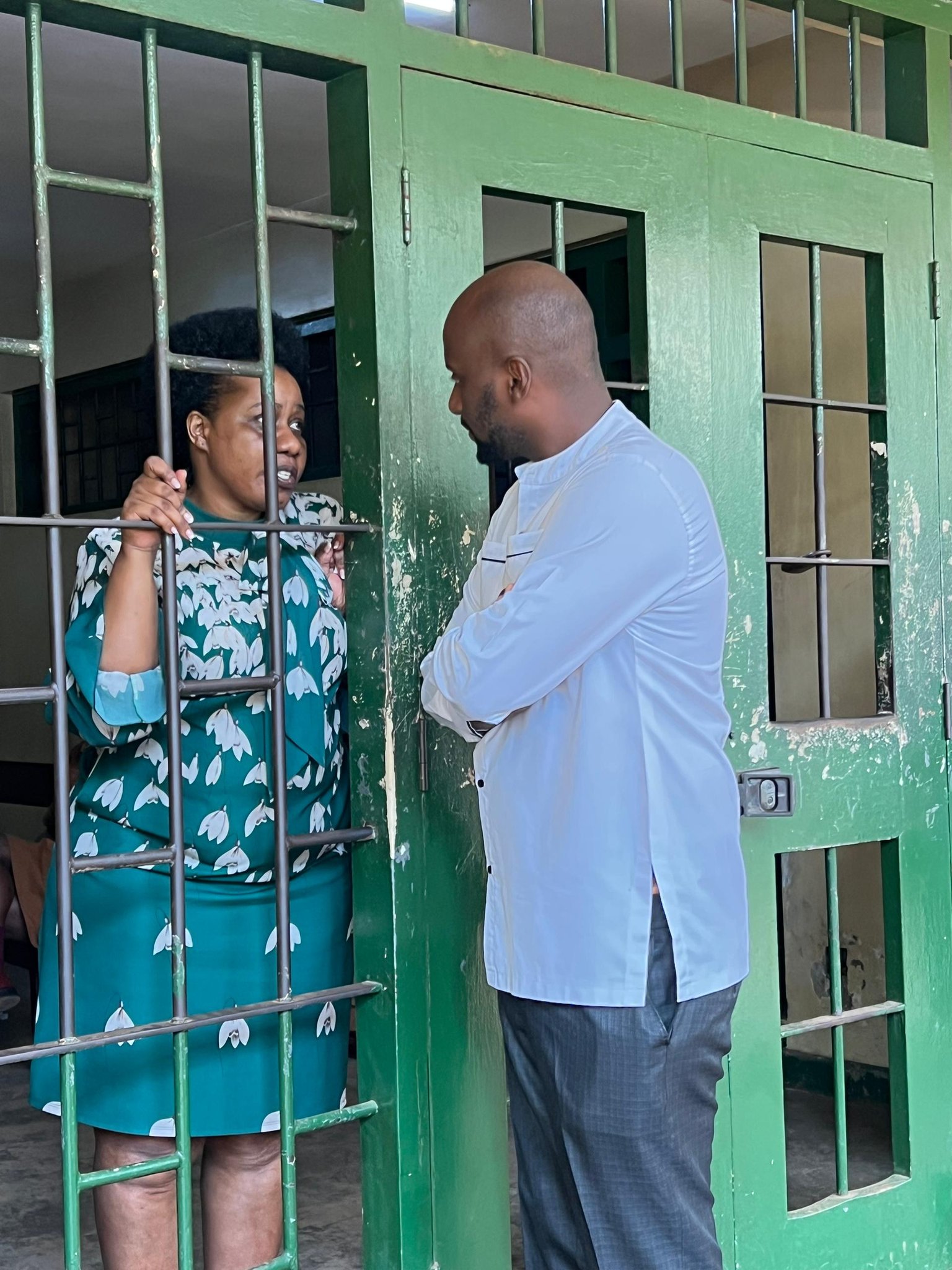
Kampala City MP aspirant Lubongoya visits Sara Bireete in Prison. [Courtesy Photo]
Ugandans have seen this movie before. In December 2020, just weeks before the 2021 general elections, human rights lawyer Nicholas Opiyo and four colleagues were abducted in broad daylight by plainclothes security operatives, handcuffed, and driven away in an unmarked vehicle. They were accused of money laundering, a charge that generated headlines but little evidence. The case dragged on while the election passed. Civic space narrowed. The damage was done long before the court ever spoke.
What links the arrests of Mr. Opiyo then and Dr. Bireete now is not the substance of the allegations, but their timing and function. Each occurred on the eve of an election. Each targeted individuals capable of exposing electoral malpractice, documenting abuses, or mobilizing legal resistance. Each relied on the prosecutorial machinery of the state to legitimize what is, in effect, preventive detention.
Since the current campaign period began, more than 400 supporters and associates of opposition leader Robert Kyagulanyi, popularly known as Bobi Wine, have been abducted, charged with fabricated offences, denied bail, and held with no realistic prospect of trial. Some civilians arrested during the 2021 elections remain incarcerated today, nearly four years later, without having had their cases heard.
This is not the rule of law. It is rule by procedure. Uganda’s judiciary, once a source of institutional pride, now operates under intense political pressure. Judges who assert independence risk transfer, stagnation, or worse. Prosecutors file charges that collapse when tested, yet serve their purpose by keeping critics behind bars during politically sensitive periods. The legal process becomes a holding mechanism, not a forum for truth.
The result is one of the highest populations of political prisoners in Africa. Among them is Dr. Kizza Besigye, a former presidential candidate and longtime opposition figure, whose repeated arrests over the years have sent a clear message: dissent will be managed through attrition.
Civil society organizations and election observers have been particular targets. Their bank accounts are frozen. Their leaders are summoned, arrested, or intimidated. The goal is strategic: to dismantle the infrastructure that could document vote rigging, expose abuses by security forces, or challenge manipulated outcomes.
This approach is sustained not only by domestic repression but also by international indulgence. Uganda remains a major recipient of Western aid and security cooperation. Donors routinely issue statements expressing “concern” while continuing business as usual. The message received in Kampala is unmistakable: repression carries few consequences.
That must change. Western governments that finance Uganda’s security sector, budget support, and development programmes possess significant leverage. Conditioning assistance on the release of political prisoners, the restoration of civic space, and demonstrable steps toward free and fair elections is not interference; it is accountability. So too is the responsibility of multilateral institutions, election bodies, and international civil society networks to speak clearly and act collectively.
Uganda does not lack laws. It lacks the political will to apply them equally. The continued use of arrests, fabricated charges, and indefinite detention to neutralize critics undermines not only Uganda’s democracy, but the credibility of those abroad who claim to support it.
The demand is simple and urgent: release all political prisoners; end the criminalization of dissent; allow civil society and election observers to operate freely; and ensure that courts serve justice, not power.
The writer is a concerned citizen
Torch Media Africa



