Share
Opinion
Across Uganda and much of the world, religious faith remains one of the most influential forces shaping identity, morality, and community life. Yet it is also one of the most contested and emotionally charged aspects of human society.
Having been baptised at just four months old, attended Sunday School, confirmed in primary school, and even served as a godparent on multiple occasions, one observation becomes difficult to ignore: religion, for many, begins long before personal understanding or choice can be exercised. It is therefore reasonable to question the depth of “choice” often associated with religious identity. At four months old, a child cannot choose Anglicanism, Catholicism, Islam, or any other belief system. These identities are largely inherited, reinforced through upbringing, and later embraced—sometimes consciously, sometimes by default.
This raises a broader philosophical question: at what point does inherited belief become personal conviction?
None of this, however, is intended as an attack on faith itself. Uganda’s annual pilgrimage to Namugongo, for example, remains a powerful expression of devotion, sacrifice, and communal identity. Far from criticism, such journeys can also be understood in another light—one that is often overlooked.
Pilgrimage, beyond its spiritual meaning, is also an act of endurance, reflection, and even recreation for some participants. Walking long distances can be physically beneficial, emotionally cleansing, and socially unifying. In many rural communities, where daily life can be repetitive and geographically limited, such journeys offer rare opportunities for movement, exposure, and shared experience.
There is also an undeniable economic dimension. Around Namugongo during pilgrimage season, local communities experience a surge in activity. Lodges fill up, food vendors thrive, transport operators benefit, and small businesses see increased demand. In practical terms, religious gatherings have become an informal but significant driver of local economies.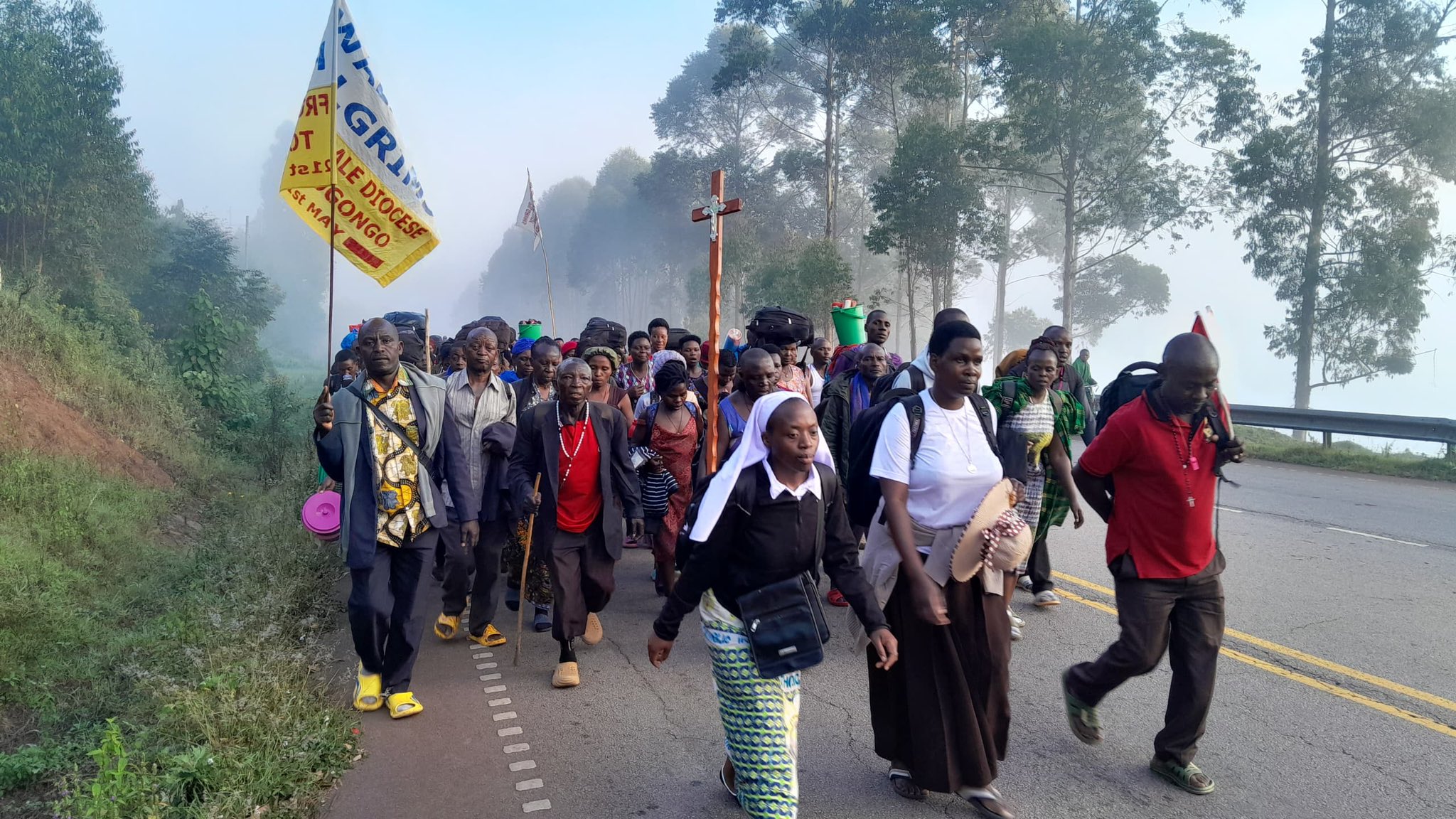
Walking long distances can be physically beneficial, emotionally cleansing, and socially unifying
Yet amid these positive aspects lies a paradox that deserves closer reflection: the persistent religious intolerance that often accompanies expressions of faith.
It is not uncommon to witness believers from different denominations criticising, mocking, or even condemning one another’s practices. Pilgrimage, worship styles, religious symbols, and doctrines frequently become sources of ridicule rather than mutual respect.
What is striking is that these divisions often occur among groups that profess the same core values—love, forgiveness, peace, and compassion.
From Catholics and Anglicans to Pentecostals, Muslims, and other faith groups, the cycle of criticism is often mutual. Each group, in moments of conviction, may dismiss the practices of others while defending its own with equal intensity. In the process, faith sometimes shifts from a unifying force into a source of division.
This contradiction raises an uncomfortable question: how can messages of love and tolerance coexist with hostility toward those who worship differently?
More importantly, what message does this send to those who are not believers at all?
For skeptics and non-believers observing these divisions, the public display of religious conflict can reinforce doubts rather than inspire faith. When belief systems are accompanied by anger, superiority, or intolerance, they risk undermining the very values they claim to uphold.
This is not an argument against faith or pilgrimage. Rather, it is a call for reflection. Religious belief, in its highest form, should elevate humanity rather than divide it. It should encourage humility rather than superiority, and understanding rather than contempt.
Uganda’s rich religious diversity is not a weakness—it is a strength. But it requires maturity, restraint, and a willingness to accept that spiritual experience is not a monopoly of any single tradition.
In the end, faith will continue to shape society in powerful ways. The challenge lies not in whether people believe, but in how they treat those who believe differently.
If religion is to remain relevant in a modern, pluralistic society, then its followers must rise above division and embody the very principles they preach. Because ultimately, belief may be personal—but humanity is shared.
Torch Media Africa



