Share
By Bosco Bakwatanisa Muto
East Africa is a region distinguished by its abundant cultural diversity, extensive natural resources, and pivotal geographic location. Over the years, the region has sought ways to improve its economic trajectory and integrate more effectively into the global economy. One of the most significant infrastructure developments in recent history is the construction of the Standard Gauge Railway (SGR), a modern rail system designed to link Uganda to major economic hubs, including Mombasa in Kenya, Juba in South Sudan, Kigali in Rwanda, and even extending into Tanzania, Burundi, and the Democratic Republic of Congo (DRC). Uganda, as a landlocked country situated at the center of this region, stands to reap significant benefits from this rail project, which is anticipated to reduce both transport costs and travel time, while catalyzing social and economic transformations that were previously unattainable.
This article explores the socio-economic effects of the SGR on Uganda and the broader East African region. Through insights from academic literature and economic perspective, I discusses how the project might influence trade, employment, regional integration, and poverty reduction, while also considering the challenges and risks involved with such a large-scale infrastructure investment.
Infrastructure’s role in economic development
Well-developed transport infrastructure is widely recognized as a fundamental pillar of economic growth. According to a 2014 World Bank report, the lack of efficient transport systems in Sub-Saharan Africa increased the cost of goods by 30-40%, limiting trade and hampering economic expansion. For a landlocked nation like Uganda, which heavily relies on roads and rails to access global markets, this challenge is even more acute.
Historically, the East African transport sector has been fraught with inefficiencies stemming from aging infrastructure and poorly maintained roads and railways. The region’s existing meter-gauge railway system has long struggled to meet the growing demands of modern trade. As noted by Mwangi Kimenyi and Zenia Lewis (2015), outdated transport infrastructure is one of the biggest obstacles to economic progress in East Africa.
The significance of the SGR project, therefore, becomes clear within this context. The SGR is expected to significantly reduce freight costs, decrease transit times, and facilitate access to markets across the region, especially for landlocked nations like Uganda. By providing a more efficient means of transporting goods to and from major ports such as Mombasa, the SGR is poised to play a pivotal role in boosting trade, lowering import and export costs, and improving regions competitiveness.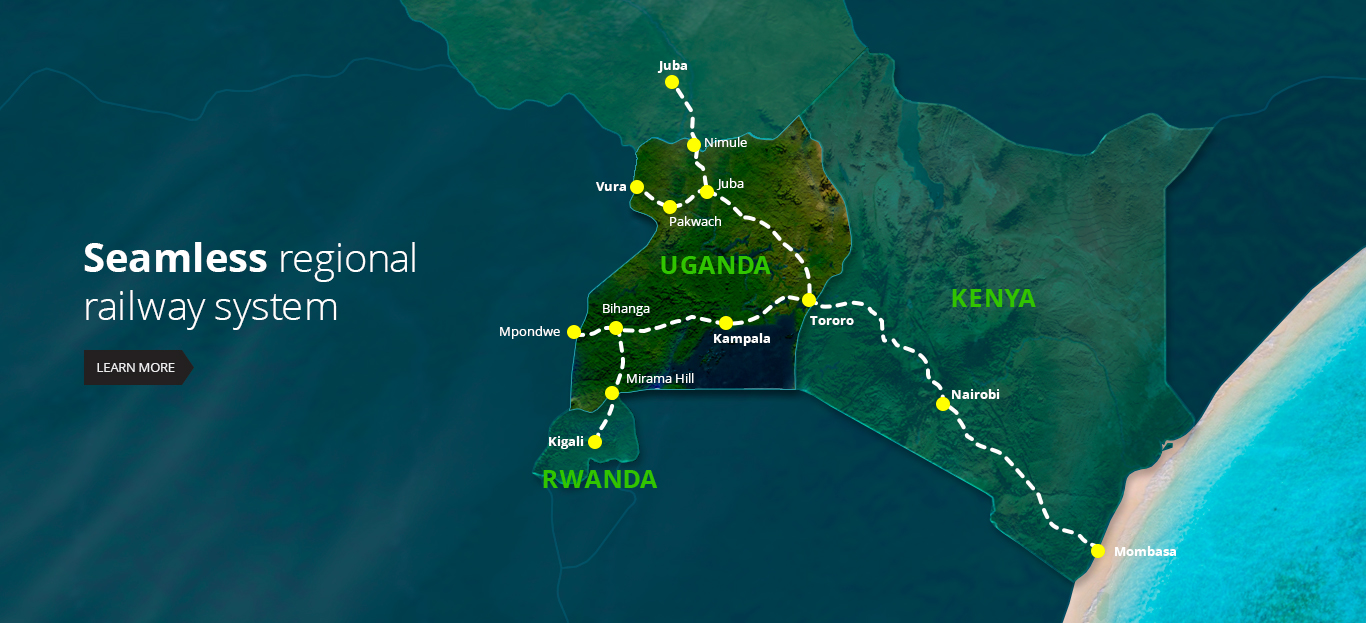
Graphic from SGR Uganda
Enhancing trade and lowering costs: The economic potential of the SGR
Uganda’s economic progress is closely tied to its ability to access global markets. Key exports like coffee, tea, tobacco, and fish often face challenges due to high transportation costs. A 2018 report by the African Development Bank (AfDB) highlighted that costly and inefficient transport systems have rendered Ugandan exports less competitive, particularly when compared to countries with more advanced infrastructure.
In this regard, the SGR is poised to be a transformative project. According to the 2019 report by the Kenyan SGR Authority, freight charges for the SGR are estimated to be 30-40% lower than road transport costs. For Uganda, these cost savings will likely result in greater profitability for businesses, reduced expenses, and enhanced global competitiveness for Ugandan goods.
Moreover, the reduction in transportation costs is not expected to benefit only large export-driven enterprises. Small and medium-sized enterprises (SMEs), which make up a substantial portion of Uganda’s economy, will also gain from improved market access both within the East African Community (EAC) and globally. With more affordable and dependable transportation options, SMEs will be better positioned to expand their operations, reach new markets, and play a more prominent role in driving economic growth.
Job creation and industrial growth
Beyond facilitating trade, the SGR is projected to play a significant role in creating jobs and fostering industrial growth in Uganda and across the region. Large infrastructure projects, such as the SGR, typically generate numerous employment opportunities, both directly and indirectly. During the construction phase of the SGR, thousands of jobs were created in Kenya, and a similar impact is expected when construction begins in Uganda.
The long-term employment benefits of the SGR, however, extend well beyond its construction phase. Once operational, the SGR is likely to stimulate industrial growth along the railway corridor. The establishment of special economic zones (SEZs) and industrial parks near key rail stations is expected to attract foreign direct investment (FDI) and encourage the growth of manufacturing and processing industries. A 2017 study by the United Nations Economic Commission for Africa (UNECA) found that efficient transport corridors are crucial for industrialization, as they lower input costs, enhance supply chain efficiency, and make it easier for industries to access both raw materials and markets for finished goods.
The industrial development spurred by the SGR will have broad social and economic impacts. By providing employment opportunities in sectors such as manufacturing, agriculture, and logistics, the railway will help alleviate poverty, particularly in rural areas where unemployment rates are high. Additionally, the increased demand for skilled labor in fields such as engineering and logistics will provide opportunities for developing local expertise and human capital, further contributing to Uganda’s long-term economic progress.
Courtesy picture from SGR Uganda
Strengthening Regional Integration and Cooperation
The SGR is also expected to strengthen regional integration and cooperation within the East African Community (EAC). Regional integration has long been recognized as a crucial driver of economic development in Africa, with the African Union (AU) and other regional bodies advocating for the removal of trade barriers and the establishment of seamless transport networks across the continent.
By connecting Uganda to the broader East African region, the SGR will facilitate the movement of goods and people across borders. This enhanced connectivity is particularly important for landlocked countries like Uganda, which rely on their neighbors for access to international markets. The railway will enable faster, more efficient trade with Kenya, Rwanda, South Sudan, and beyond.
Furthermore, the SGR is expected to reduce non-tariff barriers, such as border delays and inefficient customs procedures. The introduction of one-stop border posts (OSBPs) along the railway route will streamline cross-border trade, cutting delays and lowering the overall cost of doing business. According to the East African Community Secretariat (2019), improved trade facilitation measures, such as OSBPs, can reduce business costs by up to 30%, making the region more attractive to investors.
In addition to economic benefits, the SGR will also foster social and cultural integration within the EAC. By making it easier for people to move across borders, the railway will encourage greater interaction and cooperation between East African citizens, promoting a sense of regional identity and unity. This enhanced cooperation will contribute to the region’s long-term stability and prosperity.
Addressing challenges and risks
Despite the numerous advantages that the SGR promises, there are also significant challenges and risks to consider. One of the major concerns is the project’s high cost and the potential for debt distress. With the entire SGR project cost expected to cost over $12.8 billion, with much of this funding coming from external loans. This raises questions about Uganda’s long-term ability to service its debt and ensure the financial sustainability of the project.
Picture from SGR - Uganda
Additionally, there are concerns about the environmental and social impact of the SGR, particularly in terms of land acquisition and the displacement of communities. Large infrastructure projects often require significant land, which can disrupt local communities and livelihoods. Therefore, it is crucial for the Ugandan government and its partners to implement the project in a way that minimizes these negative impacts and ensures that affected communities are adequately compensated.
Political and economic instability in the region also poses risks to the successful completion and operation of the SGR. The success of the project will depend on the region remaining politically stable and on the ability of governments to cooperate in addressing any challenges that arise.
The Standard Gauge Railway is a landmark infrastructure project that holds immense potential to transform Uganda’s economy and the broader East African region. By lowering transportation costs, boosting trade, creating jobs, and promoting industrial development, the SGR has the potential to catalyze socio-economic growth across multiple sectors. Moreover, the railway will play a pivotal role in enhancing regional cooperation and integration, contributing to the long-term prosperity and stability of the East African Community.
However, the success of the SGR depends on overcoming significant challenges, including managing the financial burden of the project, mitigating its social and environmental impact, and ensuring political stability in the region. If these challenges are addressed, the SGR has the potential to unlock new economic opportunities for Uganda and the wider region, driving sustained prosperity for decades to come.
The writer is a doctoral student scholar and Pan-Africanist