Written By | Staff Writer
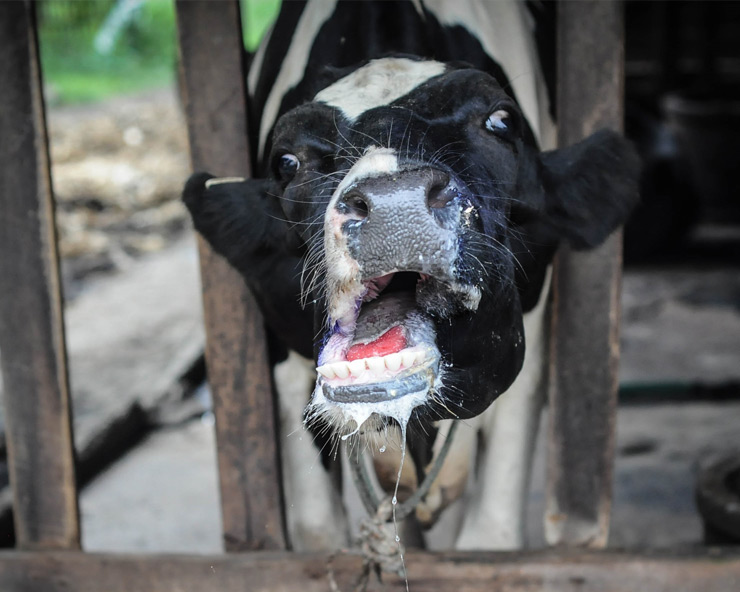
A follow-up development: on 7 October the government threatened prosecution of veterinary staff who sell state-procured FMD vaccines and said it will block cattle movement without district clearance.
Agriculture
Uganda's compulsory foot-and-mouth disease (FMD) vaccination campaign has reached the stage where policy meets the cowshed, and the government is signalling that persuasion is no longer enough. On Wednesday 7 October 2026, Minister of State for Animal Industry Bright Rwamirama warned that veterinary and extension workers who sell government-procured FMD vaccines, rather than administering them, face arrest and prosecution, according to the Daily Monitor. The same report quoted local officials promising to block cattle movement from areas where the rules are not followed.
This is a follow-up to earlier coverage of the scheme's cost-recovery model. What is new this week is not the price or the schedule but the enforcement: the state is now openly acknowledging leakage inside its own delivery chain, and it is reaching for the tools of policing and movement control to protect a programme on which the country's dairy and meat exports depend.
What the government said
According to the Monitor, Rwamirama told officials that some extension workers are selling state-procured vaccines instead of vaccinating animals, and that some districts have declared FMD outbreaks while doses sit in storage. He said a single non-compliant person can damage a whole industry: "One person who becomes stubborn and does not observe disease control can actually spoil the whole industry."
The government has procured about 44 million doses for susceptible livestock, the Monitor reported. Farmers pay Shs8,000 per dose for cattle and pigs and Shs4,000 for sheep and goats, and vaccination is expected to be repeated every six months. The compulsory programme was introduced in July. The state, officials say, carries the cost of veterinary officers' facilitation, transport, cold-chain infrastructure and storage.
Local administrators echoed the tougher line. Moses Mwesigye, Deputy Resident District Commissioner of Kiruhura, said: "I am not going to allow any movement of the cow in my district" without a letter from the District Veterinary Officer. Oyub Cheng Emannuel, Chief Administrative Officer of Kotido, said his district would step up surveillance of illegal vaccine sales.
Why leakage matters more than price
The programme's design is ambitious. New Vision reported in June that the government planned its biggest livestock vaccination drive, aimed at about 45.5 million animals: roughly 16.5 million cattle, 17.4 million goats, 4.4 million sheep and about 8 million pigs, according to Rwamirama. The target was at least 80 percent coverage in each cycle. At that time, more than 20,000 farmers were registered and about 3.5 million animals enrolled across 17 districts.
Herd immunity against a virus that spreads through contact, contaminated vehicles and shared water points is a collective good. Vaccination below a threshold leaves the virus circulating, and a vaccine that is sold privately rather than injected, or injected at the wrong dose or after a broken cold chain, produces a false sense of protection. That is the scenario officials are describing: stock on the shelf, outbreaks in the field, and a paper trail that may show doses distributed but animals unprotected.
The incentive to divert is easy to see. A dose officially priced at Shs8,000 is, to a farmer who wants to avoid registration or the digital certificate system, an item that can be bought informally, possibly at a different price and without the record that triggers a six-month follow-up. For a poorly paid field worker, the state's stock is a side income. This analysis is our reading of the incentives rather than a finding in the reports cited, which do not quantify how many doses have been diverted.
The economic stakes
The Monitor put the sector's weight in numbers: Uganda produces about 5.3 billion litres of milk a year, earns about $380 million from dairy exports, and employs about 2.7 million people across the dairy value chain. New Vision cited about $385 million in dairy exports in 2025, up from $285 million the year before, and about $12.9 million from hides and skins. The two outlets' export figures differ slightly, but both describe a dairy trade in the hundreds of millions of dollars and growing quickly.
That growth is exactly what an uncontrolled FMD epidemic threatens. Officials told the Monitor that FMD control is needed to reopen higher-value export markets. Quarantines and market closures have already hurt in the cattle corridor. Earlier this year the Ntungamo district imposed a one-month closure of livestock markets, as allAfrica reported in May, and our own earlier coverage recorded sharp falls in milk deliveries in Mbarara and Ntungamo during quarantines.
What it means for farmers
For the smallholder with three cows and a few goats, the message is double-edged. On one side, a state that enforces vaccination and punishes vaccine sellers is protecting the herd value that sits at the centre of household wealth. New Vision quoted Henry Sight Lugoloobi of Sight Farm, chairman of the Uganda Best Farmers Coalition, who put a cow's worth at Shs2 million to Shs5 million and called the vaccine fee small by comparison; he said stricter enforcement would be needed. Dr Jolly Kabirizi of Kyakuwa Mixed Farm said treating a sick animal can cost over Shs100,000.
On the other side, movement restrictions are blunt. A DVO letter requirement can slow the sale of an animal to a trader or the transfer of a heifer to a restocking beneficiary, and farmers who cannot reach a veterinary office, or who face a district office that has run out of doses, risk being penalised for a failure that is not theirs. If district officials block movement without a transparent, quick way to obtain clearance, the likely result is informal movement at night and by back routes, which is precisely how FMD spreads.
There is also a fairness question in prosecution. Public arrests of low-ranking vets make for a deterrent, but diversion that depends on a pipeline of stock requires examination of the distribution chain: who signs for the doses, how stock is reconciled against the animals registered, and whether district storage records are audited. The reports do not say whether such audits are under way.
What to watch
Four indicators will show whether the tougher line works. First, whether the first prosecutions are announced and who they involve. Second, whether the proportion of animals vaccinated in each district is published, so that the 80 percent target can be tested rather than assumed. Third, whether districts with declared outbreaks and idle stocks are told to move the vaccines quickly. Fourth, whether export markets respond: dairy and beef buyers will want evidence of a functioning traceability and vaccination certificate system, not only of announcements.
The wider lesson is that animal-disease control in Uganda has moved from a supply problem, getting vaccines into the country, to a delivery and integrity problem, getting them into animals. Buying 44 million doses is the easy part. Making sure each is injected, recorded and honoured by the district office is where the programme will be won or lost.



