Written By | Staff Writer
More than 10,000 robusta seedlings were distributed in Teso in May. Farmers say most are dead, raising hard questions about how Uganda's coffee expansion is being rolled out.
Agriculture Feature
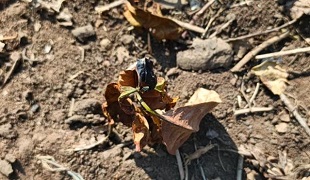
When Vice President Jessica Alupo launched a coffee seedling distribution in Katakwi District in May 2026, the pitch was simple and attractive: robusta coffee, a crop that has lifted incomes across central and western Uganda, could do the same for the poor, cotton-and-cereal farmers of the Teso sub-region. More than 10,000 robusta seedlings were handed out to households in Usuk and Ngariam counties. Four months later, according to Daily Monitor reporting from 9 September 2026, most of them are dead.
The Katakwi story is a small one in volume terms. But it speaks to a much larger question now facing Uganda's coffee-expansion drive and, more broadly, every government and donor programme that distributes planting material: how do you make sure the right crop goes to the right place, with the water and know-how it needs to survive?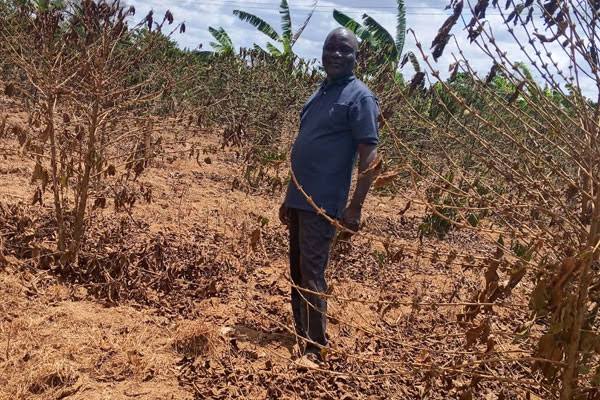
What happened in Katakwi
The Monitor's account is blunt. Anna Mirio of Odoot village received 55 seedlings and says every one died. Martin Egwarat, a former local chairperson, was given 200; none survived, and he said termites consumed what the dry spell left behind. He also voiced doubt that coffee can grow in the area's sandy soils without water. Jopita Asio of Ongem village made a more hopeful observation: seedlings that stood in shade did better than those in open fields, which she took as a sign that coffee in Teso may need both shade and irrigation. Mirio noted that only farmers with a water source at home managed to keep any plants alive.
James Otialuk, a retired agricultural officer quoted in the report, identified the underlying constraint: Katakwi's sandy soils cannot retain enough moisture for coffee. He pointed to reports of coffee trees failing in Masaka, a traditional coffee heartland, as a warning to farmers about the effect of the current dry spell. Local leaders are now asking for demonstration gardens and farming solutions tailored to local conditions before any further crops are distributed.
A drought that has hit coffee country too
It would be easy to treat Katakwi as a story of a wrong crop in the wrong place. The drought, however, is damaging coffee in places where nobody questions its suitability. The Independent Uganda reported on 12 September that farmers in Greater Masaka, Greater Luweero, Isingiro, Nakasongola, Bunyoro, Buliisa and Teso were watching coffee, maize, beans and sorghum wither. Sulaiman Minani lost his 1.5-acre coffee plantation in Bisanje Ward, Masaka City. Hawa Nalumansi, treasurer of a parish development committee SACCO in Ssenya, said beneficiaries of government agriculture programmes who borrowed to plant coffee were struggling to repay as crops failed.
Nile Post, meanwhile, reported in the past two weeks of coffee farmers in Nyakyera counting what it called 'black losses' and of a Rubanda initiative to bring affordable financing to drought-hit farmers. The Uganda National Meteorological Authority has said it expects near-normal to above-normal rainfall as El Niño conditions begin from mid-September, which should ease the dryness. But rain arriving after the damage does nothing for seedlings already dead, and heavy rain brings its own risks of floods and erosion, a pivot we examined in our coverage yesterday.
The policy context: a coffee push that is accelerating
The Katakwi seedlings are part of a wider political and economic push to put more land under coffee. At a Luweero event on 23 September, according to Nile Post, officials from the Ministry of Agriculture's coffee department warned farmers against harvesting immature beans and drying coffee on the ground. David Wamala said such practices damage the quality of Ugandan coffee, and the government signalled it would prosecute those who deliberately degrade it. The ministry is also preparing a registration system for coffee farmers and plantations to improve traceability, with the warning that unregistered farmers may find it harder to access certain international markets. In the same programme, seedlings were distributed to NRM members in Greater Luweero under President Museveni's commercial agriculture initiative, and farmers were trained in shade management and water conservation using locally available materials.
Coffee has plenty of political appeal. Bank of Uganda data cited in recent Monitor coverage show coffee earning around US$2.19 billion in the 2025/26 financial year. But the same distribution model that works in Luweero's red loams, with training and shade, is being replicated in places with very different soils and rainfall. The Katakwi experience suggests that expansion needs agronomic screening, and that the 'one crop fits all' enthusiasm that often accompanies a political launch can leave poor households worse off than before: they invest labour and land in seedlings, and lose both.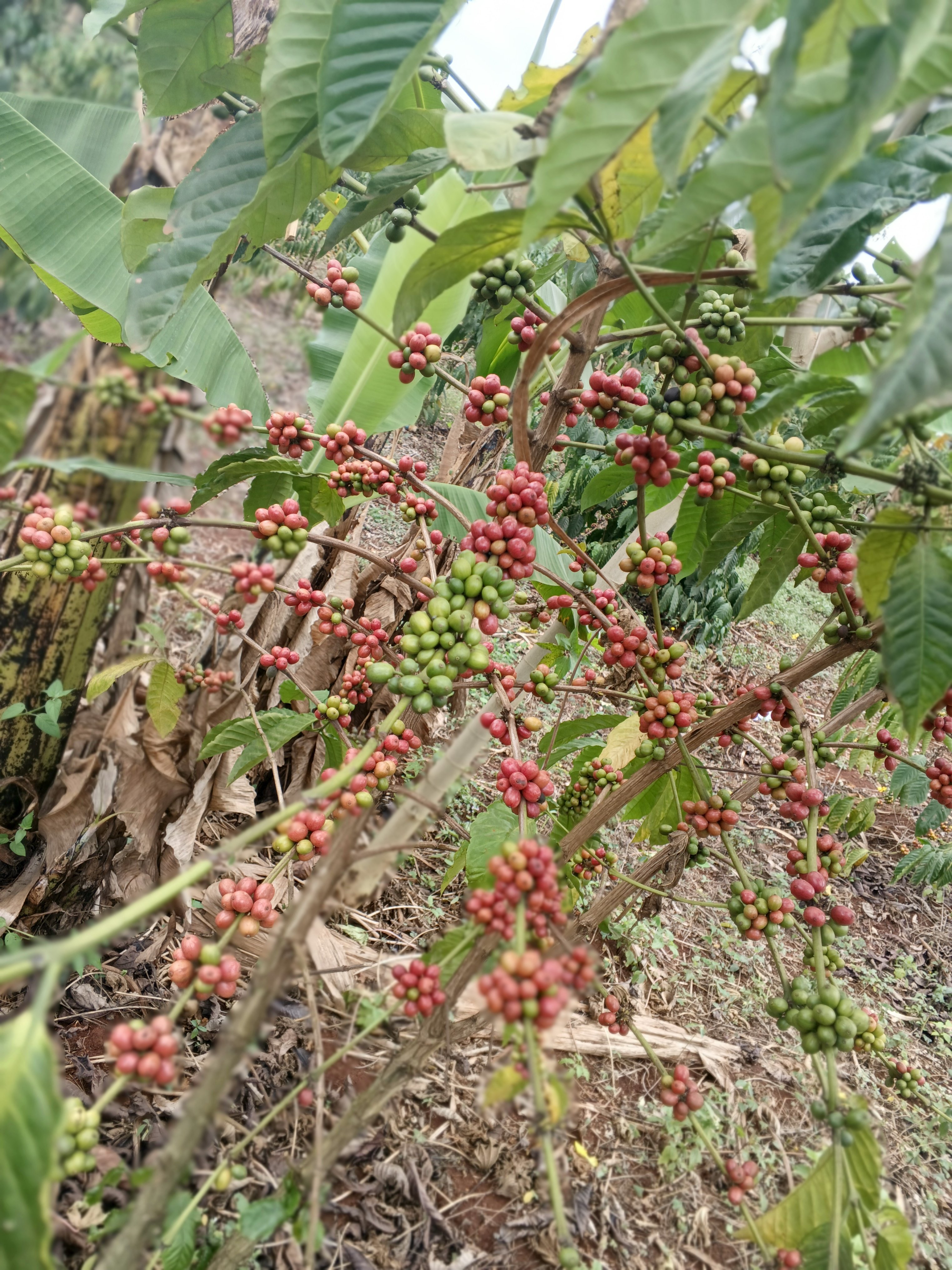
What it costs a household
For a smallholder in Teso, a failed seedling programme is not a neutral event. Planting coffee means preparing land, digging holes, mulching and watering, all of which take labour away from food crops during a season when Teso is also hit by drought. A family that put 55 or 200 seedlings in the ground and then watched them die has lost that labour, may have forgone other crops on the plots used, and has been left cynical about the next government programme.
There is also a credit dimension. The Independent's report on beneficiaries struggling to repay loans taken to plant coffee shows how quickly a crop failure becomes a debt problem when programmes are tied to borrowing. Where seedlings are free, as in Katakwi, the loss is labour and opportunity; where finance is attached, it can become a threat to land and savings groups.
Lessons: from distribution to adaptation
Three practical lessons emerge from the Katakwi case and the reporting around it.
First, site suitability must come before distribution. Soil moisture retention, rainfall reliability and access to water should be assessed before robusta is promoted in a new zone. The retired officer's warning about sandy soils is exactly the kind of local knowledge that a screening step would capture. Demonstration plots, which Katakwi's leaders are requesting, are a low-cost way to test the crop for a season or two before thousands of households commit.
Second, planting is only the start of the job. Nile Post's 2 October report from Mityana, where farmers were urged to manage coffee seedlings properly to raise household incomes, highlights the same point from the opposite direction: nursery practice, shading, mulching and watering decide survival. Asio's observation that shaded seedlings survived better is consistent with the shade-management training offered in Luweero. Programmes that pair seedlings with extension support and water-harvesting techniques will do better than those that simply hand over plants.
Third, farmers themselves are a source of design knowledge. At a Wakiso symposium on 1 October, reported by the Monitor, officials from the Ministry of Agriculture and the NGO Horizont 3000 argued for farmer-led innovation that combines farmers' knowledge with formal science. Horizont 3000 said it had invested €965,299 (about Shs3.8 billion) over four years, reaching nearly 5,000 farmers, with a further €1.2 million (about Shs4.8 billion) projected. Its model of participatory diagnosis, farmer research and market research is close to what Katakwi's leaders are now asking for: test locally, learn with farmers, then scale.
The bottom line
The most useful reading of Katakwi is not that coffee cannot grow in Teso. Nobody has yet proved that, and Asio's shaded seedlings suggest a niche may exist. It is that Uganda's agricultural expansion drives need to be paired with the climate-smart basics of knowing the land, securing water, protecting young plants and tracking survival rates. As El Niño shifts the country from drought to potential flood, the margin for programmes that skip these steps is shrinking. A seedling that dies in the field is not just a lost plant: it is a lost season for a family, and a lost chance to build trust in the next programme that comes along.



