Written By | Staff Writer
trial designed for the deep soils of central Uganda may simply not answer the question a farmer in the drier, sandier soils of Teso sub-region is actually asking.
Agriculture
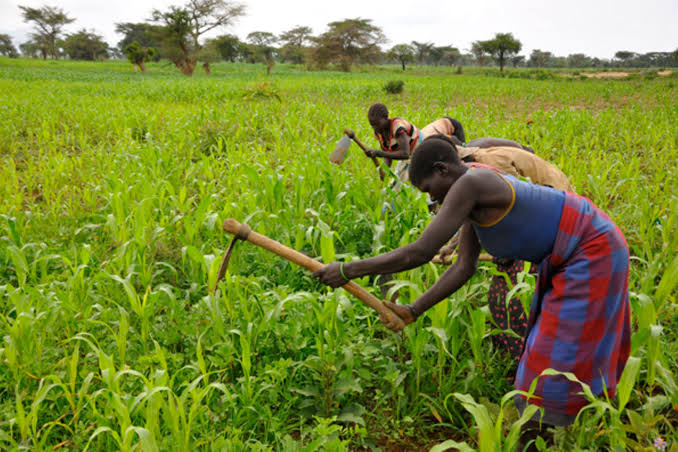
For decades, the relationship between Uganda's agricultural scientists and its smallholder farmers has followed a familiar script: researchers in Kampala or at regional universities decide which questions matter, design the trials, and then travel to the village to test their hypotheses on farmers' land. The farmer's role has typically been to host the demonstration plot, answer the enumerator's questions, and, if the technology works, adopt it. What the farmer rarely gets to do is decide what gets studied in the first place.
A project quietly wrapping up its first phase in Kumi and Mayuge districts is trying to invert that order entirely. Between March and June 2026, small-scale farmers in the two districts sat down with scientists from three public universities, government ministries and a coalition of civil society groups not to receive research findings, but to write the research questions themselves. The initiative, known as the Enabling Transformative Agroecology Project (ETAP), is implemented by ESAFF Uganda — the country's largest small-scale farmer-led advocacy movement — under the ECOTOPIA Consortium, and it is being watched closely by people who think Uganda's agricultural research system has a fundamental design flaw.
“For the first time, we are not simply responding to research questions — we are helping to develop them,” said Abraham Ojangole, a small-scale farmer from Kumi District who took part in the process. “This gives us confidence that future research will address the realities we experience every day in our communities.”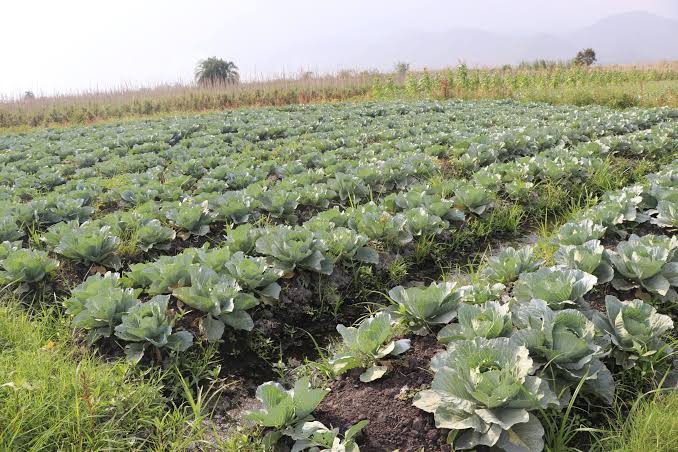
A costly mismatch
The frustration Ojangole is describing has a measurable cost. Uganda's ratio of agricultural extension workers to farmers stands at roughly 1:1,800, against a recommended standard closer to 1:500 — a shortfall that some estimates put at nearly 5,000 missing extension officers nationwide, and as high as 7,000 by other counts. The consequence shows up directly in farmers' fields: national maize yields average just 1.5 to 2 tonnes per hectare, compared with roughly 5 tonnes achievable at research stations using the same improved varieties. Bean yields for smallholders sit at around 0.6 tonnes per hectare, well below the 1.7 to 3.7 tonnes per hectare that improved varieties can deliver under proper management.
That gap between what agricultural science knows and what actually reaches a farmer's field has been described by researchers and policymakers, including at a recent AGRA@20 anniversary event in Kampala, as one of the central obstacles to transforming Uganda's farm economy. Part of the diagnosis has been structural: research priorities are often set in laboratories and lecture halls, disconnected from the specific soil types, pest pressures, market access constraints and climate shocks that vary from one sub-region to the next. A trial designed for the deep soils of central Uganda may simply not answer the question a farmer in the drier, sandier soils of Teso sub-region is actually asking.
Farmers as co-researchers
ETAP's answer is to formalise farmers as co-researchers, co-designers and co-creators of knowledge, rather than passive subjects of it. The project drew in a coalition that spans academia, government and civil society: Busitema University, Lira University and Muni University sit alongside the Alliance for Food Sovereignty in Africa (AFSA), PELUM Uganda, SEATINI Uganda and CONSENT, with the Ministry of Agriculture, Animal Industry and Fisheries (MAAIF) and the Ministry of Lands, Housing and Urban Development also at the table.
Through Community Agroecology Schools established in Kumi and Mayuge, farmers contributed indigenous knowledge on climate adaptation, biodiversity conservation, soil restoration, sustainable farming practices and local food systems — knowledge that is rarely captured in formal research proposals but that shapes how rural households actually cope with a bad season. Working alongside the universities, the coalition distilled this into five priority agroecology research gaps, each with measurable indicators attached, and agreed to use Participatory Action Research (PAR) as the guiding methodology for the studies that follow.
“Participatory research creates opportunities for mutual learning by bringing together academic knowledge and farmers' practical experience,” said Prof. Gad Kwizera, Dean of the Faculty of Agriculture at Lira University. “It also equips farming communities with evidence-based skills that improve decision-making and strengthen sustainable agriculture.”
The process was formally validated on June 12, 2026, when researchers, policymakers, farmer leaders and development partners met to sign off on the agreed research priorities, indicators and methodology that will now guide ETAP's data collection and learning agenda. Dr. Peter Opio, Dean of Busitema University's Arapai Campus, framed the moment as a test of whether Uganda's research institutions can genuinely share authority with the communities they study. “When universities, government institutions and farmer organisations work together as equal partners, they create research agendas that genuinely reflect farmers' priorities and increase the chances that research findings will influence policy and improve agricultural practice,” he said.
Why ESAFF is betting on this model
ESAFF Uganda is not a bit player in this space. Formed as the Ugandan chapter of the wider Eastern and Southern Africa Small-Scale Farmers' Forum — established at the 2002 World Summit on Sustainable Development in South Africa — ESAFF Uganda has been operational since 2008 and now counts 12,588 small-scale farmer community organisations across 54 districts as members, representing more than 765,000 individual farmers, two-thirds of them women. That scale gives the organisation both credibility with government and a genuine grassroots mandate: when ESAFF says farmers were not being listened to, it is not a rhetorical claim but a reflection of what its membership has told it for close to two decades.
The organisation's pitch is that agroecology research done with farmers, rather than on them, produces findings that are more likely to be adopted — because the questions were relevant to begin with, and because farmers who helped design a study have a stake in seeing it succeed. It is a modest claim on its face, but it cuts against a research culture that has often measured success by publications and demonstration plots rather than by what changes in a farmer's actual practice the following season.
What it means for the wider sector
The stakes extend well beyond Kumi and Mayuge. Uganda's agriculture, forestry and fisheries sector expanded by 6.7% in the last financial year, comfortably outpacing the decade-long average of roughly 4.2%, but that growth has been driven overwhelmingly by cash crops such as coffee, while yields for staple food crops that most smallholders depend on for both income and household nutrition have remained stubbornly flat. Climate change is compounding the problem: this year alone, prolonged dry spells have driven hunger deaths in Karamoja, forced farmers in Acholi to delay second-season planting, and destroyed crops across much of northern and eastern Uganda. Declining soil fertility and biodiversity loss are adding further pressure on a farming system that, for most of the country's roughly 70% agriculture-dependent workforce, offers little cushion against a failed season.
Advocates of the ETAP approach argue that these overlapping shocks are precisely why research priorities can no longer be set from a distance. A drought-adaptation trial designed without input from the communities actually living through the drought risks answering the wrong question entirely. Whether ETAP's participatory model can be scaled beyond two districts — and whether NARO, the country's dominant public agricultural research body, adopts elements of it — remains an open question. But for a sector where the gap between research station yields and farmers' fields has proven remarkably persistent, a model that starts by asking farmers what they actually need to know is, at minimum, a different way of trying to close it.
“The future of agroecology depends on recognising farmers as knowledge holders, innovators and equal partners in research,” an ESAFF Uganda representative said following the validation workshop. “When science and community experience come together, the solutions are more practical, more inclusive and more sustainable.”



