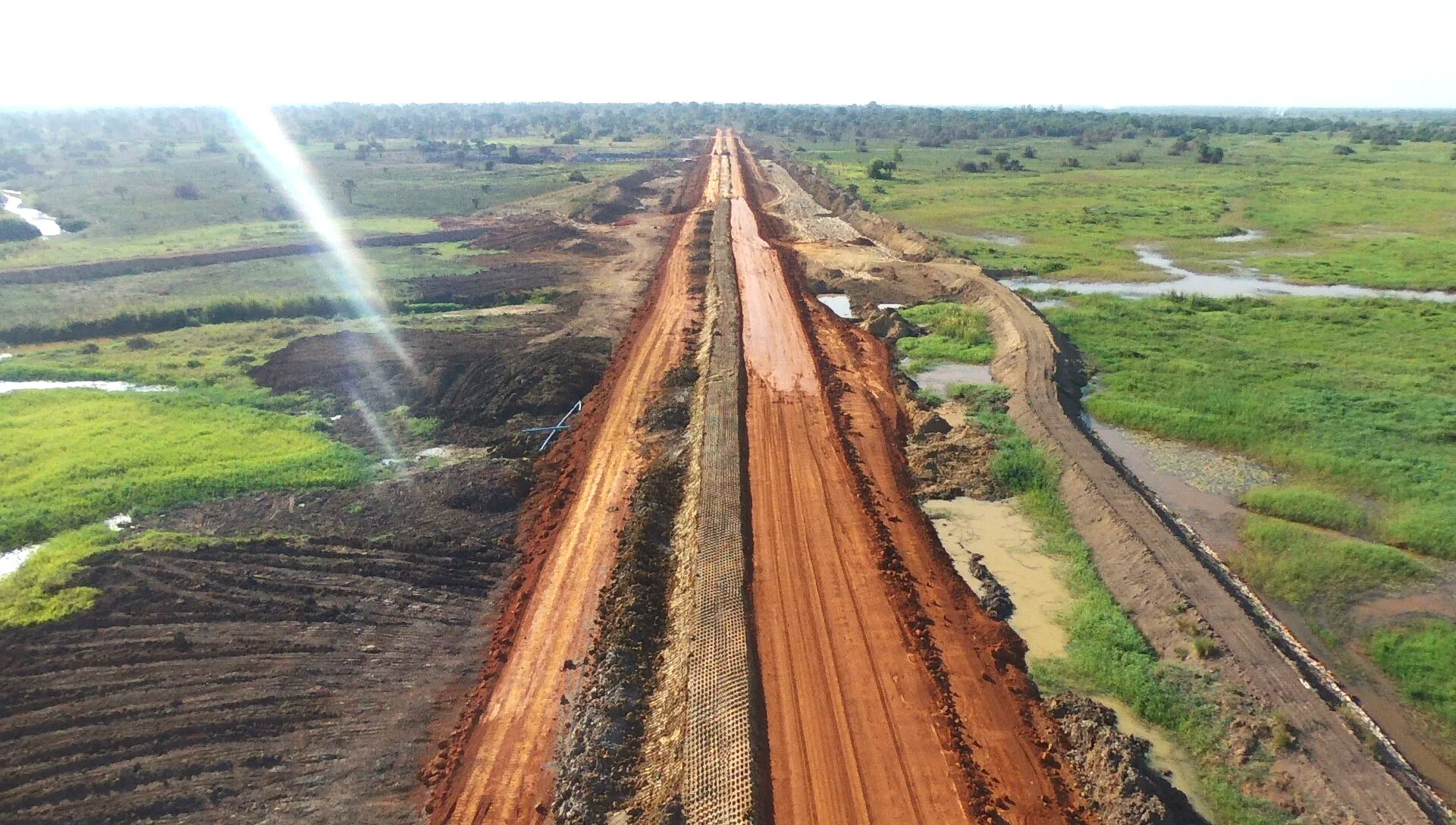
A multi-billion-shilling scheme meant to shield northern farmers from dry spells has not broken ground. Landowners say they will not move before they are paid, and they say Shs1.5 million an acre is out of date.
Uganda Agriculture
A scheme ready to build, a site not ready to hand over
The Ministry of Water and Environment (MWE) has asked landowners in Gulu and Amuru districts to allow construction of the Unyama Irrigation Scheme to start before they are fully compensated, promising to pay in phases as work proceeds. The appeal, made at a stakeholders' meeting at the Gulu District Council Hall and reported by The Cooperator News and the Daily Monitor on 26 October 2026, exposes a familiar problem in Uganda's irrigation drive: the engineering is often easier than the land.
The scheme covers about 700 hectares along the River Unyama, across Angany village in Patiko Sub-county in Gulu and the Pabbo and Opara sub-counties in Amuru, according to The Cooperator News. It is meant to help farmers cope with prolonged dry spells and unpredictable weather. Construction was originally set to begin in May 2025 and has not yet started.
Where the money comes from
Unyama is one of three major schemes in the third phase of the Farm Income Enhancement and Forest Conservation Programme (FIEFOC-3), a US$125 million programme. The other two are in Nakapiripirit and Bulambuli districts. The Monitor reports that financing comes from Islamic Development Bank loans, with contributions from the Arab Bank for Economic Development in Africa and the Government of Uganda. The contractor is Ambitious Construction Limited.
Neither outlet gives a project-specific cost; both say only "multi-billion shillings". Earlier Monitor headlines on the same scheme described it as a Shs70 billion project, but that figure is not repeated in this week's reporting and should be treated as dated. Patrick Okotel, manager of Multipurpose and Bulk Water Development at MWE, said the contractor received part of the funds in May 2025.
One discrepancy in the coverage is worth flagging. The Monitor says 103 households own a total of 7,000 hectares in the project area, while The Cooperator News puts the scheme itself at about 700 hectares. The first figure is likely a typographical slip or refers to a wider area, but neither report resolves it. The land and compensation numbers should be confirmed with MWE.

The dispute in numbers
The standoff is about price. The compensation rate on the table is Shs1.5 million per acre, set in a 2016 valuation. Landowners say a decade of rising land values has made it obsolete. Santo Onek, the LC I chairman of Angany village, has 153 acres in the project area and proposed at least Shs3 million per acre. He said the government plans to pay his family Shs317 million for the land, which works out to roughly Shs2.1 million an acre on a simple division, so the payment may include crops or structures, though the reports do not say. "I wish government could pay us at least Shs3 million for an acre," he told the Monitor.
Ballington P'Ongwech, Gulu's District Secretary for Works and Technical Services, asked: "Where in Uganda will you find land at Shs1.5mln for an acre?" Justin Obol, the district LCV chairman, urged MWE to "be flexible and revise the rate". Affected persons are demanding Shs2.8 billion in total before surrendering land, the Monitor reports, and land in Acholi sells for anything from Shs800,000 to Shs10 million an acre depending on location.
Importantly, the opposition is not to the project itself. Patrick Komakech, the Patiko Sub-county chairperson, said residents support the scheme and that "the only challenge is the rate at which the government wants to pay for the land". Rwot Baptist Latim, chief of Pawel, welcomed the scheme as a response to climate change and offered to mediate land disputes.
The ministry's argument
Mr Okotel's appeal rests on practicality and precedent. "You can never finish compensation in one day," he said, and "I am appealing to you to allow the contractor to start work." He pointed to the Sipi Irrigation Scheme in Bulambuli, which he said is about 60 percent complete after landowners let the contractor in before compensation was settled. In Gulu, he said, 36 of the 56 project-affected persons have consented to construction, which leaves 20 holdouts.
He also warned that new demands could delay the project further. That caution has weight. Each month of delay costs money: contractors claim for idle time, prices of materials move, and commitments to lenders are tested. Ministry officials have said that farmers who benefit will form a cooperative to manage the infrastructure after completion, which means the scheme's long-term value depends on communities that are, at present, in dispute with the state.
The legal and trust problem
The ministry's request runs into a basic principle. Article 26 of Uganda's Constitution says that compulsory acquisition of property requires prompt payment of fair and adequate compensation before the government takes possession. A phased payment plan that begins after the contractor moves in sits uneasily with that wording. It also asks landowners to rely on promises at a time when many have seen earlier compensation processes drag on. Land in northern Uganda carries particular sensitivity after years of displacement and disputes over customary tenure, and the Monitor's earlier coverage recorded local resistance to the scheme in the Amuru area.
The ministry might reasonably answer that the 36 consenting owners show trust is possible. But consent given under pressure of delay is fragile. If the remaining 20 holdouts in Gulu, and any in Amuru, are a minority with a genuine grievance over price, an updated valuation might cost less than a prolonged stalemate.

What it means for farmers and the economy
The stakes extend beyond the Unyama valley. Rain-fed farming dominates northern Uganda, and the scheme's stated purpose is to cushion farmers against dry spells and erratic weather. Irrigation can allow a second or third crop a year, reduce losses and give farmers confidence to buy better seed and inputs. The government's own sector statement to Parliament last month recorded 7,203 hectares under irrigation across 10 schemes, a small footprint against national needs, so every stalled scheme counts.
The cooperative model matters too. A scheme that is handed to farmers but not paid for by water charges, or that is built on contested land, risks falling into disrepair, a fate that has met some earlier public irrigation schemes in Uganda. Settling compensation fairly is therefore not only a matter of justice but also of keeping the asset working over decades.
Ways forward
Three options appear realistic. First, MWE could commission a fresh valuation of land in the project area, which would test the Shs3 million figure against current market evidence, and then pay at the revised rate. Second, it could pay in tranches with a binding, published schedule and an escrow or ring-fenced fund, so that landowners see money moving before the contractor's machines do. Third, it could use the chiefdom and district leaders who have offered to mediate to broker a single settlement for the remaining holdouts. These are not mutually exclusive.
Whatever the route, the Sipi example suggests that sequencing and trust can be managed. The test for Unyama is whether the ministry treats the 2016 rate as a starting point rather than a ceiling, and whether landowners accept a credible payment schedule. Until then, a scheme designed to bring water to Gulu and Amuru will remain a plan on paper.
Published By | Features Editor