Written By | Staff Writer
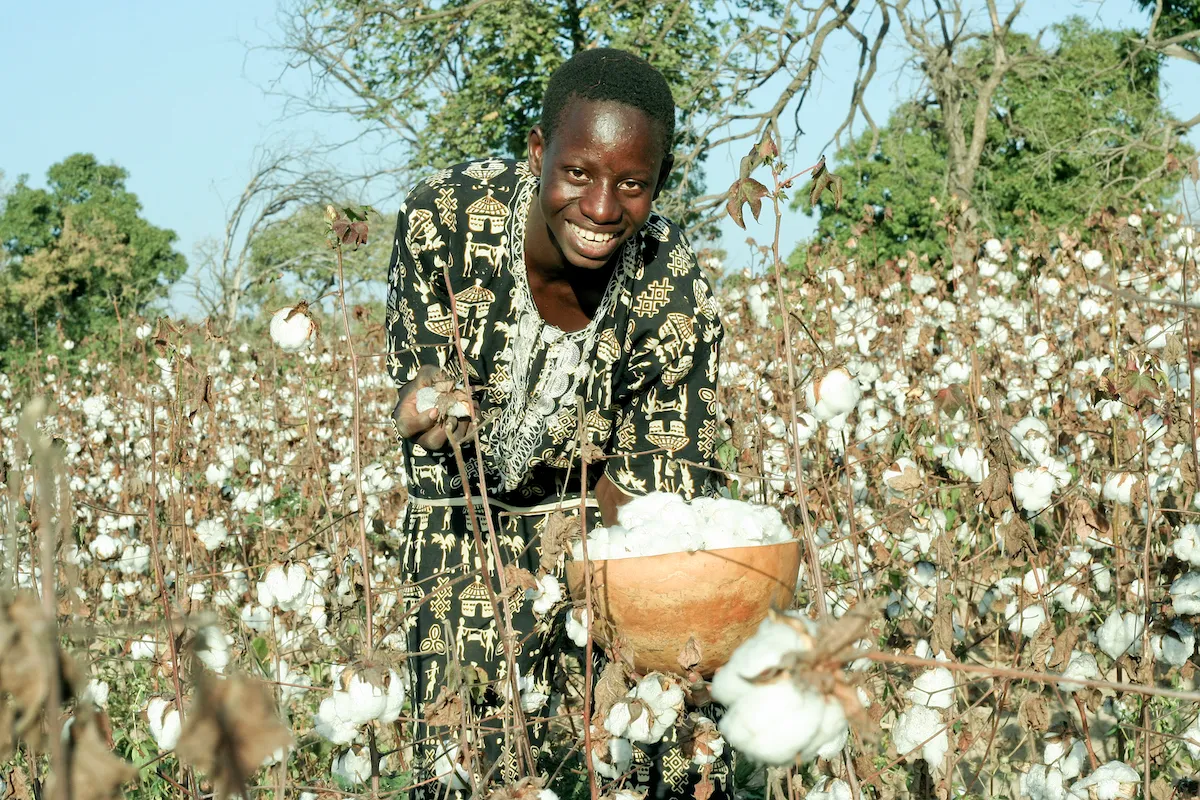
Farmers are being paid about Shs1,200 a kilogramme while spinners say the real money lies in yarn and garments. Can Uganda close the gap between the field and the factory?
Agriculture
Once known across eastern Uganda as "white gold", cotton is now a crop many farmers in Mbale, Bukedea, Pallisa and Kumi are quietly abandoning. The Cotton Development Organisation (CDO) says production in the region has fallen by about 40 percent over the past decade, as households shift to cassava, maize, sunflower and other crops that pay better or more reliably. Reporting by the Daily Monitor in early September, together with regional coverage from Kasese and a September look at the textile industry, shows a sector squeezed at both ends: farmers who say the farm-gate price does not cover their costs, and manufacturers who say too much of the crop leaves the country as raw lint, taking jobs and foreign exchange with it.
This piece pulls those threads together. The facts below come from reporting published between August and mid-September 2026; no single dramatic event has occurred in the last 72 hours, but the debate over how to rescue the crop is live as farmers weigh what to plant next.
A price that does not add up
The central grievance is price. The Monitor reported that cotton currently fetches about Shs1,200 per kilogramme, which farmers say does not cover seed, land preparation, chemicals, labour, harvesting and transport. In Kasese, a separate report quoted Adrian Katwetegeke, a regional field officer of the Uganda Cotton Ginners and Exporters Association, putting last season's farm-gate price at between Shs1,500 and Shs1,700, down from about Shs1,900 the season before and roughly Shs2,000 in earlier years. Whichever figure applies locally, the direction is the same: a falling price at a time when input costs have risen.
Farmers describe a chain of smaller losses on top of the headline price. Albert Oluka of Malera in Mbale told the Monitor that middlemen using unreliable weighing scales make it hard to know whether he is paid for the correct quantity. Stephen Opedele of Bukedea said cooperatives sometimes delay payment for months after delivery. Others cite declining yields, poor-quality seed, pests, infertile soils and bad roads. Josephine Atalo of Atiri in Kween District has cut her cotton from two acres to half an acre and planted cassava on the rest, saying she would return if prices rose. David Otim of Pallisa said cassava, maize and sunflower have displaced cotton because they often pay better.
Cotton is also a slow crop. In Kasese, planting generally runs from July to August and harvest from February to March, with the crop taking about six months to mature and needing up to six weedings and regular spraying. That is a long time to carry costs when a farmer can plant a food crop and sell within three or four months. Julius Rukara, Kasese's principal agricultural officer, has asked the National Agricultural Research Organisation (NARO) to develop varieties that mature in three to four months. He also notes that cotton competes for land with cocoa, vanilla and coffee, which offer better prices and more dependable markets.
Weather adds risk. Katwetegeke said the 2026 rains in Kasese came later than expected and had not supplied enough moisture by late July, and he advised farmers to wait for adequate rain before planting. In Bukedea, Hellen Ongaya said she delayed planting because the rains came late, and urged government to invest in irrigation. Most cotton areas are rain-fed; the Mubuku Irrigation Scheme in Kasese exists but its reach is limited, according to the reporting.
What is at stake nationally
Cotton matters well beyond the farm. An African Development Bank project document from August 2025, cited by the Monitor, estimates that cotton supports between 150,000 and 200,000 smallholder households across more than 75 districts. The CDO says the sector supports over 2.5 million people directly and indirectly, mostly in the lower-value stages of farming, ginning and transport. Annual lint production is put at 15,000 to 25,000 metric tonnes, and cotton is described in the September textile analysis as Uganda's third-largest export crop after coffee and tea.
For eastern Uganda in particular, where land is fragmented and many households have few cash crops, a decade-long retreat from cotton removes one of the few crops that historically carried a guaranteed buyer through the ginning network. The farmers quoted still credit it with paying school fees and helping them buy land; Modesta Okurut of Bukedea, who has grown cotton for nearly three decades, said it did exactly that despite low prices.
The factory-floor argument
Manufacturers make a different case: the problem is not only farm-gate price but where the value is captured. In an analysis published on 11 September 2026, Peter Muindi Musau, chief finance officer of Fine Spinners Uganda, argued that exporting raw cotton moves value and jobs abroad, saying exporters "take away local jobs and forex which would have remained here". Zirandra Singh, acting general manager of Southern Range Nyanza (Nytil), said new plants would raise employment and demand for local water and electricity.
The numbers cited are striking, with caveats. A 2025 brief from the Economic Policy Research Centre (EPRC), as summarised in the analysis, compares value at each stage of the chain, at roughly US$1.40 for lint, US$3 for yarn, US$5 for fabric and up to US$12 for a finished item such as a T-shirt, although the units were not specified. The same brief projects US$650 million to US$750 million a year in export revenue if Uganda moved fully from raw lint to finished garments. That is a projection, not current earnings, and the fabric-demand estimate of over 250 million metres a year rests on a 2009 policy assumption of six metres per person.
Existing capacity is modest but growing. Fine Spinners produces about 2.5 tonnes of cotton yarn a day, employs about 700 people directly and plans to reach 4 tonnes a day by the end of 2027, exporting to Denmark, France, Rwanda and Burundi. Southern Range Nyanza, based in Jinja, has invested over US$45 million since 1996 and supplies uniforms to the armed forces and public servants under the Buy Uganda Build Uganda policy. Together the two firms report about 2,450 spindles, roughly 920,000 garments a year and more than 3,470 employees, 43 percent of them women. Jain Mukesh of Alpha Woolens Uganda said his company plans to support cotton growers in northern and western Uganda.
Policy levers and their limits
Government has several tools in place or proposed. The Revolving Lint Buffer Stock Fund aims to keep cotton available to local factories, and the Uganda Development Corporation has been capitalised to support manufacturing. A cotton, textiles and apparel strategy drawn up by the National Planning Authority with Msingi East Africa blames weak apparel exports on low factory efficiency, inconsistent quality and failure to meet international standards, and recommends selling value-added yarn and fabric regionally first. Jolly Sabune, the CDO's managing director, says incentives exist but more are needed.
On the farm side, a private initiative is trying to lift incomes. Wilson Womakuyu of Afric Co-operative Society, which is mobilising farmers in the east, argues that revived cotton could drive agro-industrialisation and jobs. Emmanuel Matyetsye, Uganda representative of the Greek firm EMKAT S.A., said global demand for cotton products is rising and that farmers could earn about Shs4,000 per kilogramme if the crop reaches higher-value markets. That figure is an estimate offered by a buyer's representative, not a contracted price, and farmers will want it in writing.
What to watch
Three tests will show whether the revival is real. First, whether farmers see a transparent, published price before planting, with weighing and payment rules that cut out the scale and delay complaints. Second, whether quick-maturing, high-yielding seed reaches farmers in time for the next season, as Kasese officials are asking. Third, whether the factories' appetite for local lint translates into forward contracts rather than speeches.
There is a tension policymakers will have to manage. Pushing more cotton into local mills could depress export demand for lint if domestic prices are set too low, while a price that pleases ginners may not please farmers. Without irrigation and shorter-cycle varieties, even a better price may not stop growers from switching to cassava or sunflower. Parliamentarians quoted in the Monitor, including Mbale's Umar Nangoli and Bulambuli's Sarah Wekomba, have called for funding and better farm-level quality, but no new allocation had been announced in the reporting reviewed.
For now, the arithmetic is simple. A farmer paid Shs1,200 a kilogramme has little reason to plant more, and a mill short of local lint has little reason to expand. Whoever breaks that stalemate first, through price, seed or contract, will decide whether Uganda's white gold regains its shine.



