Written By | Staff Writer
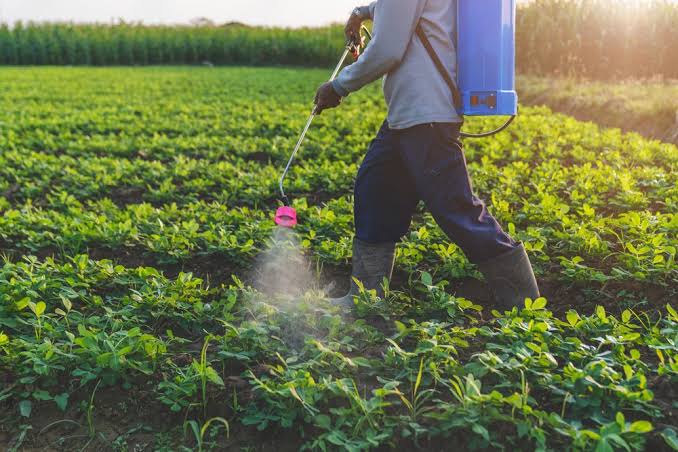
The nine chemicals being phased out entirely read like a list of the hazards regulators have spent years flagging in Uganda's agrochemical supply chain.
Agriculture
By the end of 2026, nine of the agrochemicals Ugandan farmers have relied on for decades to protect maize, tomatoes, cotton and rice will be gone from agro-input shelves entirely. The Ministry of Agriculture, Animal Industry and Fisheries (MAAIF) has ordered a phased withdrawal of chemicals including alpha-cypermethrin, atrazine, butachlor, carbofuran, chlorothalonil, dichlorvos, dimethoate, diuron and propanil, with importation already halted since May 21, 2026, and full market withdrawal to be completed by year end. Nine further active ingredients — among them the widely used fungicide mancozeb — have been placed under tight, crop-specific restrictions rather than banned outright. The decision, one of the most consequential agricultural regulatory actions Uganda has taken in years, is forcing farmers, agro-dealers and exporters into an uncomfortable scramble with four months left on the clock.
The trigger was a scientific review by MAAIF's Agricultural Chemicals Review Committee, acting on concerns first raised by CropLife Africa Middle East and examined in detail at the second annual Crop Life Symposium in Kampala earlier this year. The committee assessed 18 active ingredients for their toxicity to humans, wildlife and waterways, and for the trade risk they posed given tightening residue standards in Uganda's key export markets. According to the Commissioner for Crop Inspection and Certification, Dr Paul Mwambu, the review was driven by "emerging international scientific evidence and trade concerns relating to potential risks posed by certain active ingredients to human health, environmental safety, food systems and compliance with international residue standards on agricultural commodities."
What is being banned, and why
The nine chemicals being phased out entirely read like a list of the hazards regulators have spent years flagging in Uganda's agrochemical supply chain. Alpha-cypermethrin and chlorothalonil are toxic to bees and aquatic life; atrazine has been linked to reduced male fertility and, at high exposure, coma and circulatory collapse; carbofuran is toxic to a wide range of non-target wildlife and irritates skin and eyes; dichlorvos is acutely toxic to the environment; dimethoate is linked to reproductive disorders and harms pollinators; and diuron and propanil have been associated with kidney, spleen and liver damage. Uganda is not acting in isolation — according to the US Environmental Protection Agency, an estimated 59 percent of the 41 agrochemicals currently registered for use in the country are classified as Highly Hazardous Pesticides, many of them already banned in the European Union on toxicity grounds.
The restricted list is more surgical, narrowing certain chemicals to the specific pest problems they are still considered necessary for. Imidacloprid will now be permitted only for coffee pest control and seed treatment; carbendazim is restricted to cashew nuts; indoxacarb is limited to tomatoes and brassica crops for controlling tuta absoluta and diamondback moth; profenofos is confined to fall armyworm control in maize; and thiamethoxam remains available for the black coffee twig borer and fall armyworm specifically. Fipronil, once used across multiple crops, will now be permitted only for termite control in construction — removed from farming use altogether. Mancozeb, a fungicide MAAIF says has no viable substitute for managing fungal disease in potatoes, tomatoes and other crops, has been given a five-year reprieve while the ministry and industry search for an alternative.
Enforcement with teeth
Unlike some past regulatory notices that farmers and dealers have been able to quietly ignore, this phase-out comes with an enforcement structure MAAIF says it intends to use. Since May 21, 2026, the ministry has stopped issuing new import permits for any of the banned active ingredients. Officials have warned that unauthorised repackaging, misleading labelling, illegal importation, sale of unregistered products, adulteration, counterfeit agrochemicals, or non-compliance with stewardship directives will attract administrative and legal action — including suspension or cancellation of dealer licences, seizure of stock, market withdrawal, intensified facility inspections, corrective action directives and prosecution. For an agro-input sector where counterfeit and unregistered products already circulate widely in village markets — a problem flagged separately in MAAIF's own Seed Tracking and Traceability System rollout and in Uganda National Bureau of Standards estimates that counterfeits make up 30 to 40 percent of some input categories — the enforcement question is as significant as the ban itself. A rule that pushes cheap, effective, banned chemicals out of registered agro-shops but does not stop them circulating informally risks simply driving the hazard underground rather than eliminating it.
Industry pushback and the cost of alternatives
CropLife Uganda, representing the agrochemical importers and manufacturers whose products are affected, has publicly asked government for more time to bring safer alternatives to market, warning that a compressed transition risks leaving farmers without effective options against pests such as fall armyworm and diamondback moth precisely when they need them. That concern is not abstract: earlier in 2026, agrochemical importers separately lobbied government to delay a related EU-backed ban on 14 chemicals, arguing the timeline gave the sector too little room to source, register and distribute replacement products at comparable cost. Newer, compliant alternatives typically carry a higher price tag than the chemicals they replace, and for smallholders already squeezed by a fertiliser-use gap — Uganda's average application rate of 1 to 2.4 kilogrammes per hectare lags far behind Kenya's 32kg and Rwanda's 29kg — an increase in crop-protection costs lands on farmers who have little room to absorb it.
Some farmer movements see the ban as validation rather than disruption. Grassroots organisations working through the Eastern and Southern Africa Small-scale Farmers' Forum (ESAFF) Uganda have spent recent years building 37 Community Agroecology Schools that train farmers to substitute synthetic pesticides with botanical alternatives — neem, chilli and garlic extracts among them — that campaigners describe as near-zero-cost, locally available and far safer to handle. For farmers already using these approaches through ESAFF's network, MAAIF's ban simply catches regulation up with practice already spreading at the grassroots. For the much larger population of commercial and semi-commercial farmers who depend on synthetic chemistry to protect cash crops such as maize, tomatoes, cotton and coffee at scale, botanical substitutes are unlikely to close the gap in time, at least not without significant extension support the government has not yet detailed.
The human cost driving the policy
Behind the regulatory language is a public health record that has been accumulating for years without a coordinated response. Ugandan studies have linked pesticide exposure to acute effects — headaches, breathing difficulty, skin and eye irritation, nausea — and to more severe chronic outcomes with sustained exposure, including leukaemia, lymphoma, and kidney, brain and breast cancers, along with disrupted child neuro-development, reduced fertility and diabetes. Field research in districts such as Mbale has documented farmers unblocking spray nozzles with their mouths and applying chemicals without protective equipment, practices that sharply raise poisoning risk. Public health researchers have repeatedly noted that Uganda lacks the toxicovigilance systems, pesticide-residue monitoring infrastructure and integrated cancer registries needed to systematically link chemical exposure to long-term disease outcomes — meaning the true scale of harm from decades of unregulated agrochemical use is still, in large part, unmeasured.
What is at stake for trade
Beyond public health, the ban is explicitly framed as a trade-competitiveness measure. Uganda has spent 2026 building an export push around record coffee volumes, an EU-facing avocado roadmap, and ambitions to expand horticultural and fish exports into markets with strict maximum residue limits. A single rejected consignment over pesticide residue can cost exporters far more than the price difference between a banned chemical and its safer substitute — the Eastern Africa Grain Council estimated in August that aflatoxin-related rejections alone have cost Uganda roughly Shs32.8 billion in exports since 2023, and agrochemical residue violations carry a comparable risk to horticulture and coffee shipments bound for the EU. Framed this way, the ban is as much about protecting Uganda's access to lucrative export markets as it is about protecting the farmers who apply the chemicals in the first place — two goals that, for once, point in the same direction, even if the transition between now and December will not be an easy one for the smallholders caught in the middle.



