Agriculture
Every year, plant pests destroy roughly 40 percent of global crop production, inflicting economic losses estimated at more than USD 220 billion. In Africa, the toll is even steeper: pests wipe out between 30 and 60 percent of the continent's crops annually, according to Enrico Perotti, Secretary of the International Plant Protection Convention (IPPC), who warns that the continent “cannot afford to wait for major outbreaks before strengthening plant protection systems.” For Uganda, a country whose agricultural exports underpin a significant share of its foreign exchange earnings, that warning has become the basis for a quiet but consequential shift in how the country defends its farms, and its trade relationships, from an enemy that respects no borders.
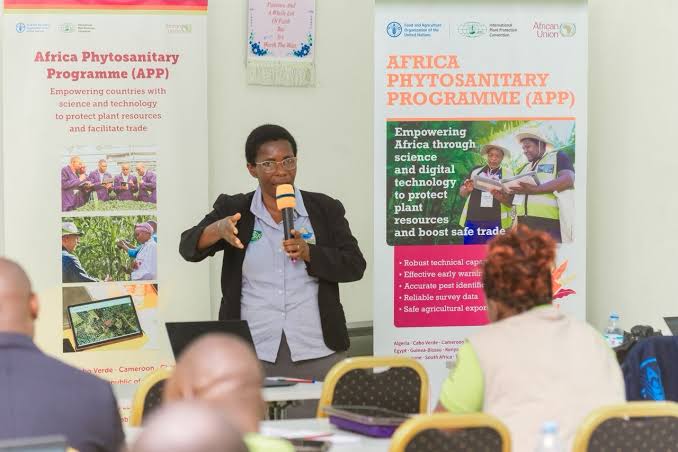
Uganda has formally joined the Africa Phytosanitary Programme (APP), a continent-wide initiative using digital tools, standardised surveillance procedures and real-time data collection to detect and manage plant pest threats before they can spread across borders or derail export shipments. The move, confirmed earlier this month by Joab Tugume, Head of Plant Quarantine at the Ministry of Agriculture, Animal Industry and Fisheries, is aimed squarely at one of the most persistent weaknesses in Uganda's agricultural trade infrastructure: a plant pest surveillance system officials themselves describe as inadequate for the scale of the threat.
Digitising a system built on paper and guesswork
“One of the phytosanitary challenges that Uganda has been facing is the weak surveillance system. The e-phytosanitary system is coming in to digitise our surveillance activities so that we have ready data that can be used in our trade negotiations and market access,” Tugume explained. In practical terms, that means replacing manual, often delayed paper-based pest reporting with digital tablets, standardised field protocols and a shared Geographic Information System (GIS) hub where plant health officers across the country — and eventually across the continent — can log pest sightings, map outbreak risk in real time, and coordinate faster containment responses.
Among the pests the new system is specifically designed to track is Xylella fastidiosa, a bacterial disease that has become one of the most feared threats in global plant health circles. Regarded by trading partners including the European Union as a high-risk quarantine pest, Xylella has triggered import restrictions on coffee plants and other host species from affected regions elsewhere in the world. For Uganda — Africa's leading coffee exporter, with earnings that have topped half a billion dollars in recent seasons — the ability to demonstrate credible, data-backed evidence that its coffee-growing regions remain free of such threats is not a bureaucratic nicety. It is a trade necessity.
That link between plant health surveillance and market access is central to why Uganda signed on to the programme. “Trade depends on confidence. When we have credible information about our plant health status, we are able to support farmers and open more markets for our products,” Tugume said. The stakes are not hypothetical: Uganda's agricultural exporters have already experienced the cost of failing to meet food and plant safety standards in neighbouring markets. Trade analysts cite roughly Shs32.8 billion in losses since 2023 linked to non-compliance with food safety requirements, including repeated rejections of Ugandan maize by buyers in Kenya and South Sudan over aflatoxin contamination, and restrictions imposed by Kenya on imports of Ugandan milk and milk products over food safety concerns.
A continental effort gathering momentum
Uganda's participation places it alongside Cameroon, the Democratic Republic of Congo, Egypt, Guinea-Bissau, Mali, Sierra Leone, Zambia and Zimbabwe among countries that have formally integrated the APP into their national phytosanitary systems. The programme, launched in 2023 as a joint initiative of the IPPC Secretariat, the Food and Agriculture Organisation of the United Nations (FAO) and the African Union's Department of Agriculture, Rural Development, Blue Economy and Sustainable Environment, began with 11 pilot countries. Nine more joined in 2025, and a further 18 are expected to come on board in the programme's next expansion phase.
The scale of investment behind the initiative reflects how seriously regional and international partners are treating the threat. To date, the APP has trained more than 600 plant health specialists across the continent and deployed hundreds of digital tablets for field surveillance work. The programme's next phase, discussed in mid-July at a Strategic Partnership Forum in Addis Ababa that brought together ministers, national plant protection authorities, donors and regional institutions, is focused on strengthening national ownership of the systems and expanding training so that African institutions can eventually manage plant health monitoring independently, without relying indefinitely on external technical support.
Dr Fikru Regassa, Ethiopia's State Minister for Livestock and Fishery Resources Development, told the Addis Ababa forum that “effective phytosanitary systems are fundamental to safeguarding agricultural investments, ensuring food security, protecting natural ecosystems, facilitating safe and competitive trade, and strengthening the resilience of our food systems.” That framing — plant health as an economic and food security issue rather than a narrow technical one — has increasingly shaped how African governments, including Uganda's, are prioritising investment in the sector.
What it means for Ugandan farmers
For the smallholder farmers who make up roughly 80 percent of Uganda's agricultural population, the direct, day-to-day benefits of a digitised pest surveillance system may not be immediately visible. But the indirect effects could prove significant. Faster detection of outbreaks means faster containment, reducing the risk that localised pest problems balloon into region-wide crop losses of the kind that have periodically devastated Uganda's banana, cassava and cotton sectors. Historical data from Uganda's own Ministry of Agriculture shows that pest and disease losses already cost the country an estimated USD 35 to 200 million annually in bananas alone, USD 60 to 80 million in cassava, USD 10 million in cotton and USD 8 million in coffee — losses that better surveillance and faster response times could meaningfully reduce over time.
There is also a market-access dividend that could flow back to farmers in the form of higher, more stable export prices. When trading partners have confidence in a country's phytosanitary data, they are more likely to accept shipments without costly delays, additional testing, or outright rejection — all of which currently erode the margins Ugandan exporters, and by extension the farmers who supply them, are able to capture. As Uganda works to expand agricultural exports under frameworks such as the African Continental Free Trade Area, credible plant health certification is increasingly treated by trade officials as a prerequisite for growth rather than an optional add-on.
Still, questions remain about how quickly the benefits of the digital system will reach the district and farm level, particularly in regions with limited connectivity and thinly staffed agricultural extension services — the same structural gaps that have separately been flagged by stakeholders at events such as the AGRA@20 Uganda Country Celebration earlier this month as a barrier to translating research and innovation into on-farm results. Whether the Africa Phytosanitary Programme can bridge that gap, or whether it risks becoming another well-funded system that struggles to reach Uganda's most remote farming communities, will likely determine how much of its promise is ultimately realised.
For now, officials are treating the programme's arrival as a milestone. As Perotti put it in Addis Ababa, investing in phytosanitary systems is “not simply about protecting plants but also about protecting economies, farmers and future generations” — a framing that, for a country as dependent on agricultural exports as Uganda, carries particular weight.
Published By | Features Editor